
 E-Paper



The spotlight’s on federal agencies
The judgment in the Delhi excise policy case dents the reputation of CBI and strengthens the perception that federal agencies are targeting opposition parties

 Prefer HTon Google


If politics in India has become increasingly polarised, a key wedge has been the burgeoning prosecution of opposition politicians by federal agencies on allegations of corruption. In the long string of such cases, none was as high-profile as the Delhi excise policy case that led to the incarceration of virtually the entire frontline leadership of the Aam Aadmi Party (AAP), including the unprecedented jailing of then sitting chief minister Arvind Kejriwal. His deputy Manish Sisodia spent more than a year in prison. The case created a miasma of corruption around a party that built its reputation on probity, hamstrung governance in the national Capital amid a hailstorm of raids and political rows, and was arguably one of the biggest contributors to the AAP’s loss in the assembly elections last year.
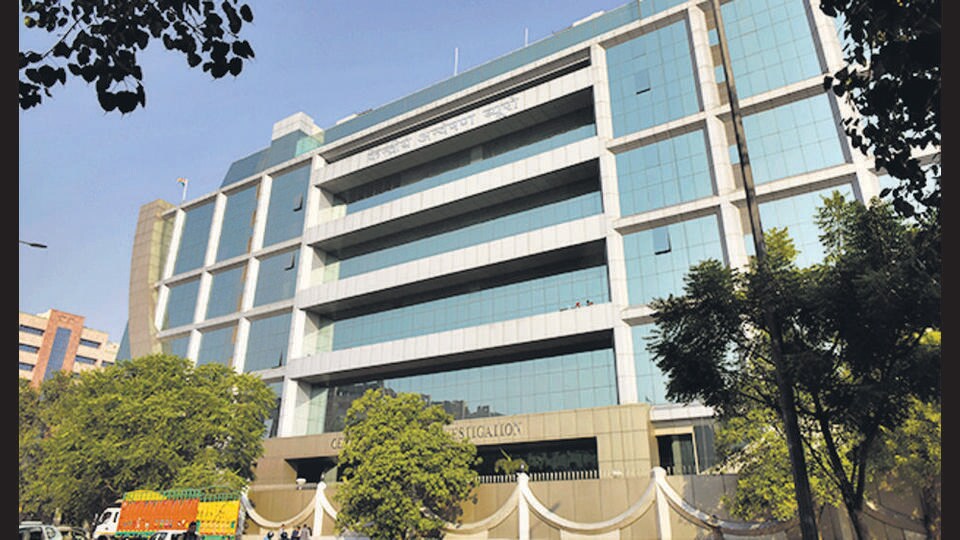
It is against this backdrop that a special court’s decision to acquit all the accused assumes significance, beyond the particulars of this case. The judge’s scathing remarks against the prosecution and asking for departmental action against the investigating officer, the observation that the voluminous charge sheet failed to make a cogent case or provide any material evidence, the finding that the case rested solely on the statements of people who had turned approvers and no criminal intent was established, and the decision that it was too weak even for a trial, all point to one sorry conclusion – a motivated prosecution short on hard evidence to back its allegations. To be sure, this is only the first step of what will surely be a lengthy judicial adjudication process — CBI has already announced it will appeal the verdict in the Delhi High Court — and the decision speaks more about the prosecution than whether there was any real corruption in the framing of the liquor policy. There are also parallel but separate proceedings in the same case being pursued by the Enforcement Directorate (though their fate remains unclear as they are dependent on the predicate offence).
The judgment not only dents the reputation of CBI but further cements the perception that federal agencies are targeting opposition parties. When agencies invoke stringent provisions, such as the Prevention of Money Laundering Act with onerous bail conditions, the expectation is that the evidence is robust and the case airtight. If such cases collapse even before trial, it inevitably raises questions about investigative standards, and motives. Questions are also raised about the protracted denial of bail in such cases.
This is not occurring in a vacuum. In recent years, a number of high-profile cases — such as the 2G case or the National Herald case — have stumbled before the judiciary for want of prosecutable proof. The government has admitted that while the number of prosecutions involving politicians has zoomed, convictions remain in single digits. Institutions such as ED and CBI derive their authority not merely from statute, but also from public trust. Inept or motivated prosecutions damage institutional credibility, as do actions such as an agency boss making the rounds of election-bound states weeks before polls.
None of this implies that corruption should go uninvestigated, or that political leaders deserve special immunity. On the contrary, accountability is essential. But the prosecution must be even-handed, transparent, and legally sustainable. Agencies should take care to neither act, nor be seen as acting, at the behest of political forces because such a perception weakens public faith in the rule of law and emboldens the corrupt. Nothing can be more harmful to democracy.


