
 E-Paper



What a surge in cases signifies
As caseloads rise in several countries, follow precautions, track the evolution of the virus

 Prefer HTon Google


The world appears to be facing another Covid-19 resurgence. The number of new infections has shot up in parts of Asia, Oceania, and several regions of Europe. Some regions, such as Hong Kong and South Korea, are reporting unprecedented fatality figures. Infection records too have been broken in some of these regions, although that has generally been the case where the Omicron variant of the Sars-CoV-2 takes hold.
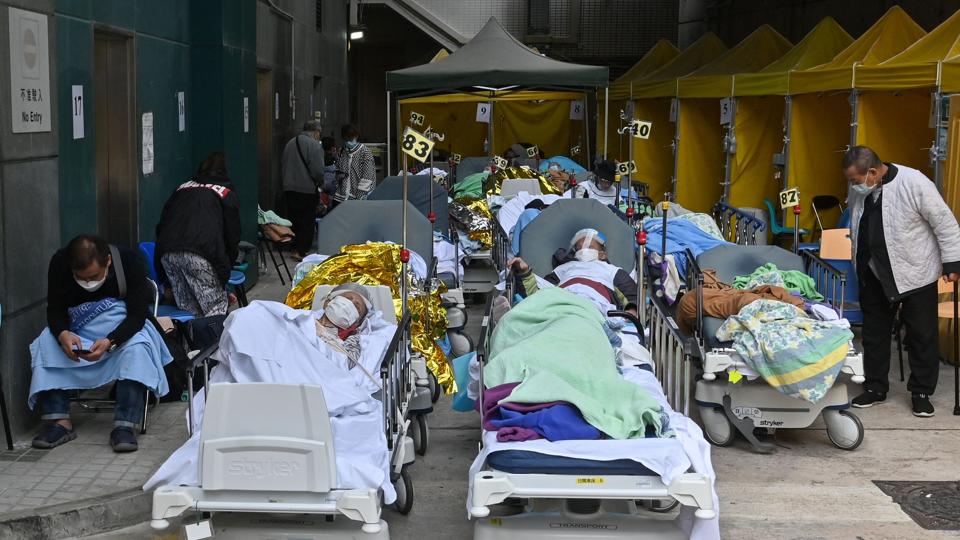
There are three factors that could explain the surge. First, some of the regions where case numbers are tracking near vertical trajectories are those that are only now seeing an outbreak of the highly transmissible Omicron variant. Among these are New Zealand and Australia, which had hitherto been more successful than others in keeping the virus out of their borders. But the newest variant of concern has demonstrated the ability to blow past the best of defences. Second, waning or suboptimal immunity: Several of the regions fared better than others in controlling past waves of infections. But that has meant much of the population immunity in these regions has been conferred only by vaccines. Dozens of robust studies have shown that the best immunity is among people who have recovered from Covid-19 and also been vaccinated. This explains why some regions with a zero-Covid policy, such as China, where the focus was on hard lockdowns to stamp out past outbreaks, are now recording surges in deaths as well as cases. Similarly, some European countries with early mass vaccinations avoided outbreaks in certain population groups (like the elderly) among whom waning immunity is now a growing concern. In such people, boosters, studies show, may be good for robust infection protection only for four months. Third, changing behaviour: Countries like the United Kingdom have dropped all restrictions (including mask mandates), which has led to a natural uptick in cases.
There is, however, an unknown that scientists are still tracking: Evolution. Recombination viruses of Omicron’s BA.1 and BA.2 lineages are under the scanner, as are versions that appear to be a mix of Delta and Omicron. These are, to be sure, a natural outcome of evolutionary trajectories. Nonetheless, tracking these will be crucial. Even minor genomic switches could confer on the virus the ability to spread faster, be more resistant or lead to worse sickness (or demonstrate a combination of any of these characteristics). It will now be crucial to keep an eye on these signals, globally as well as in India.


