
 E-Paper



What the hijab decision entails
Karnataka authorities must ensure that access to education is not denied to Muslim women

 Prefer HTon Google


Is the hijab an essential practice enshrined in Islam and is the Karnataka government violating constitutional rights by asking students to stick to school uniform? According to the Karnataka high court (HC), the answer to both questions is a resounding no. In a verdict on Tuesday, a three-judge bench dismissed petitions by female students who were barred by their colleges from wearing the hijab while attending classes. The court offered three reasons for its ruling: One, the hijab was not dictated by Islamic rule or the Quran and was mainly a cultural phenomenon that couldn’t pass the test of essentiality, as devised by the Supreme Court. Two, the State has the power to decide what students should wear in the classroom and can delegate that power to colleges. And three, the prescription of a uniform for classrooms was reasonable and did not violate any constitutionally protected rights.
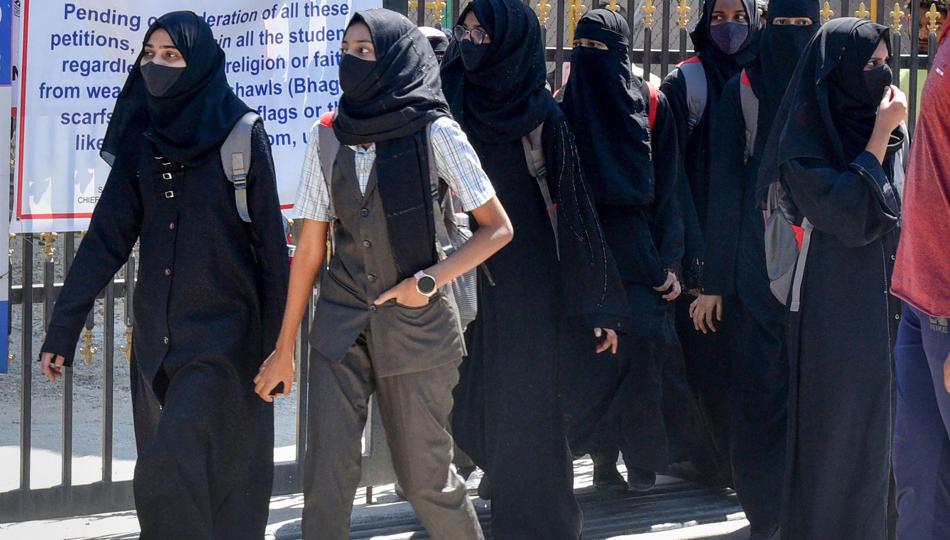
This is the first time that a constitutional court in India has assessed the practice of wearing the hijab on the touchstone of essential practices. Just like with the 2018 Sabarimala verdict, its decision is unlikely to stem the swirling row – the petitioners have decided to approach the Supreme Court, some women have been refused entry into examination halls because they refused to remove the hijab and mobilisation on this issue is unlikely to die down anytime soon. Two points merit attention. In its closing paragraphs, the judges point to “unseen hands” that fomented unrest. It should not escape scrutiny that the ban on hijab came suddenly, in the middle of the academic session, and after years of local communities negotiating relaxations in the uniform code. It is also instructive that the incidents happened in a communally sensitive region where the discourse has become increasingly polarised.
The biggest casualty in the whole row is the education of vulnerable women. Government data shows Muslim women suffer from poor educational indices and school enrolment, with numbers far below the national average, and greatly depend on government institutions. To deny them education, and, therefore, an avenue to stand up to patriarchy, orthodoxy and poverty is a travesty. The HC has confirmed the right of schools to decide on uniforms but they should take into account the socioeconomic backgrounds of the students, and work to ensure that they are not forced to drop out. History and contemporary examples show that educated and empowered women are the best antidotes to dogma and orthodoxy. No one should stand in their way.


