
 E-Paper



What the Supreme Court order on UCC reveals
Affirming the power of states to set up panels exploring UCC may have political ramifications

 Prefer HTon Google


Article 162 of the Constitution gives state governments the power to legislate on subjects where a central law, which automatically gains precedence, does not occupy the field. The Supreme Court on Monday used this key provision to reject a batch of petitions challenging the move by certain states to set up committees to explore the feasibility of implementing a uniform civil code (UCC) in their respective administrative jurisdictions. The top court noted that the concurrent list – which comprises issues on which the Union and the state governments can legislate – contains questions of marriage and divorce, infants and minors, adoption, wills, intestacy and succession, joint family and partition. Since these issues are at the heart of the debate over UCC – currently, a patchwork of personal faith-based laws, in addition to some secular pieces of legislation which govern this field – the court noted that there was no legal infirmity in the constitution of panels to examine the feasibility of UCC.
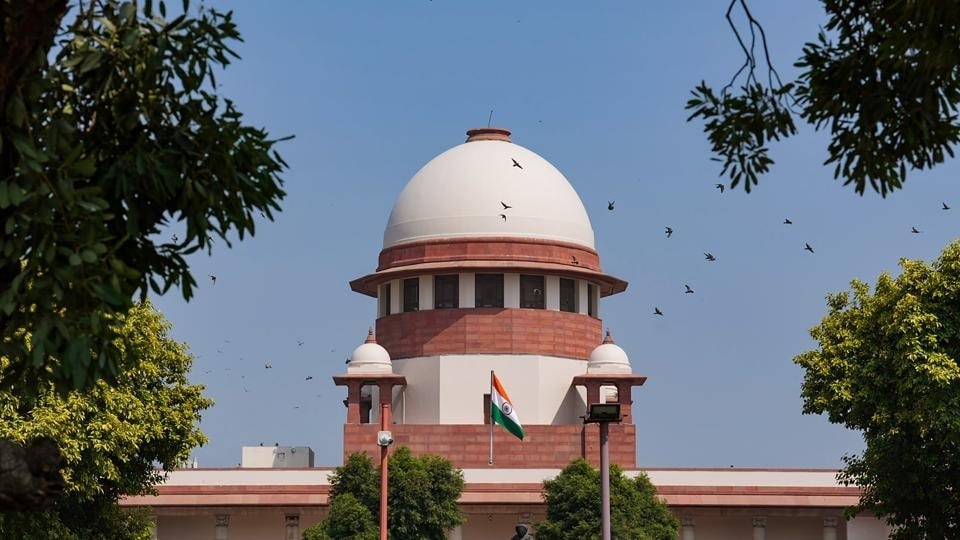
Two caveats are important. One, this is not an endorsement of UCC. Just last week, a bench led by Chief Justice of India Dhananjaya Y Chandrachud said that having uniform laws on marriage, divorce, succession, adoption and maintenance is a matter for Parliament to consider, and that the apex court could not tell Parliament what laws to enact. And two, this is merely an examination of whether a state government has the power to examine possible laws related to marriage, divorce, adoption and inheritance, among others. This doesn’t mean that the court has upheld UCC, simply because there exists no such common law, either at the national or the state level. In some ways, an analogy can be drawn to the cluster of laws passed in recent years by Bharatiya Janata Party (BJP)-ruled states against forced conversions. Many of these statutes deal with marriage, and the state has the power to enact them, but that doesn’t mean they aren’t being challenged on grounds of constitutionality, right to religion, privacy or against discrimination.
UCC has been a core ideological objective of the BJP for decades, and it is only recently that some BJP-ruled states have constituted panels to explore a common code. Legal and ideological debate aside, the move appeared geared for explicitly political ends, especially given that most of them came months before scheduled elections. What remains to be seen is whether any of these states (or the Union) actually move towards enacting a law on this controversial subject, and whether the court’s order opens the doors for more states to undertake political signalling.


