
 E-Paper



Bidding adieu to the current inflation series | Number Theory
.
Updated on: Jan 17, 2026, 08:49:01 IST

 Prefer HTon Google
Share via


Copy link

The National Statistical Office (NSO) released Consumer Price Index (CPI) data for the month of December on Monday. The NSO release also said that this would be the last monthly release under the current series and the next retail inflation number would begin a new series. Revision of data series such as inflation and GDP is a regular statistical practice to ensure that they are in sync with the changes in the economy. Having said this, it is worth looking at India’s retail inflation trajectory – and also the benchmark inflation rate for inflation targeting framework – under the current series which lasted from January 2011 to December 2025.
Bidding adieu to the current inflation series
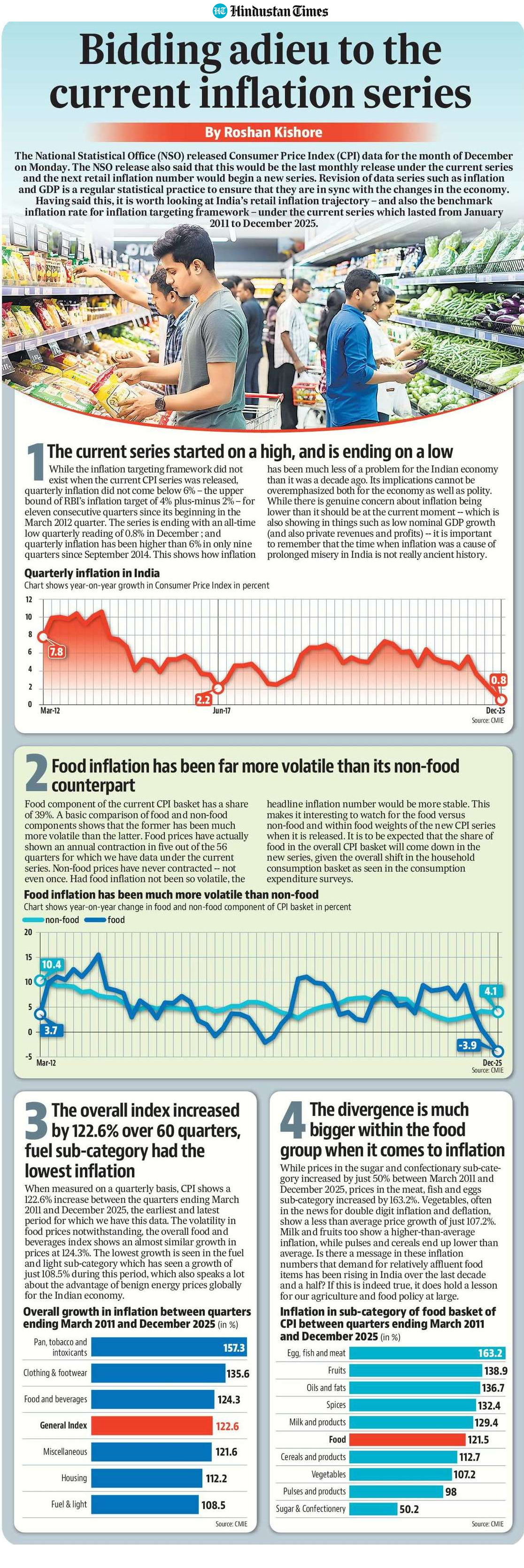
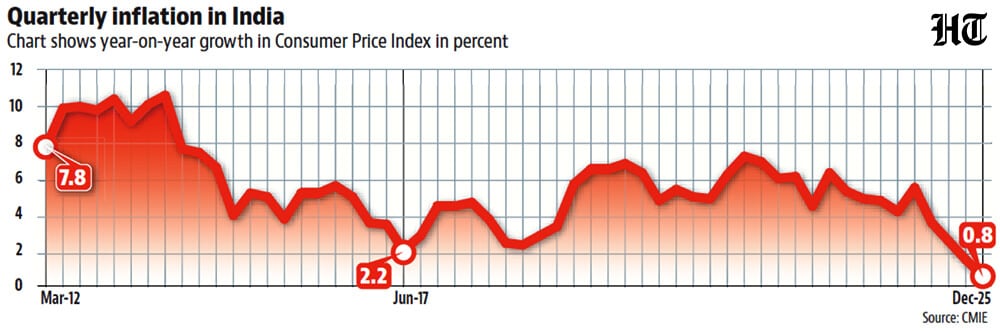
 The current series started on a high, and is ending on a lowWhile the inflation targeting framework did not exist when the current CPI series was released, quarterly inflation did not come below 6% – the upper bound of RBI’s inflation target of 4% plus-minus 2% – for eleven consecutive quarters since its beginning in the March 2012 quarter. The series is ending with an all-time low quarterly reading of 0.8% in December ; and quarterly inflation has been higher than 6% in only nine quarters since September 2014. This shows how inflation has been much less of a problem for the Indian economy than it was a decade ago. Its implications cannot be overemphasized both for the economy as well as polity. While there is genuine concern about inflation being lower than it should be at the current moment -- which is also showing in things such as low nominal GDP growth (and also private revenues and profits) -- it is important to remember that the time when inflation was a cause of prolonged misery in India is not really ancient history.
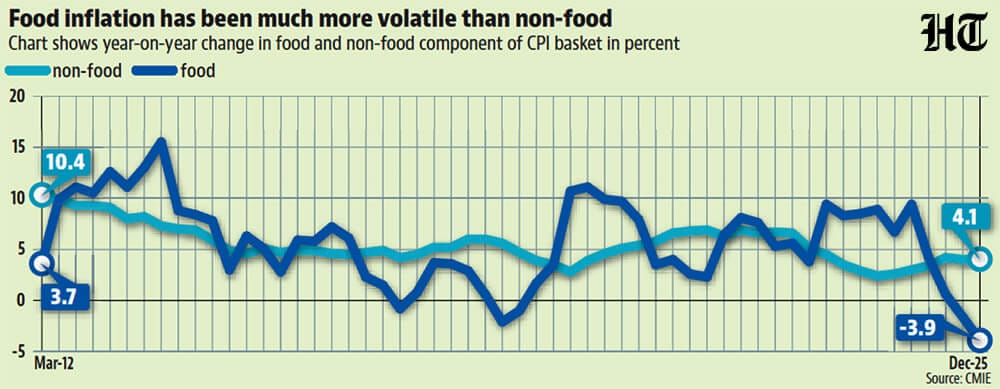
- Food inflation has been far more volatile than its non-food counterpartFood component of the current CPI basket has a share of 39%. A basic comparison of food and non-food components shows that the former has been much more volatile than the latter. Food prices have actually shown an annual contraction in five out of the 56 quarters for which we have data under the current series. Non-food prices have never contracted -- not even once. Had food inflation not been so volatile, the headline inflation number would be more stable. This makes it interesting to watch for the food versus non-food and within food weights of the new CPI series when it is released. It is to be expected that the share of food in the overall CPI basket will come down in the new series, given the overall shift in the household consumption basket as seen in the consumption expenditure surveys.
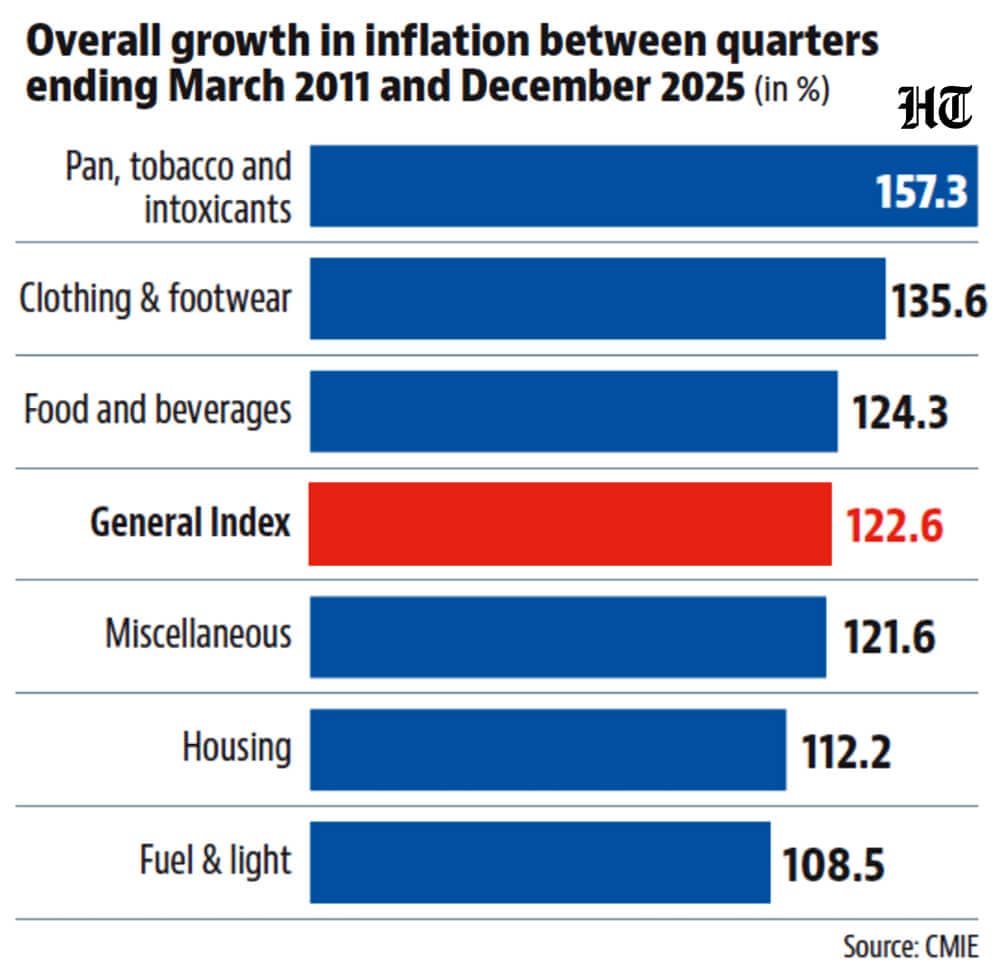
- The overall index increased by 122.6% over 60 quarters, fuel sub-category had the lowest inflationWhen measured on a quarterly basis, CPI shows a 122.6% increase between the quarters ending March 2011 and December 2025, the earliest and latest period for which we have this data. The volatility in food prices notwithstanding, the overall food and beverages index shows an almost similar growth in prices at 124.3%. The lowest growth is seen in the fuel and light sub-category which has seen a growth of just 108.5% during this period, which also speaks a lot about the advantage of benign energy prices globally for the Indian economy.
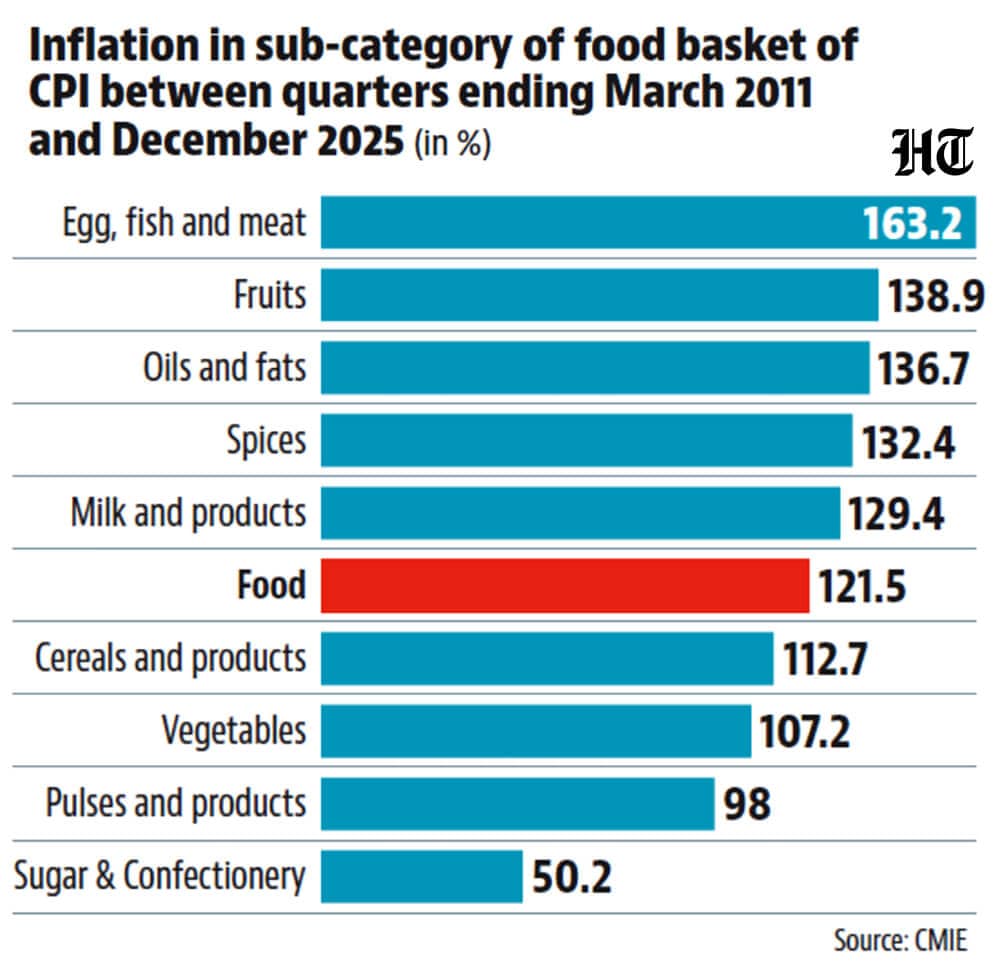
- The divergence is much bigger within the food group when it comes to inflationWhile prices in the sugar and confectionary sub-category increased by just 50% between March 2011 and December 2025, prices in the meat, fish and eggs sub-category increased by 163.2%. Vegetables, often in the news for double digit inflation and deflation, show a less than average price growth of just 107.2%. Milk and fruits too show a higher-than-average inflation, while pulses and cereals end up lower than average. Is there a message in these inflation numbers that demand for relatively affluent food items has been rising in India over the last decade and a half? If this is indeed true, it does hold a lesson for our agriculture and food policy at large.


Unlock a world of Benefits with HT! From insightful newsletters to real-time news alerts and a personalized news feed – it's all here, just a click away! -Login Now!


