E-Paper



Can the 16th Finance Commission rejuvenate fiscal federalism? | Number Theory
Fiscal year 2026-27 will mark the beginning of awards under the 16th Finance Commission (FC)

 Prefer HTon Google


Fiscal year 2026-27 will mark the beginning of awards under the 16th Finance Commission (FC). The 16th FC’s report will likely be tabled along with Sunday’s Budget. FCs are constitutionally mandated bodies that define the revenue sharing between Centre and the states every five years. Fiscal federalism is a widely debated and often emotive issue in the larger political economy space in India. Opinions and takes are often strong, although not necessarily rooted in facts. Here is a brief summary of the larger environment which characterizes fiscal federalism in India.

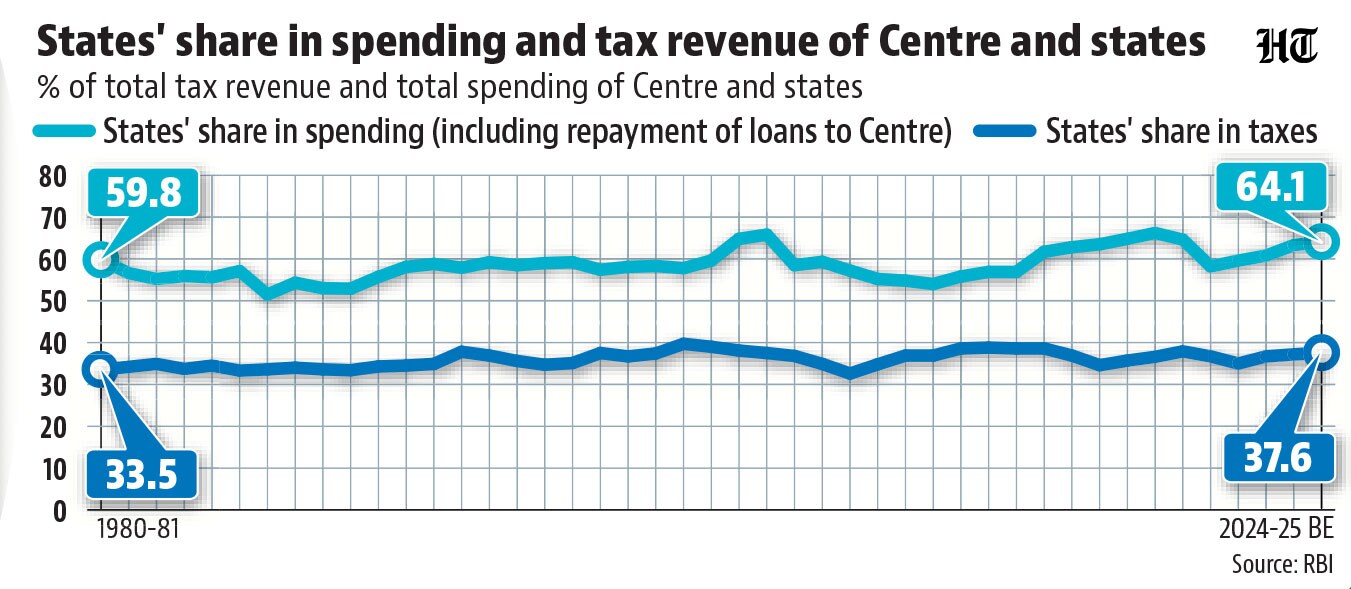
 There is a fundamental asymmetry between the Centre and the states when it comes to revenue and spendingThis lies at the heart of the fiscal federalism tension. States spend more than the Centre but raise less in taxes. The latest available numbers put the expenditure and revenue distribution between the center and states at 36%-64% and 62%-38% respectively. This means that central funds are crucial for states being able to pay for their spending.
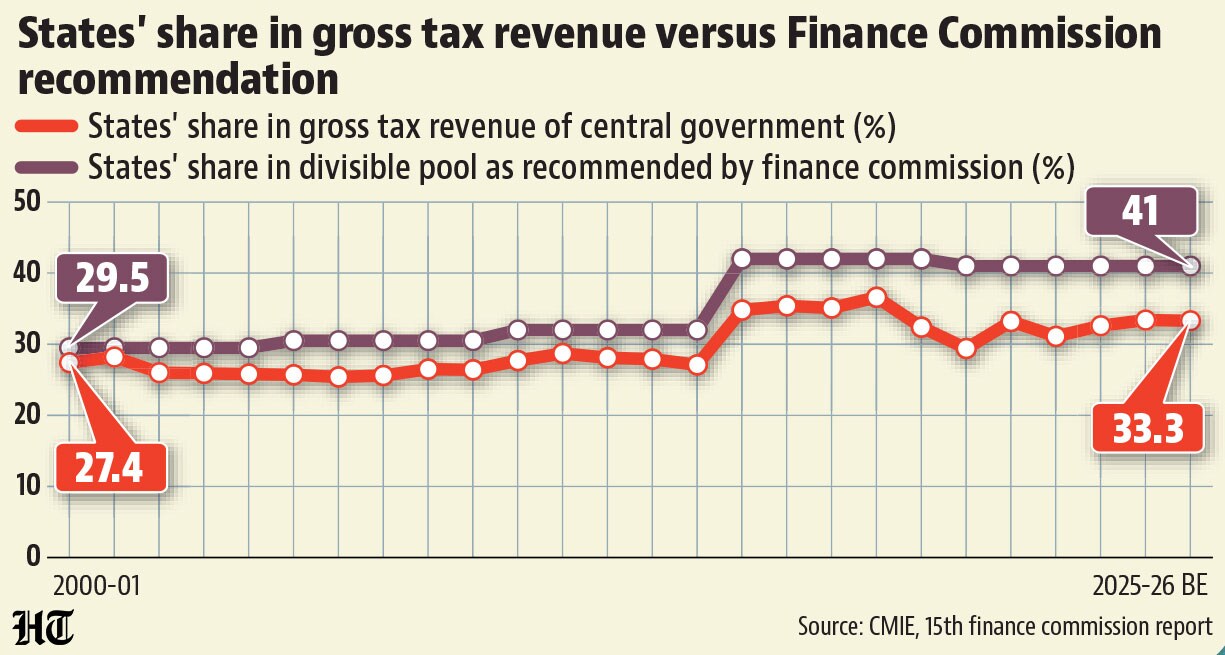
- FC awards have increased state’s share in central taxes, but the Centre has found ways to control actual devolutionsThe 14th FC increased the share of states in central taxes to 42% in 2015. This number used to be just 29.5% until the 11th FC. The 15th FC kept this arrangement intact although the headline number came down to 41% because of Jammu and Kashmir ceasing to be a state. Actual tax devolutions however, have not increased as much. They reached a peak of 36.6% in 2018-19 but have between 30%-35% since then. The reason? The Centre has shifted a part of its taxes outside what is called the divisible pool.
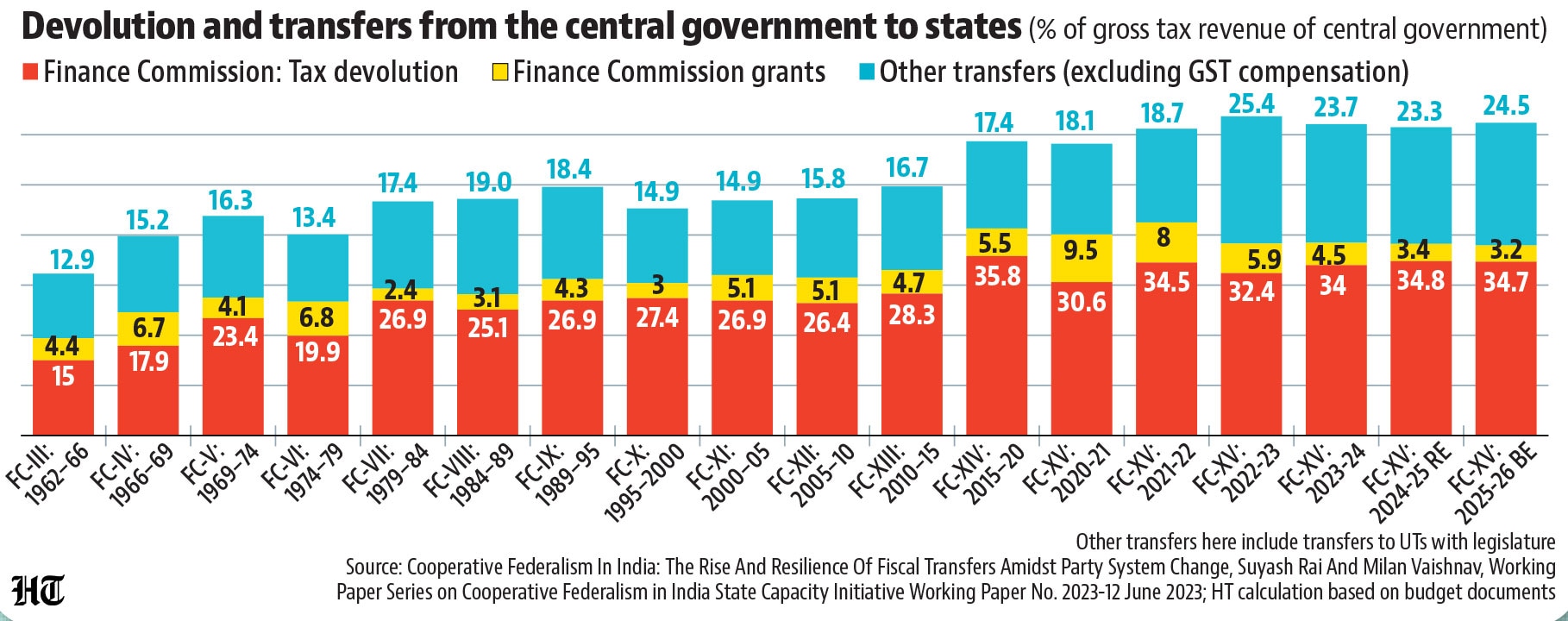
- But states are receiving much more money from the Centre thanks to other heads..This is where a lot of critical voices speaking in favour of the states tend to be economical with the truth. Tax devolutions are not the only money which the Centre sends to the states. A Carnegie India paper by Suyash Rai and Milan Vaishnav shows that once all transfers are included, the central government’s transfers to the states crossed more than 60% of its gross tax revenues. A big driver of this increase has been the growing resource allocation under various centrally sponsored schemes (CSS), which are often rolled out with political advantages in mind. But it has created a situation where the Centre is finding itself squeezed for spending money even on absolutely critical things such as defense. To be sure, a lot of the CSS money is being seen by states ruled by opposition parties as being ridden with political conditionalities which are designed to favour the BJP. The ultimate situation is the worst of both worlds: growing political heartburn and a fiscal hole at the same time.
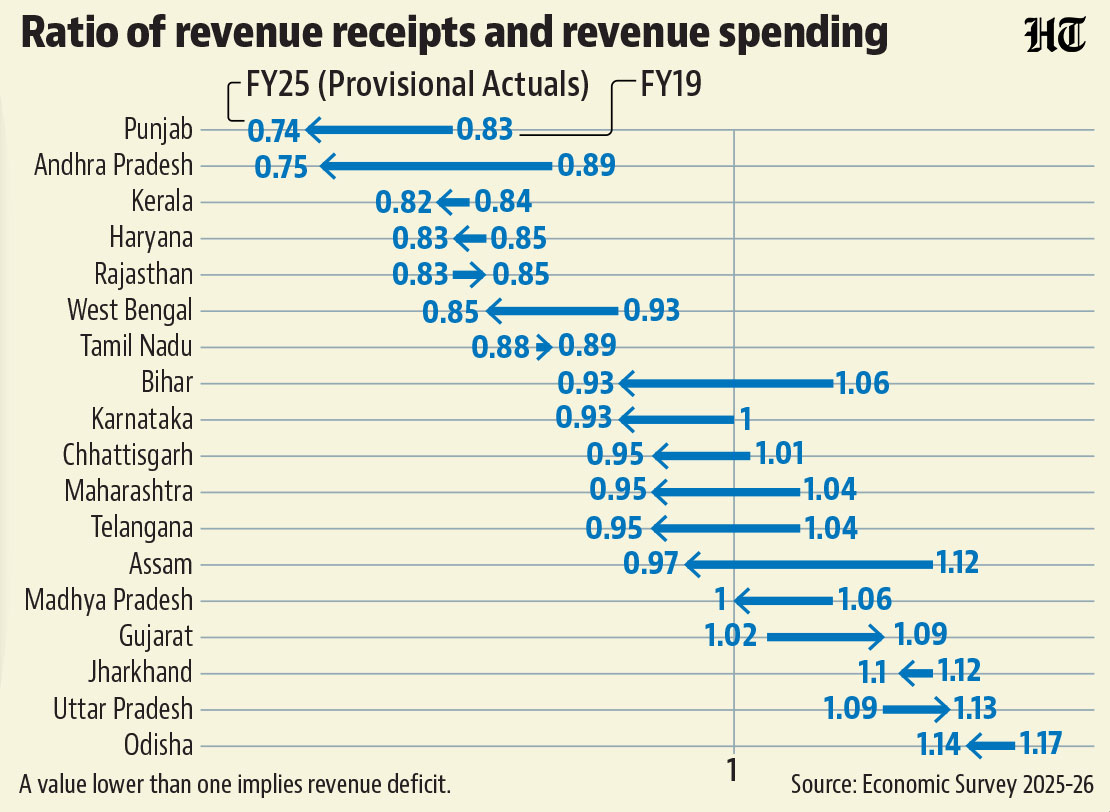
- States are also not helping their own cause by being populist when it comes to spending moneyThis is another pressing problem confronting fiscal federalism at the moment. More and more state governments are embracing populist measures such as cash transfers because they are seen as electorally useful. This is adding to their debt and diverting spending away from activities which would help long-term growth. Technically speaking, the states are bound by fiscal responsibility and budgetary management rules at the level of overall expenditure -- but are still free to spend the money as they want to. This in-principle fiscal sovereignty, however, is leading to a situation where the incentives are now aligned for states to behave in an imprudent manner. Existing market mechanisms such as yields on state bonds do not correct this misalignment.
This structural problem in India’s fiscal federalism can only be overcome by first assuaging concerns rooted in demographic and linguistic fault lies which are now increasingly aligned ; southern states feel that they are being penalised by India’s fiscal federalism framework which tends to pursue equality by directing more of central taxes raised in richer states to poorer states. It is the challenge of pulling off this balancing act which makes the FC not just a technocratic but also a statesman-like exercise. We will know on Sunday whether the 16th FC has delivered on it.