E-Paper



How important is the Muslim vote for TMC in West Bengal? | Number Theory
This three-part data journalism series will answer questions to facilitate an informed discussion on the political dynamics in the state elections

 Prefer HTon Google


West Bengal will vote in two phases on April 23 and 29 to elect a new assembly. After the publication of post-adjudication electoral rolls in the state, it is now clear that the Special Intensive Revision (SIR) exercise has led to a disproportionately high exclusion of Muslim voters in the state, a trend which has not been seen in any state which has undergone SIR so far and has released district-level data (to be sure, none of the other states went through the adjudication process). Given the fact that Muslims are unlikely to vote for the Bharatiya Janata Party (BJP), this has led to an unprecedented weaponisation of the Muslim vote question in these elections.
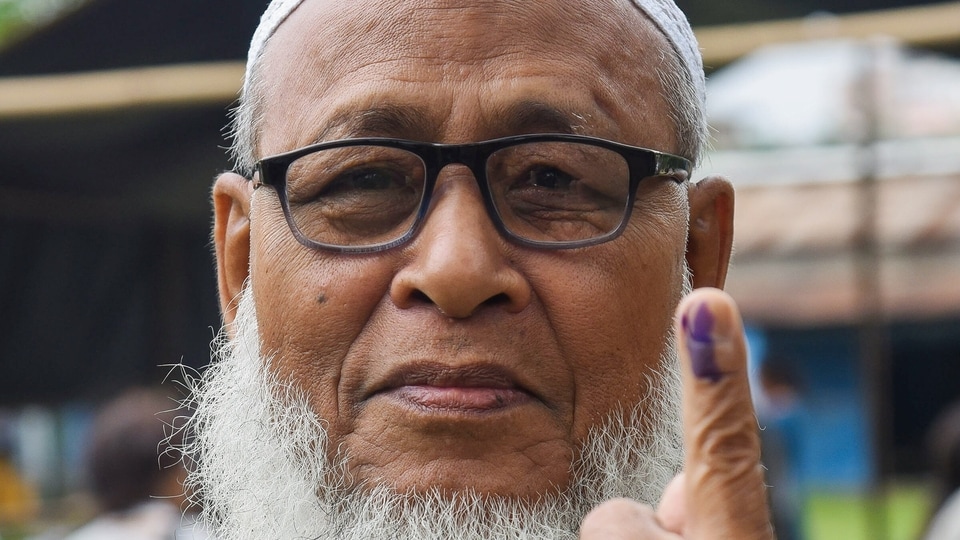
How important is the Muslim vote in the state for the ruling Trinamool Congress (TMC)? How has Muslim politics evolved historically in West Bengal? What has been the historical trajectory and spread of Muslim population in the state? This three-part data journalism series will answer exactly these three questions to facilitate an informed discussion on the political dynamics in these elections.
 TMC-BJP vote gap increases once the contest enters Muslim majority districtsAccording to the 2011 census data, 27% of West Bengal’s population is Muslim. The Muslim population in the state is not distributed uniformly. The district-wise share of Muslims varies from 5.7% in Darjeeling (the lowest) to 66.3% in Murshidabad (the highest) . How does this skew manifest itself in the state’s political competition? A good way to look at it is by comparing district-wise cumulative vote share of the TMC and BJP in the state with a the rising share of Muslims in the population. Data clearly shows that a large part of the TMC’s edge vis-a-vis the BJP is thanks to the former’s dominance in districts with higher Muslim population share.
- TMC’s advantage among Muslims was the most critical in 2019 Lok Sabha electionsWhile district-wise vote shares are useful to understand the regional skew in religious support patterns, it has limitations when it comes to distilling down to constituency level contests. This is because we do not have constituency level population data disaggregated by religion. One way to ascertain the dominance of Muslim voters in a constituency is to see whether a constituency has continuously elected a Muslim. An HT analysis of West Bengal assembly result data shows that 39 out of the state’s 294 assembly constituencies (ACs) elected a Muslim MLA in 2011, 2016 and 2021 assembly elections. Thanks to the 2008 delimitation, pre-2011 ACs are not comparable with the existing ones. The TMC has won a majority of both Muslim electing and non-Muslim electing ACs in all three assembly and three Lok Sabha elections since 2011. However, its lead in the non-Muslim electing ACs shrank to just 11 in the 2019 Lok Sabha when the BJP stunned the TMC by winning 18 out of the 42 Parliamentary Constituencies (PCs) in the state, just 4 short of the TMC’s total. It was the TMC’s massive 33-1 lead over the BJP in the Muslim electing ACs which saved the day for it in 2019. In the two post-2019 elections, the TMC has recovered a large part of the ground it lost to the BJP in 2019 even in the non-Muslim electing ACs.
- TMC has made large inroads in the Muslim vote in West Bengal the past two decadesThe TMC, which was originally formed as a breakaway group from the Congress in 1998, contested its first assembly election in 2001. Between the 2001 and 2021 assembly election, the TMC has increased its vote share and seat share count by 17.4 and 52.7 percentage points. How much of this support can be attributed to the TMC’s support among Muslims in the state? A good way is to look at the TMC’s cumulative vote share across districts arranged in ascending share of Muslim population in every assembly election since 2001. The results are unambiguous: the TMC’s support in Muslim majority districts increased continuously and reached a peak in 2021.
- What this means...The data is clear. TMC’s political dominance in West Bengal critically depends on its overwhelming support among Muslims.