
 E-Paper



Is AI a 'first world problem' right now? | Number Theory
What do people at large think about AI though? Most of the debate around the technology, is extremely nerdy, of course
Updated on: Sep 18, 2026, 06:33:34 IST

 Prefer HTon Google
Share via


Copy link

The debate on AI in the public sphere has moved from whether it will take our jobs to whether it will it kill us all. People and companies leading the AI roll-out including the likes of Anthropic chief Dario Amodei have gone on record to say that AI development needs to be calibrated lest the technology goes rogue. Such statements have drawn supports from other industry leaders such as Elon Musk and Sam Altman. What do people at large think about AI though? Most of the debate around the technology, is extremely nerdy, of course. A recently released survey conducted by Pew Research Center, a US-based non-profit gives some interesting insights into the question.
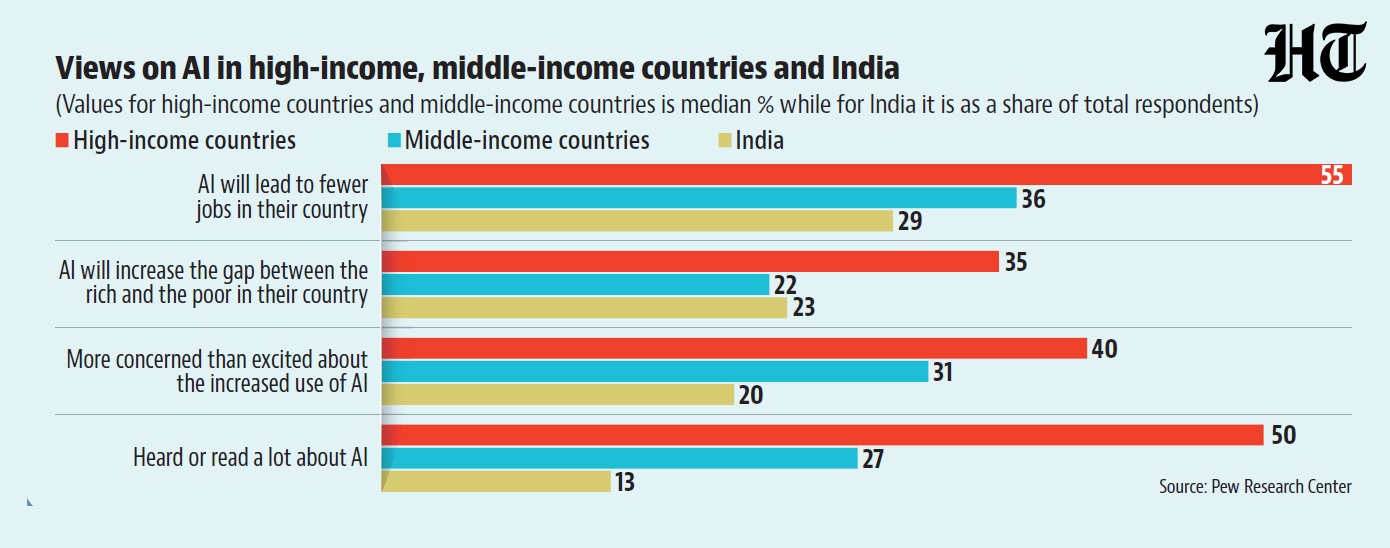
 High-income countries show a larger fear of AIPew’s findings show that apprehensions vis-à-vis AI are much larger in high-income countries than in middle-income countries. The survey was done in 37 high-income and middle-income countries, and the latter cohort also includes India. The pattern holds in responses across a range of questions including overall concern vis-à-vis the technology as well as things such as job-losses and rise in inequality. India actually shows lower apprehensions vis-à-vis AI than middle-income countries as a whole in the survey. Do these statistics mean that AI is a proverbial first world problem at the moment? There is a catch here.
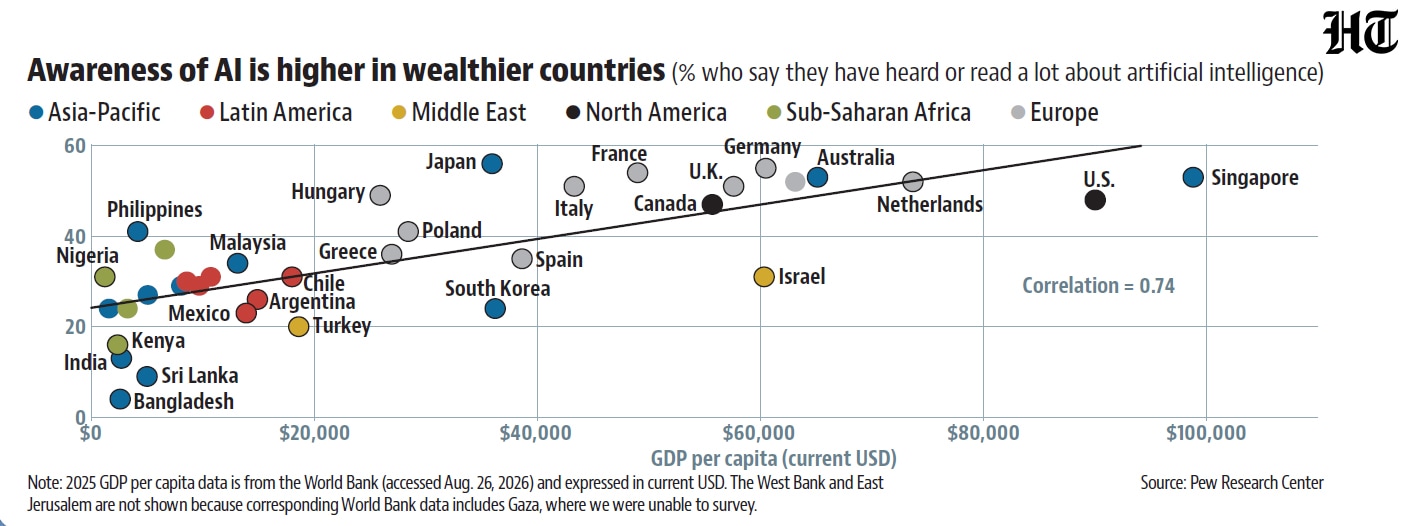
- High-income countries have a lot more awareness about AI than their middle-income peersLower levels of apprehensions vis-à-vis AI in relatively poorer countries could be the classic case of ignorance being bliss. The Pew Survey questionnaire also sought responses on awareness about AI along with views on its potential pros and cons. The data is clear. Respondents in high income countries are significantly more aware of AI than the ones in middle incomes countries. This lends itself to a possibility that people in middle income countries are not as worried about AI because they do not really know what it can entail. Some of the data from the survey, such as respondents in countries such as Pakistan and Bangladesh feeling extremely confident about their country being able to regulate AI underlines this theory. This particular question does not have data from India. India is ranked 34th among 37 countries in the survey where respondents have heard/read a lot about AI.
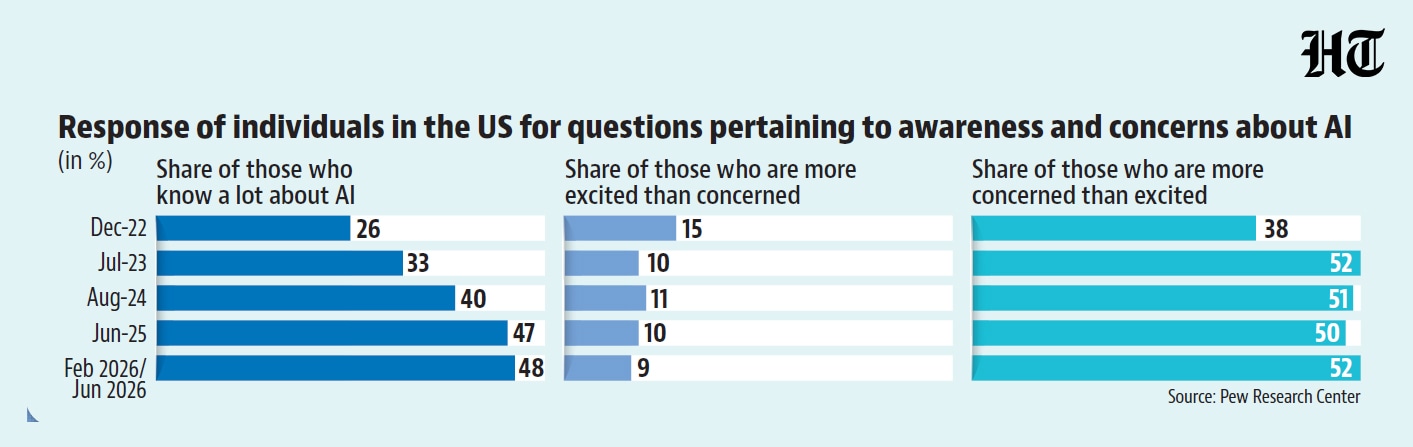
- Data also shows that rising awareness adds to apprehensions vis-à-vis AIWhile the Pew Survey data has only one or two rounds of responses for most countries, it actually has four rounds of data for the US from 2022 onwards. What the data shows is a positive correlation between rising awareness about AI and increase in apprehensions about its impact. Rising awareness about AI has decreased the share of people who are excited about the technology from 15% to 9% between 2022 and 2026 and at the same time share of those who are concerned has increased significantly from 38% to 52%.
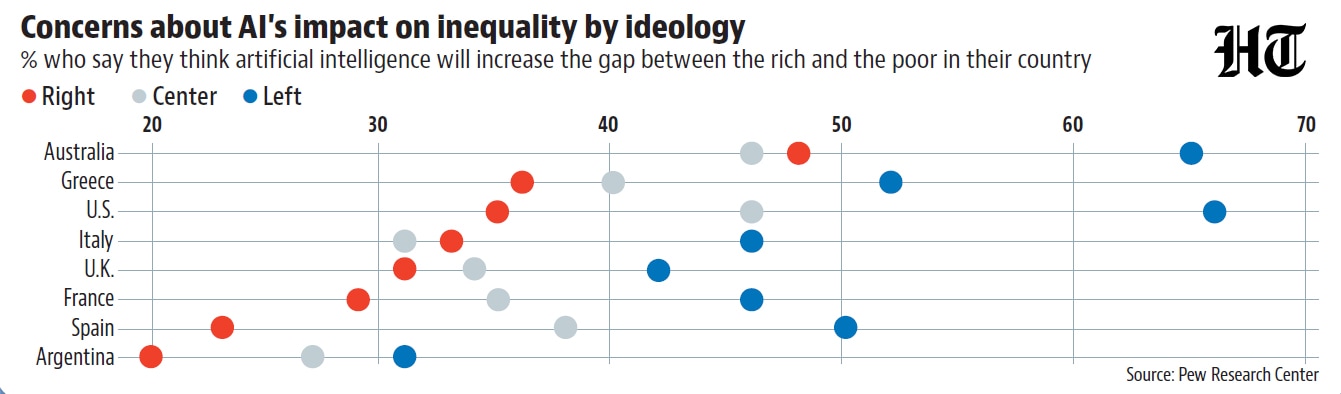
- Income/Information might not be the only thing shaping views on AI thoughWhile the Survey’s findings suggest a strong link between awareness and income levels in shaping views on AI, it is not the only factor doing so. Data shows that other factors such as political views and age-cohort also seem to matter in how people see AI. For example, those on the left were more apprehensive about AI leading to an increase in inequality than those in the Centre or on the right. Similarly, older people are more apprehensive about AI than younger ones, although concerns regarding AI are rising even in the younger population.


Unlock a world of Benefits with HT! From insightful newsletters to real-time news alerts and a personalized news feed – it's all here, just a click away! -Login Now!


