E-Paper



Number Theory: How many Indians have seen all of independent India's history
August 15 marked 77 years since India achieved independence from British colonial rule
Updated on: Aug 15, 2024, 15:50:04 IST

 Prefer HTon Google
Share via


Copy link

August 15 marked 77 years since India achieved independence from British colonial rule. This makes the country far older than many senior citizens in the country. It also means that only a small part of the country is likely to have witnessed the moment of independence. In fact, several other moments when India’s sovereignty was under threat are unlikely to have been seen by most people alive today. What is the proportion of people who have witnessed these moments firsthand? The World Population Prospects (WPP)—population projections by the United Nations—released this July can help us estimate that.
Here is what it shows.
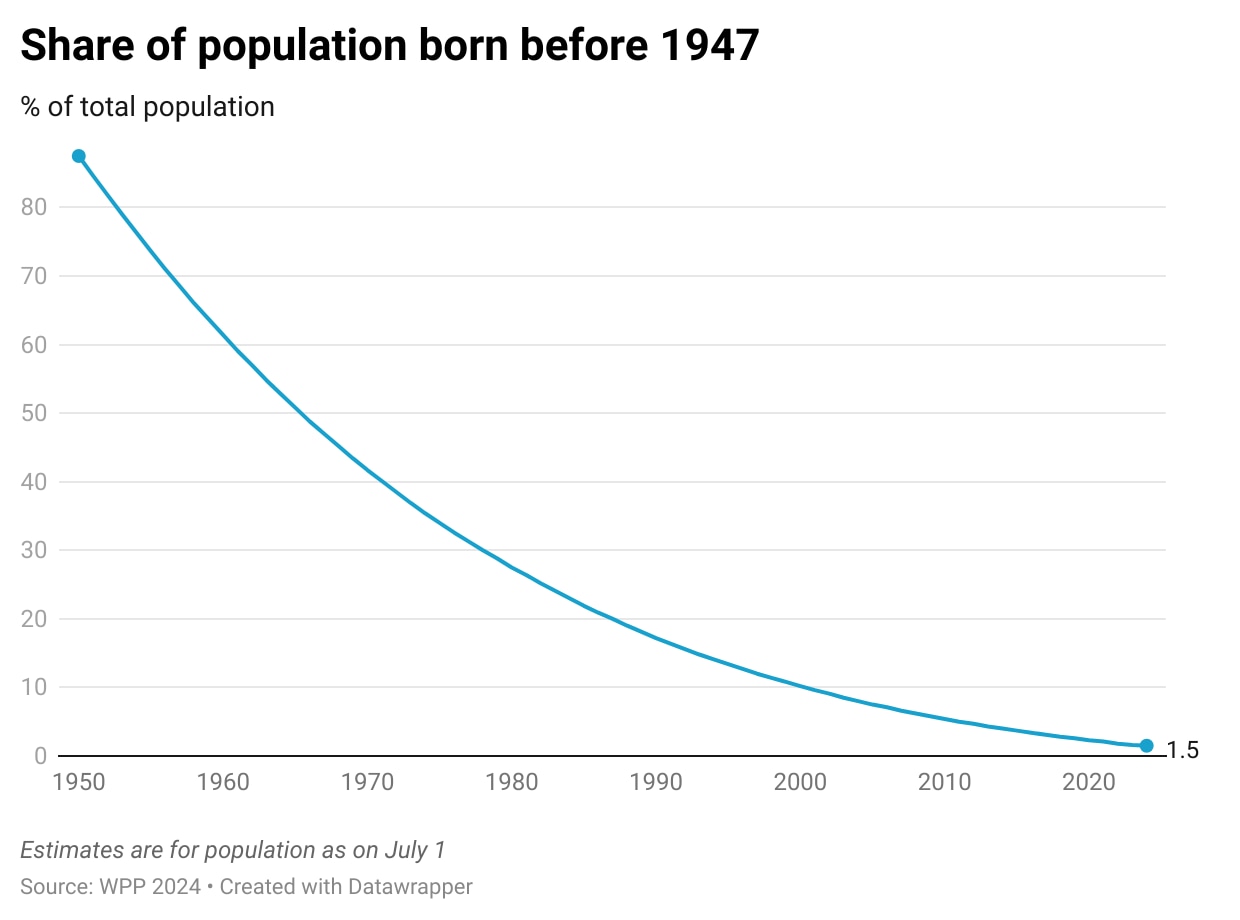
 Even in 2024, 21 million citizens are likely to have seen the first I-DayWPP data gives estimates of population, including single-age returns, for every year from 1950 to 2023 and projections from 2024 to 2100. This shows that even in 1950, just three years after Independence, only 87.5% of the population was born before 1947, a sign of the high birth and death rates back then. Both births and deaths have slowed considerably since 1947. This led the proportion of pre-Independence-born people in the population to decline slowly, but the number still stands at 1.5%. While this might appear small in comparison to the total population, it is quite larger in absolute terms: around 21 million. To be sure, one important caveat with these numbers is that projections account for migration. This means that some among the 21 million might be immigrants, and the 21 million may not account for those who emigrated, however small the number of such people may be.
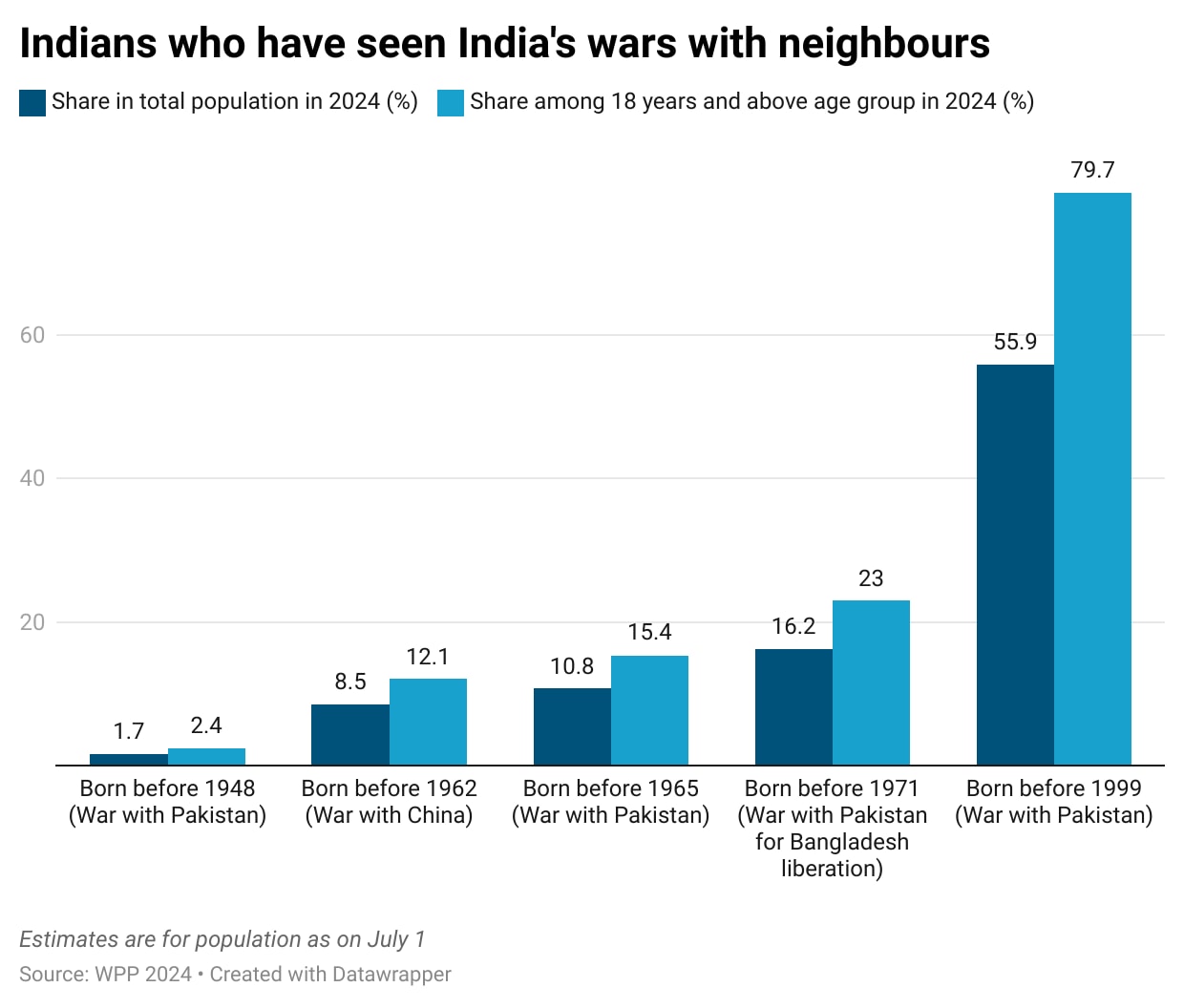
- How many have seen the wars with neighbours that came after?India has seen five wars, big and small, with its neighbours: 1948, 1965, 1971, and 1999 with Pakistan; and the war with China in 1962. Except for the most recent war in Kargil in 1999, less than half the population alive today has seen these wars. To be sure, the number is still around one-tenth of the population or more for the wars up to the 1962 war with China, and bigger if we look at the share of people who have seen these wars among voters. This trend explains why these wars are still part of the political rhetoric today.
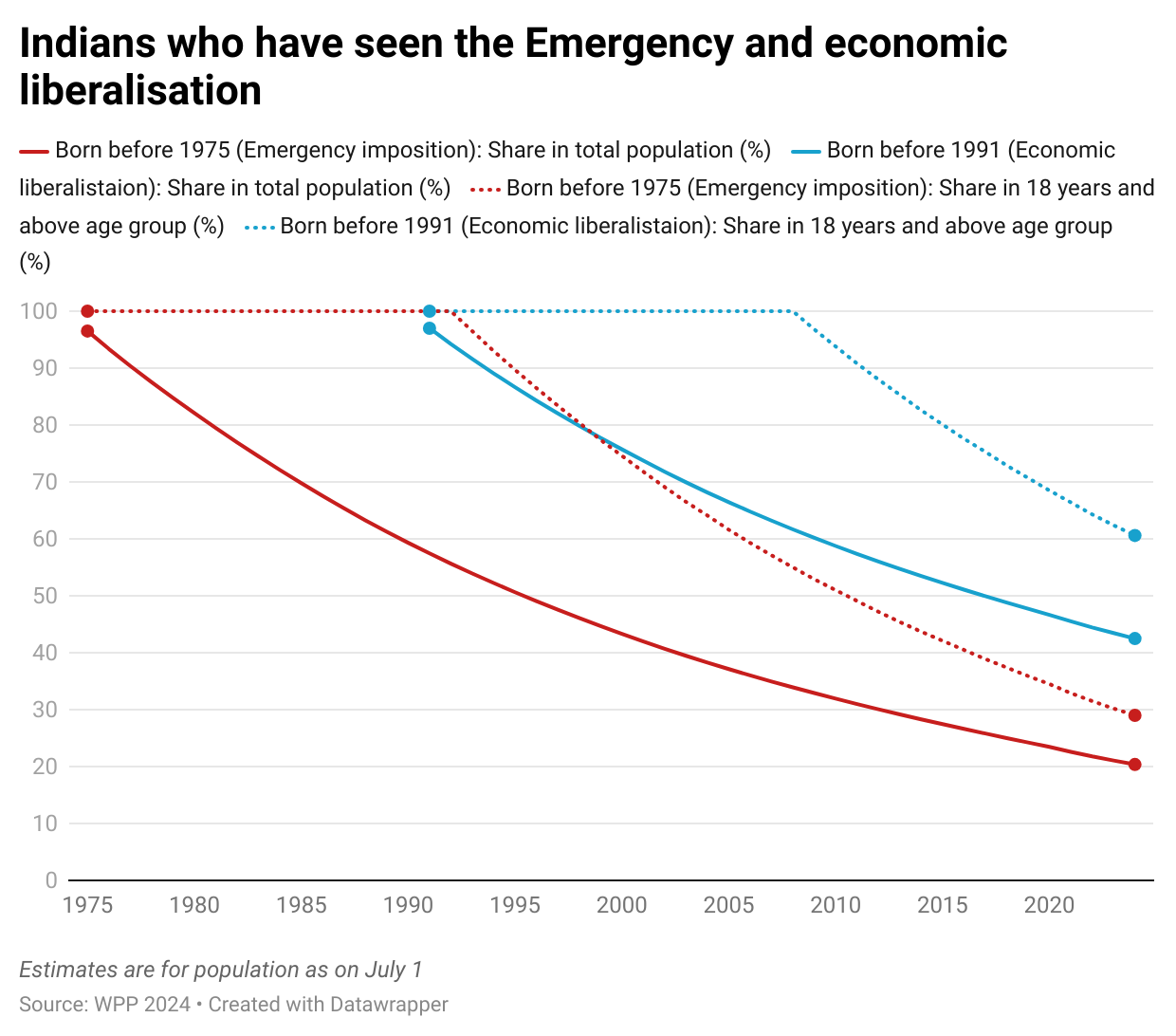
- How many have seen the Emergency or liberalisation reforms?Unlike the fight for independence against the British, internal struggles for electoral and economic freedom are more likely to be part of public memory today. For example, around 20% of the population was born before the Emergency was imposed by Indira Gandhi in 1975, and 42% of the population was born before the 1991 reforms heralded by then finance minister Manmohan Singh that liberalised the economy. Among voters, these proportions increase to 29% and 61%. This again explains why the period of or before these events is regularly invoked in the public discourse.
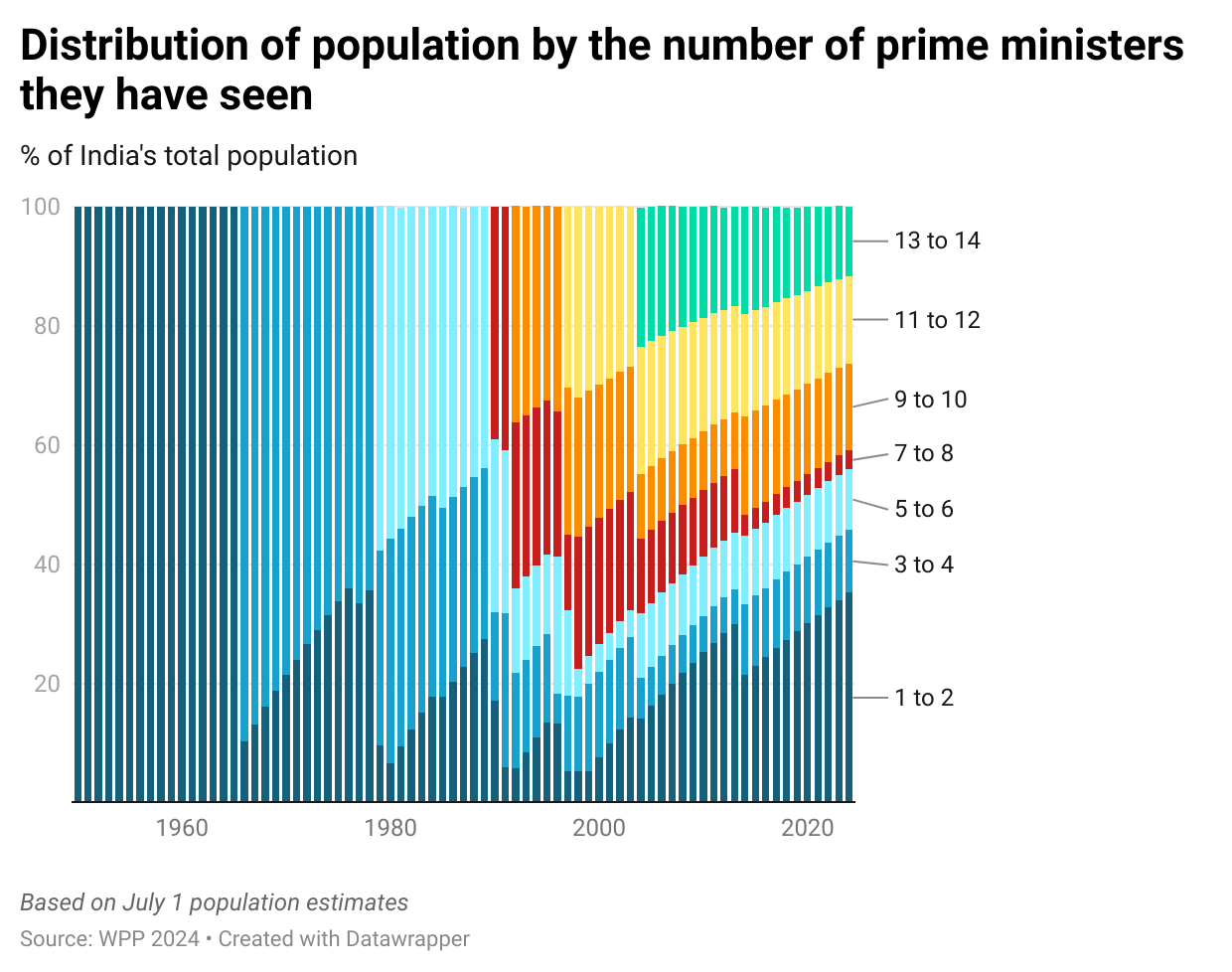
- How many have seen all 14 prime ministers?While only 1.5% of the population alive today saw the first Independence Day, the long tenure of India’s first Prime Minister, Jawaharlal Nehru, means that the proportion that has seen all of India’s 14 prime ministers is almost seven times that number—10%. To be sure, 35% of the population today has seen only up to two PMs, despite the fact that Singh and Narendra Modi have both served two full terms, and 18% has seen just Modi. Even those born during the stint of Atal Bihari Vajpayee, who preceded Singh, are unlikely to have seen the more turbulent coalitions of the 1990s. The proportion of those who have seen only up to three prime ministers stands at 48% today.