E-Paper



Number Theory: Implications of China's rise in global EV market
.
Published on: Oct 24, 2024, 08:42:59 IST

 Prefer HTon Google
Share via


Copy link

Less than a month after the European Union agreed to impose tariffs up to 45% on imports of Chinese electric vehicles (EVs), a flagship publication of the International Monetary Fund (IMF) has argued that Chinese EV imports might be crucial in reducing carbon emissions from transportation. IMF’s observations are likely to generate heartburn, if not backlash, in advanced countries, and subtly underline China’s growing prowess in the strategic global automobile market. Here are four charts which explain this in detail.
Implications of China's rise in global EV market
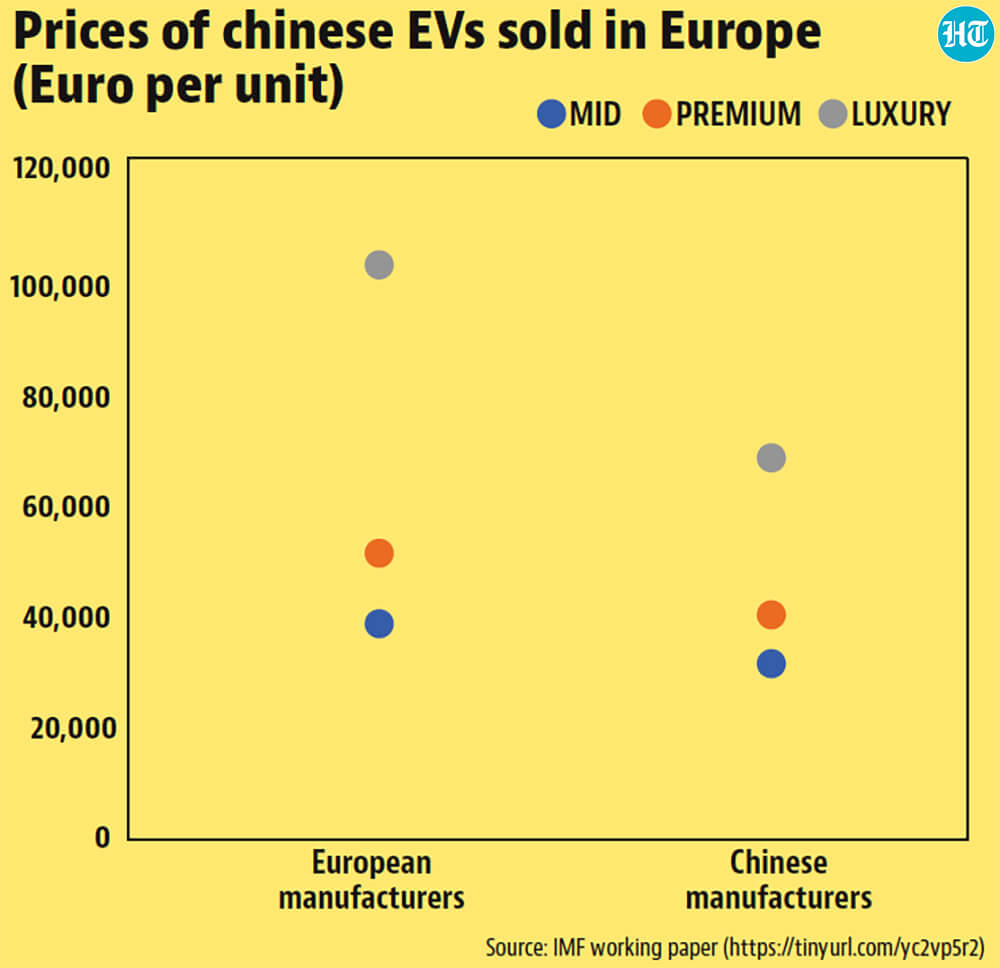
 What has IMF said about Chinese EV imports?Chapter 1 of the October 2024 World Economic Outlook of IMF has a box on the global automotive industry and the shift to EVs. While the discussion is inspired by the need to expedite a reduction in carbon emissions from transportation which it notes “have failed to decline at the same pace as those from electricity generation and industry in the past 15 years”, it acknowledges the criticality of “closing the cost and convenience gaps between EVs and conventional internal combustion engine vehicles, which is a key obstacle to a widespread adoption of EVs”. Chinese EV imports, IMF notes, will play a crucial role in achieving this goal. “The ability to import EVs from China softens the trade-offs between economic and climate goals. With fewer imported EVs, climate policies have to be more stringent to reach the same climate goal, and households’ purchasing power is reduced. Imports of EVs also redistribute gains and losses between countries specialising in car manufacturing (losing market share) and net car-importing countries (gaining purchasing power),” the WEO report says. The arguments made in WEO are based on an IMF paper published this month which shows that Chinese EVs are significantly cheaper than their European counterparts across segments.
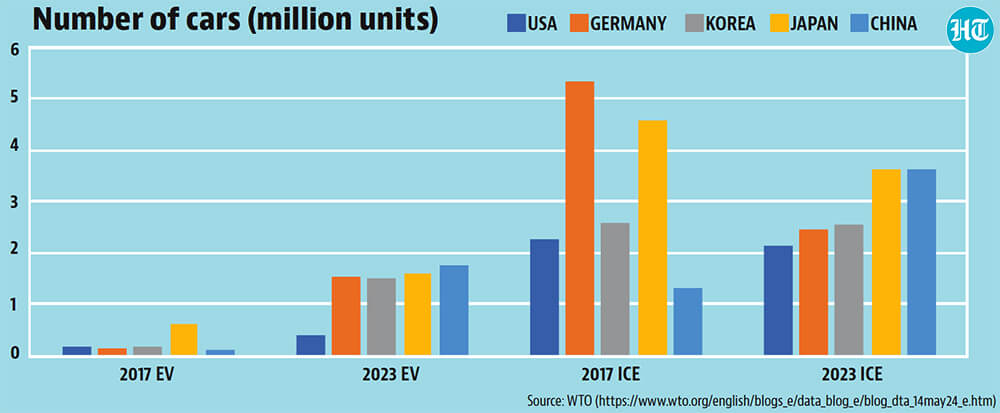
- China has made massive gains in EV exports in recent yearsData from a World Trade Organisation (WTO) blog (https://tinyurl.com/ykc8ez4u) published in May 2024 shows that China went on to become the largest car exporter in the world by number of units in 2023 from being ranked 11th in 2017. China’s global rise in car exports has been driven by EVs. While the number of internal combustion engine (ICE) vehicle exports increased by a multiple of 2.8, its EV exports increased by more than 16 times during this period. To be sure, ICE cars still exceeded the number of EVs in terms of number of units exported by China.
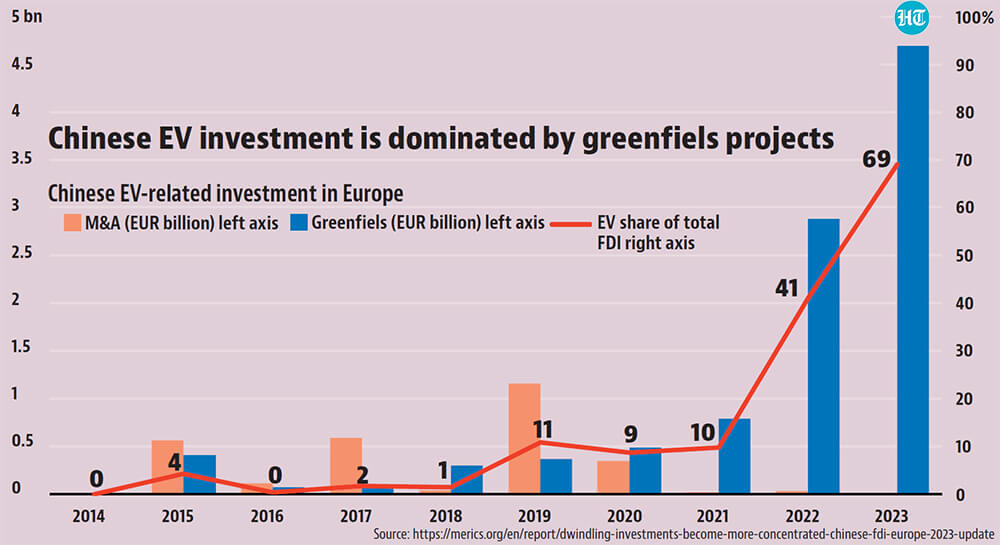
- What does this mean for the global EV market?China could do what Japan did to the global automobile industry in the 1970s, an IMF working paper (https://tinyurl.com/yc2vp5r2) published this month concludes. The paper argues that the EU’s climate-driven EV adoption policy and China’s productivity advantage over others in EVs will create a more radical disruption to the global automobile market than what Japan’s productivity advantage along with the oil shock in the 1970s delivered. The paper believes that growing protectionism in European markets will lead to a rise in Chinese FDI in EVs which has anyway seen a large increase in the last few years. According to a report by the Rhodium Group, 69% of China’s FDI in Europe was in EVs in 2023.
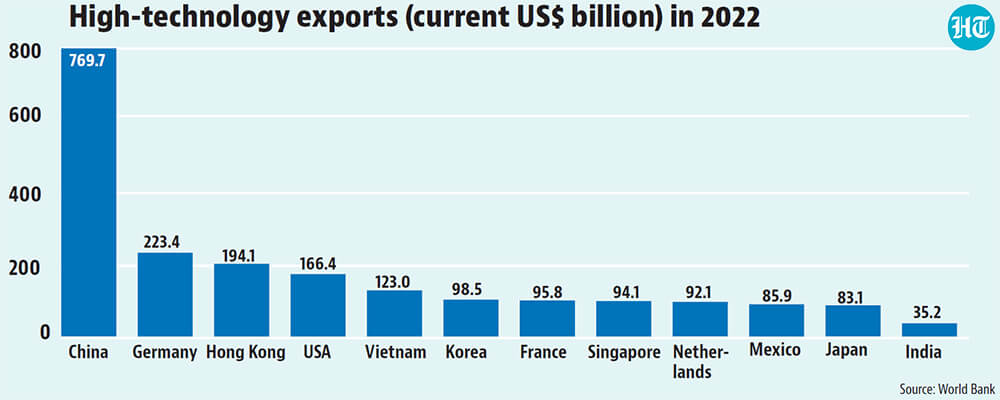
- China will continue to be a dominant exporter going forwardThis is the most important takeaway of this discussion. While the Chinese economy is clearly past its peak in terms of overall growth rates – the latest WEO projections see China’s GDP growth falling to less 5% in 2024 and less than 4% by 2027 – it will continue to be a major exporter and thereby dominate the global economy. China’s growing presence in sunrise sectors such as EVs and renewables is in keeping with its stated goal of boosting future growth by focusing on “new productive forces”. China is already the leading exporter of the world in high-technology exports in value terms and exported almost as much as the next five exporters put together. On the other hand, the growing geopolitical and tech privacy-related tensions between the US and its allies and China also means that the global economy will continue to live under the constant threat of a massive economic disruption.