E-Paper



This year's Budget: What to expect and what not to | Number Theory
Finance minister Nirmala Sitharaman will present her ninth consecutive budget today

 Prefer HTon Google


Finance minister Nirmala Sitharaman will present her ninth consecutive budget today. The Economic Survey presented on Thursday said it expects real GDP growth in 2026-27 to be around 6.8%-7.2% and the fiscal consolidation strategy is likely to continue. This leaves little interest in the immediate fiscal calculus of today’s budget. Does this make it an unimportant exercise? Far from it. The correct way to read this year’s budget is in the proper context. Here are some numbers that explain it better.
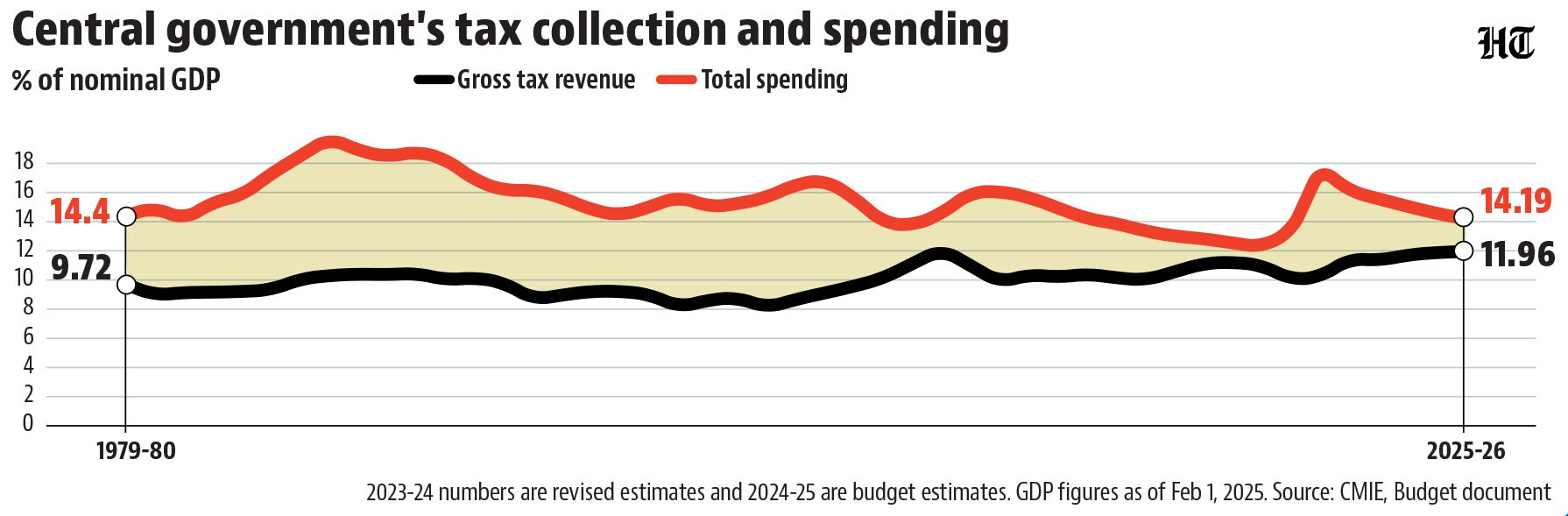
 Budgetary spending has been losing its importance relative to the economyIf one number captures the importance of the budget, it is the ratio of budgetary spending to nominal GDP. This has fallen steadily over the long term from almost 20% in the 1980s to less than 15% today. Central taxes, on the other hand, have shown an upward trajectory after losing momentum in the aftermath of the 2008 Global Financial Crisis. Given the fiscal consolidation imperative, the former cannot really increase until the latter rises sharply. This also means the budget’s impact on the economy is likely to be second-order rather than a first-order stimulus driven by spending changes.
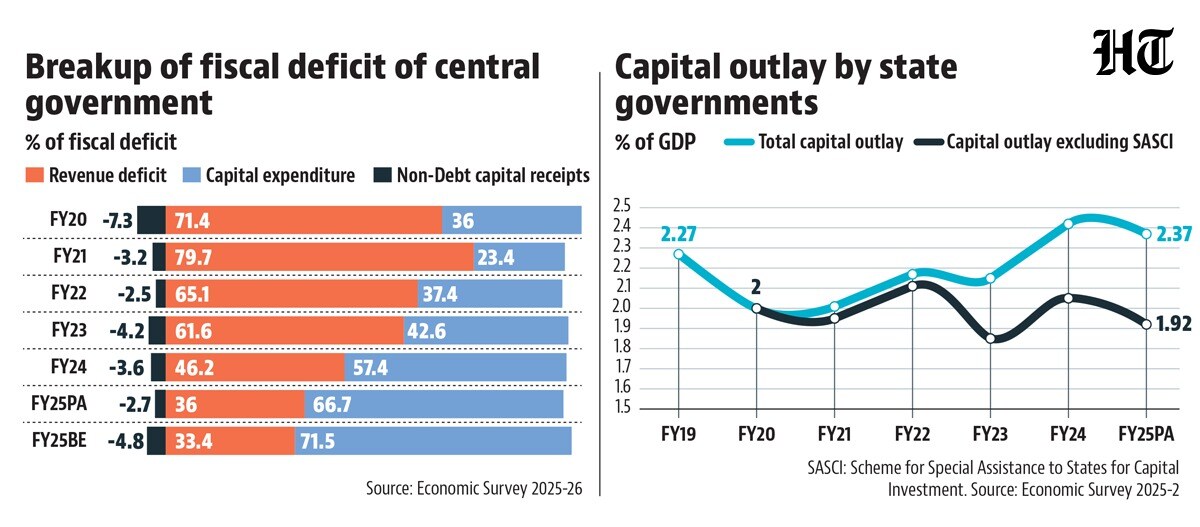
- But quality and nudges via-a-vis spending continue to play an important role in the larger economic storyThis is best explained by the budget’s approach to capital spending in the post-pandemic period. The share of capital spending in the Centre’s total expenditure increased from 12.5% in 2019-20 to 22.1% in 2025-26. More importantly, capital expenditure now accounts for more than 70% of the central fiscal deficit, compared to about 36% in 2019-20. This capital spending has played an important role in plugging infrastructural gaps, thereby adding to future growth. Through initiatives such as interest-free capital expenditure grants to states, the budget has ensured that capital spending is higher at the state level than it would have been otherwise. These measures show a larger policy focus beyond immediate numbers.
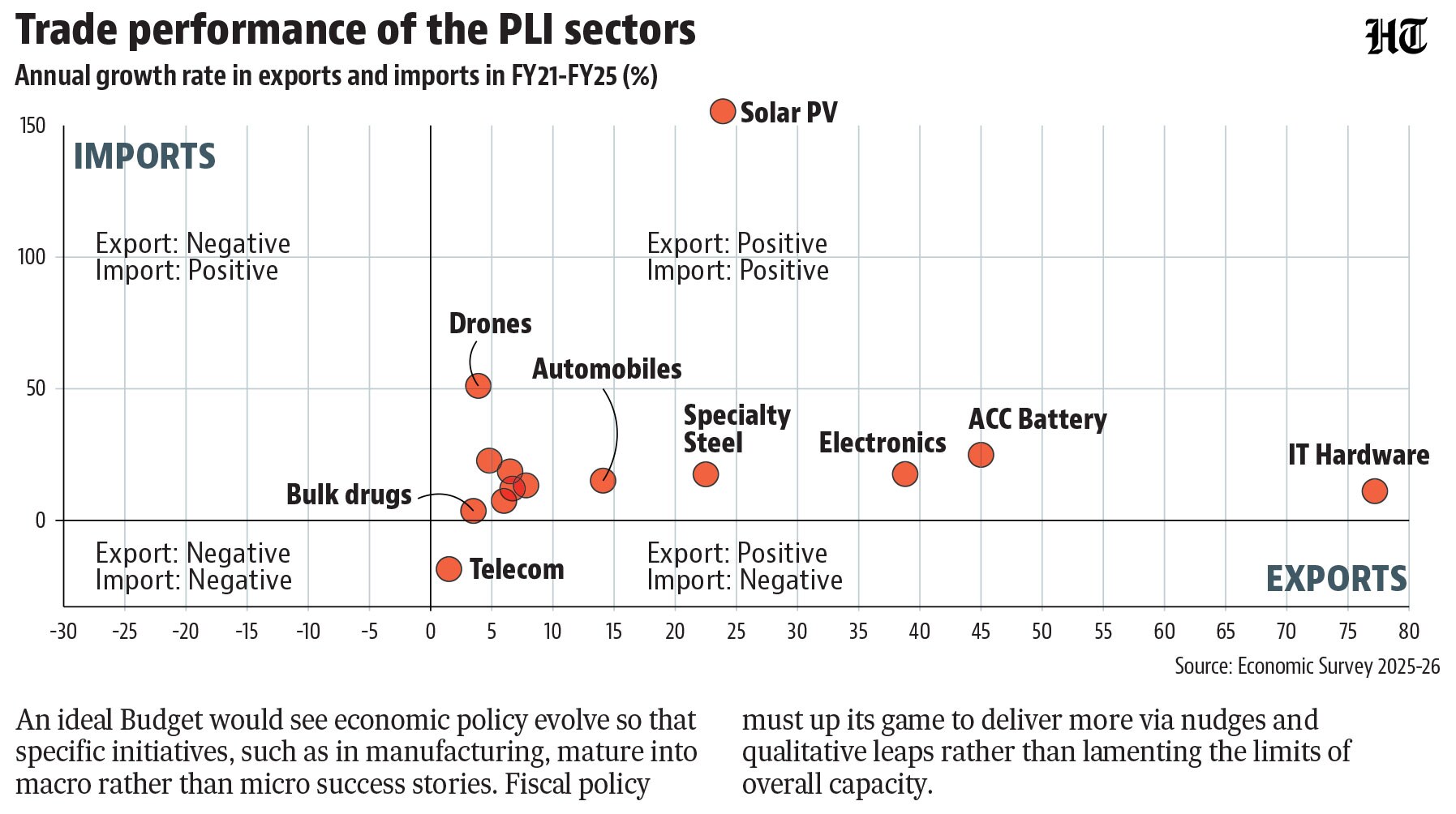
- There are real success stories from targeted policies, but a larger structural break is awaitedTake manufacturing. The government has made various efforts to boost India’s manufacturing prowess since 2014. The Production Linked Incentive (PLI) programme, launched after the pandemic, was another iteration of this pursuit. This year’s Economic Survey highlights that PLIs have been successful in many sectors, evidenced by a rise in both imports and exports following the policy. “These trends indicate a scaling up of production capacity and the integration of value chains, suggesting that domestic manufacturing is not only maturing but is also beginning to leverage imported intermediate goods to facilitate higher-value exports,” the survey said. Such gains notwithstanding, pushing manufacturing’s share in the Indian economy remains an aspirational goal. Objectives such as this ought to be considered more important budgetary goals in the medium to long term.
An ideal budget would see economic policy evolve so that specific initiatives, such as in manufacturing, mature into macro rather than micro success stories. Fiscal policy must up its game to deliver more via nudges and qualitative leaps rather than lamenting the limits of overall capacity.