
 E-Paper



The new risks in global energy security | Number Theory
.
Published on: Dec 22, 2025, 08:39:29 IST

 Prefer HTon Google
Share via


Copy link

The world’s energy consumption has been growing over time, not just because of population growth – which is expected to continue up to 2061 – but also because of increased access and consumption.
In most of history, the risk in meeting this demand came from the risk to fuel supply. However, this two-part data series shows that the nature of this risk is changing now. This first part shows that apart from increased energy consumption, the world is also diversifying its energy consumption matrix, a process projected to continue in the future. The second part will show that this changing matrix has generated a new risk: from disruptions to the supply of minerals critical to today’s energy consumption matrix.
This is the first of a two-part series on the changing nature of energy security risk. The second part will show how a shift to cleaner energy has changed energy security risk.
The new risks in global energy security
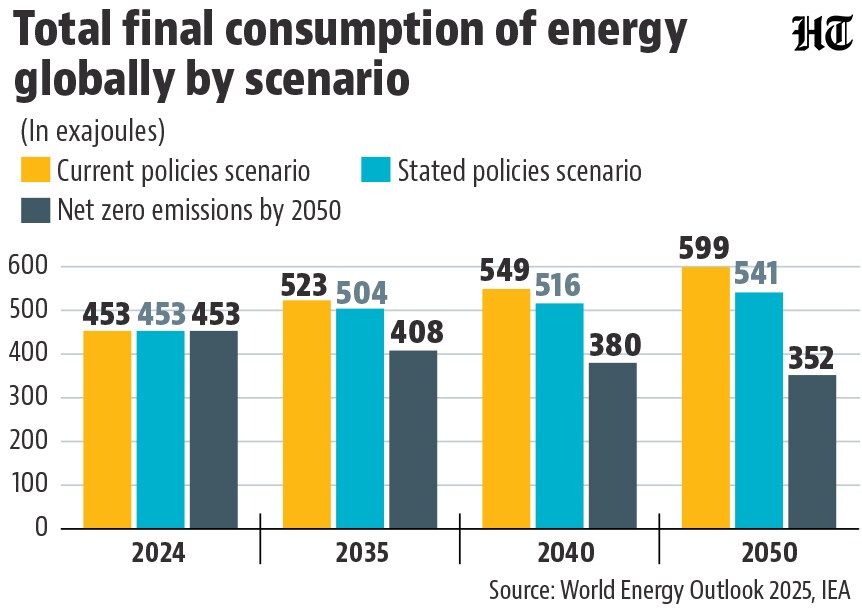
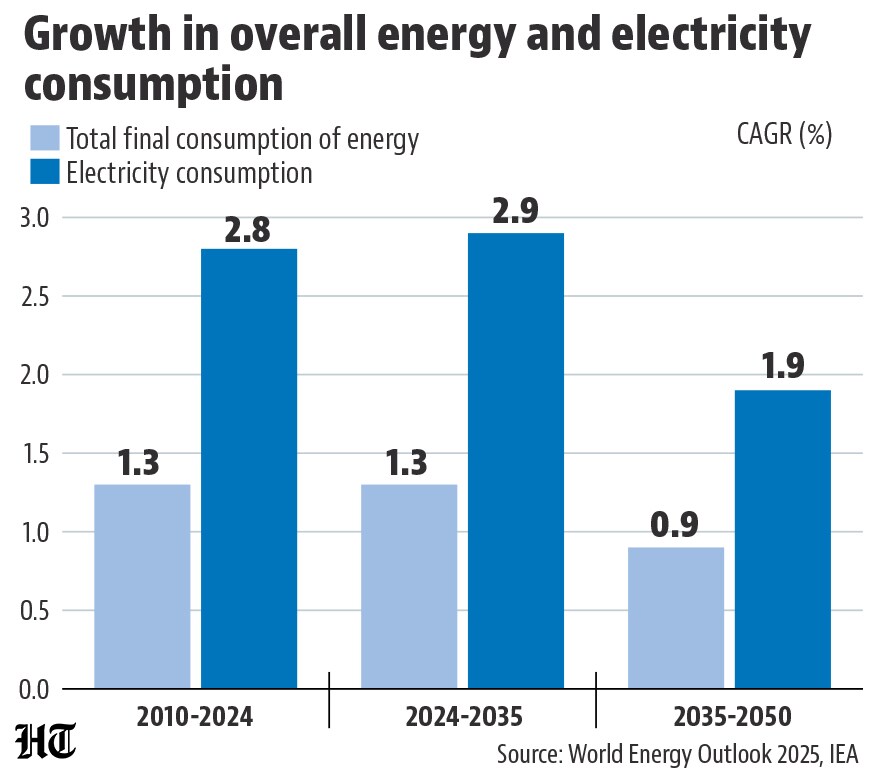
 Energy use will grow even if efficiency plans yet to be adopted are accounted forIn its World Energy Outlook (WEO) report published last month, the International Energy Agency (IEA), an intergovernmental organization that analyses trends in the energy sector and makes recommendations, projected the energy demand up to 2050. This shows that if one looks at policies already in place (Current Policies Scenario or CPS), global energy consumption is expected to continue to grow at a CAGR of 1.3% from 2024 to 2035, roughly the same rate as between 2010 and 2024, but slower than the 2.3% rate at which consumption grew between 1990 and 2010. The growth is expected to further slow down to 0.97% from 2035 to 2050, but there is growth nonetheless. Consumption is expected to grow even if one accounts for stated formal policies (Stated Policies Scenario or STEPS), which aim to make energy use more efficient but are not in operation yet. Clearly, the supply of fuel itself – whether clean or not – will continue to be important for energy security, although this risk is not expected to grow at a pace seen in the past.
- Energy consumption is going to tilt even more towards electricity…Electricity’s share in total energy consumption has already grown: from 17% in 2010 to 21% in 2024. It is expected to grow to 25% by 2035 and 29% by 2035. In the STEPS pathway this change is likely faster, with electricity’s share growing to 26% by 2035 and 31% by 2050. This is because electricity use is one reason for yielding the efficiency gains (for example, in electric vehicles) that slow down the growth in consumption. To be sure, efficiency gains or the move towards cleaner fuels for arresting global warming are not the only reasons behind this change. Some of this change is also driven by the changing nature of the world economy. The latest example of this is the proliferation in data centres, which accounted for 1.5% of electricity consumption in 2024, and are expected to account for 3% by 2030.
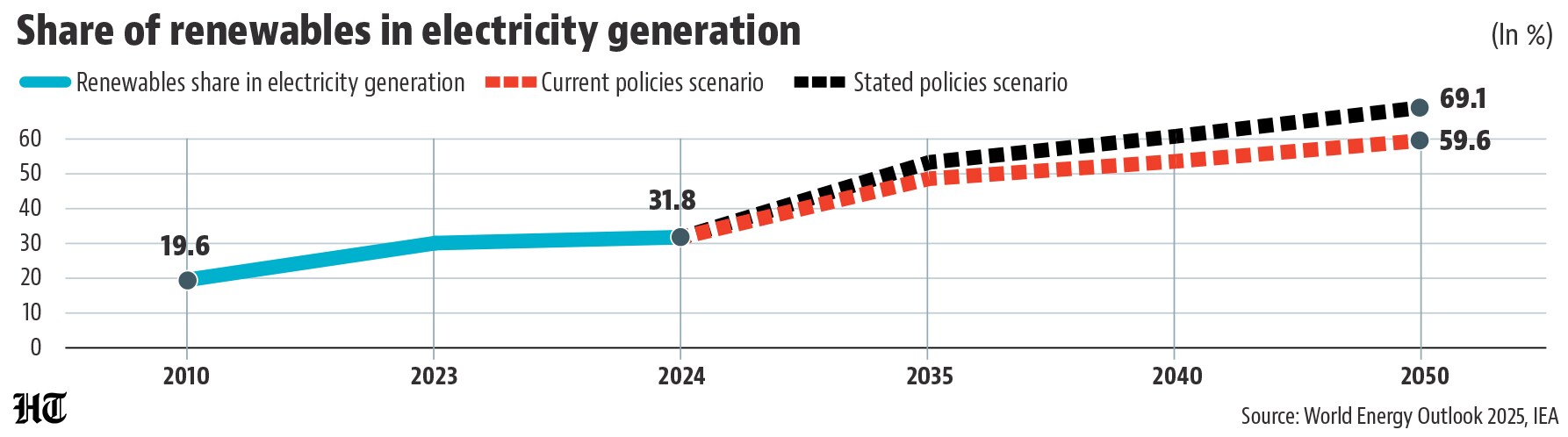
- …which is increasingly being generated from renewable sourcesTwenty per cent of electricity generated in 2010 was from renewable sources. This proportion increased to 32% by 2024. Even in the CPS pathway, where countries do not follow through on their future commitments, this proportion is expected to grow to 49% by 2035 and 60% by 2060. To be sure, electricity is not the only sector where renewable energy is consumed. Renewables can be also used in heat consumption. However, even if one looks at energy from the supply side, its growing share is projected to grow. Renewables’s share in global energy supply was 8% in 2010, which increased to 13% in 2024. This share is expected to grow to 19% by 2035 and 26% by 2050.
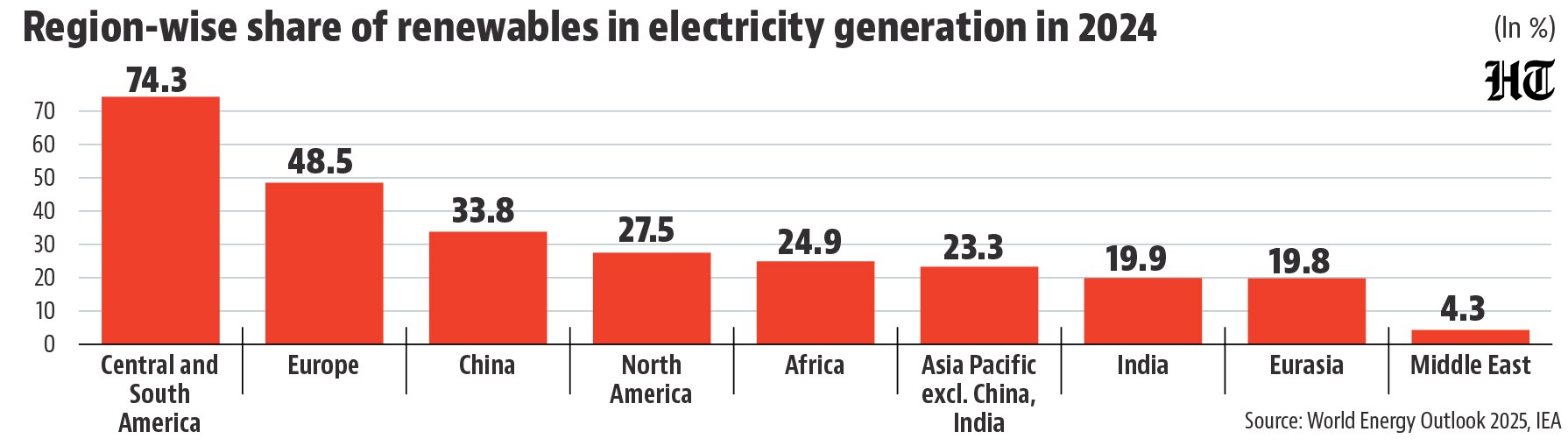
- Who has shifted most to renewable sources?This is important to understand where the nature of energy security risks have changed. WEO data shows that in 2024 Central and South America and Europe lead in the share of renewables in electricity generation, with half or more of the electricity generation in these regions already from clean sources. To be sure, most other regions in the world (except West Asia) also generate around a fifth of their electricity from renewables, which is not an easily replaceable proportion. Why has the shift to renewables changed the nature of energy security risk? This is what the second part of this series will explain.



Unlock a world of Benefits with HT! From insightful newsletters to real-time news alerts and a personalized news feed – it's all here, just a click away! -Login Now!


