E-Paper



US@250: Fighting a cold civil war | Number Theory
Almost a century after the civil war, civil rights movements in the US had to fight to ensure not just freedom but also dignity for the African American people
Updated on: Jul 3, 2026, 20:33:19 IST


Share via


Copy link

America, almost everybody agrees, is a bitterly divided country today. History tells us that polarisation is not new to the American people. Just short of its centenary, the country fought a civil war in 1861, which was mainly about the abolition of slavery. Almost a century after the civil war, civil rights movements in the US had to fight for ensuring not just freedom but also dignity for the African American people in the country. Violence has often accompanied such political disagreements. That the US is one of the most gun-wielding societies does not help. Having said all this, there is a case to be made that the fissures in US@250 are very different from what they have been in the past.

Headline political polarisation numbers do not suggest anything out of the ordinary
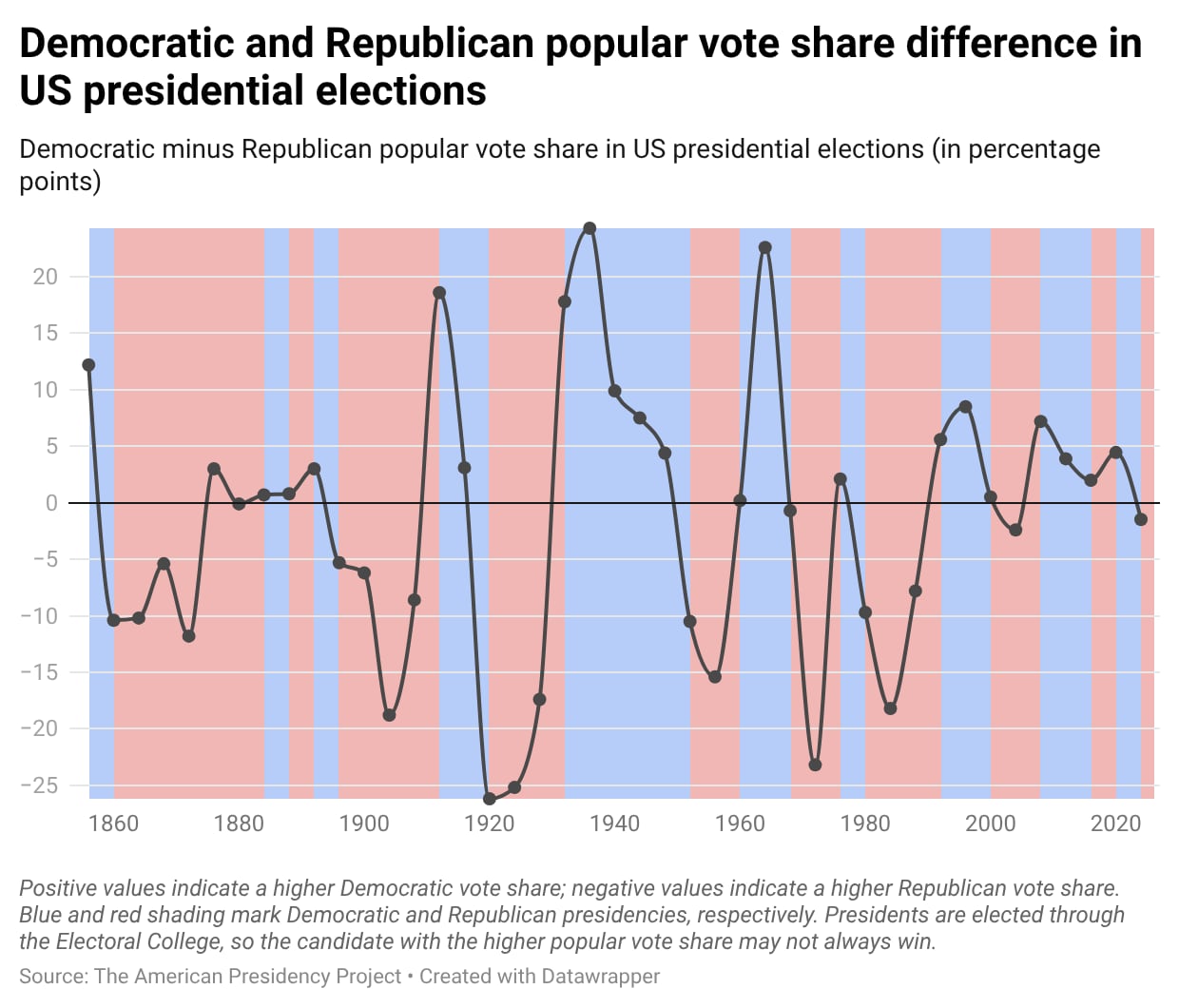
 Headline political polarisation numbers do not suggest anything out of the ordinaryDonald Trump’s 2016 and 2024 victories were close, if one looks at the popular vote share of the Republicans and the Democrats. The 2024 election gap was less than 1.5 percentage points of vote share. But this does not really tell us anything about the level of current political polarisation in the US. There have been presidential elections that were much closer in terms of vote share. The 2000 vote saw a difference of just about 0.5 percentage points between the two parties, for example.
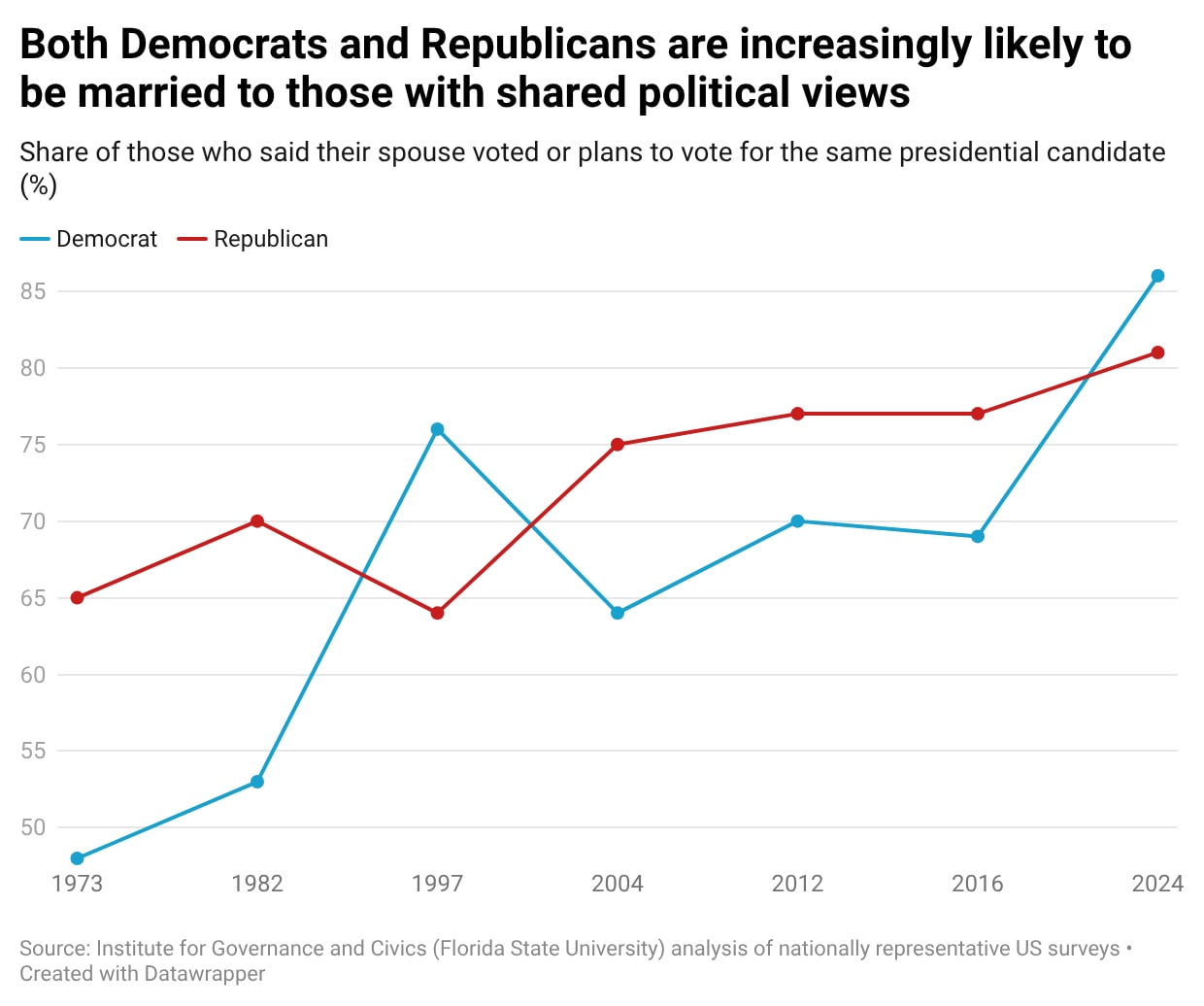
- But what is tearing apart the US is the percolation of “personal is political” in a very different wayIf you knew the religion/caste of a husband or wife in India, you could say with a reasonable degree of confidence that the other will share the social cohort. In the US, you could go a step further. An astonishingly high share of people is married to partners who vote for the same political party. The numbers, according to a survey, are at an all-time high for both the Republicans and Democrats. Marital ties are only the most extreme manifestation of the problem. There are similar echo chambers in universities, workplaces etc. where politics dictates personal ties. When Trump captured power the second time, he has gone after such cohorts opposed to his and his politics’ worldview with a vengeance with companies and university administrations obliging out of either fear or hopes of currying favour. To be sure, there is a second-order story to this polarisation with both the Republican and Democratic parties trying to realign themselves on more monotonic lines. The Republican realignment, of course, started with the rise of Trump and MAGA and the Democrats seem to be inclined towards a more left-leaning pivot now.
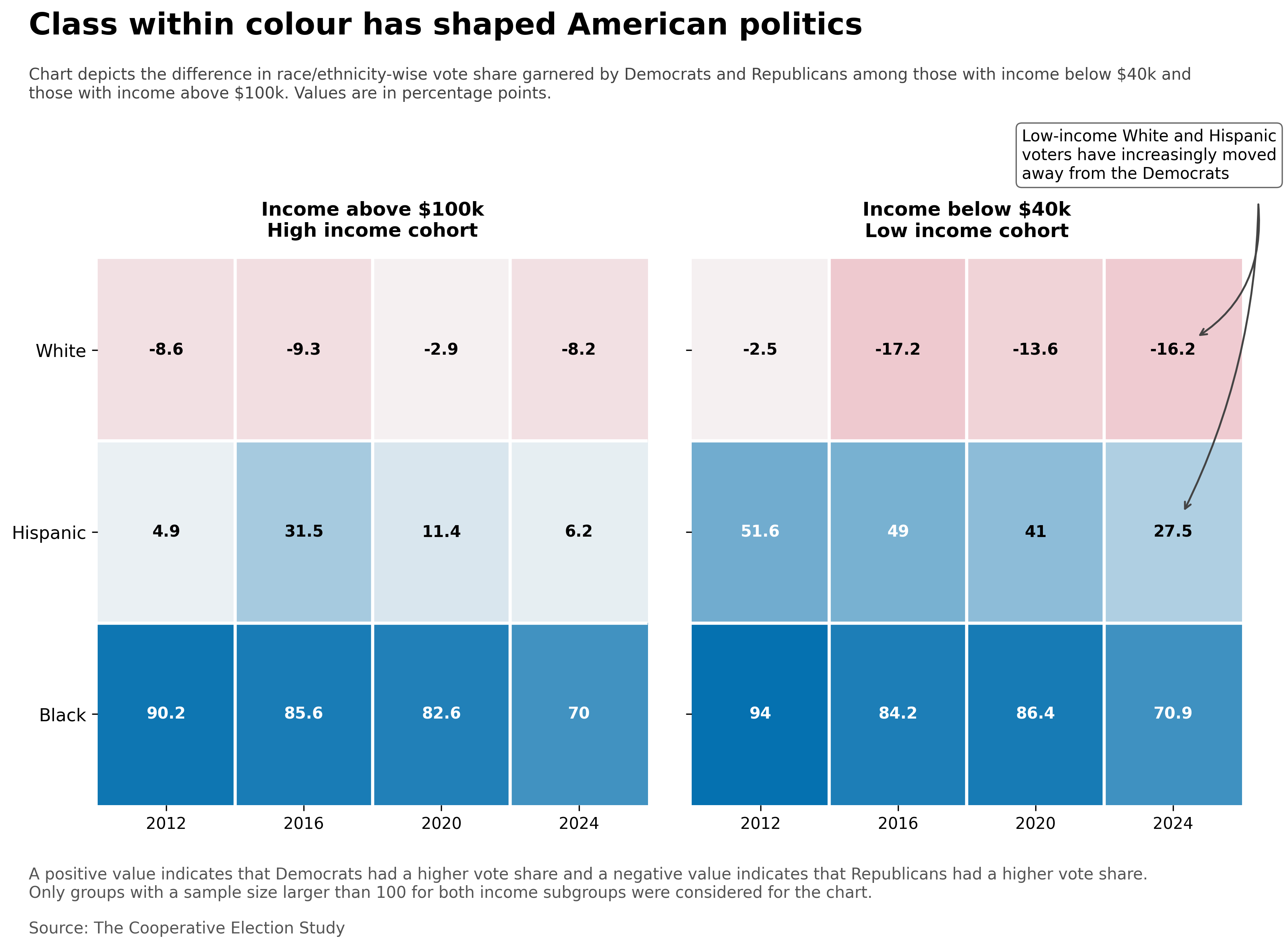
- The growing social fracture in America stands in contrast to a convergence on class linesHerein lies the irony. Even as we are told that myriad social and personal identities are pulling Americans apart like never before, there is good reason to believe that it is the proverbial first world problem. An income-wise breakup of polling data tells us that voters in the lowest income class have increasingly rallied behind Donald Trump in the last three elections – the trend was strongest in 2024 – even as the richest continue to behave according to conventional wisdom about American politics: Whites being disproportionately Republican and the rest Democrat.
- An honest resolution of growing class tensions in the US will require a more forthright class approach in its politics than its politicians have displayed since the advent of neoliberalism in the 1970s and the palliative-focused policy band-aid that has followed the period after the global financial crisis of 2008. Trump’s political genius has been in acing the act of running with the hare and hunting with the hound when it comes to the class question.