
 E-Paper



Choice-based credit system: Is Panjab University ready for transition from 2018-19?
A look at how CBCS will benefit undergraduate students and challenges in implementing the system in the remaining departments of PU and its 192 affiliated colleges from the next academic session.


A notification by University Grants Commission (UGC) required all colleges and universities to implement choice-based credit system (CBCS) from 2015-16 onwards. However, Panjab University started the system in 13 departments (honours school courses) in 2016-17.
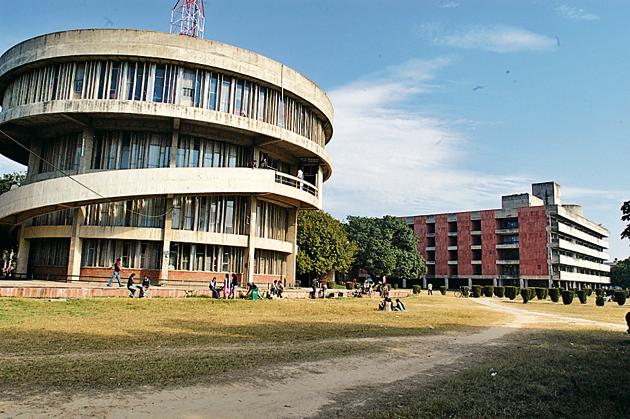
The new academic session 2018-19 is not far but PU is still not fully prepared to implement CBCS across all 78 teaching departments on the campus even though the authorities are desirable to implement the same from next year.
We take a look at how CBCS will benefit undergraduate students and the challenges in implementing the system in the remaining departments of PU and its 192 affiliated colleges from the next academic session.
1. What is the choice-based credit system? How is it different from the present system?
The choice-based credit system (CBCS) allows students to choose interdisciplinary, intradisciplinary courses and skill-oriented papers (even from other disciplines according to learning needs, interests and aptitude). It makes education broad-based and at par with global standards. Credits can be obtained through unique combinations. For example, physics with economics, microbiology with chemistry or environment science.
The new system is mobile as it allows students to study a course at different times and institutions to complete it. Credits can be transferred from one institution to the other.
Students can undertake as many credits as possible without repeating all courses in a particular semester if they fail in one or more courses.
Under this system, there are core courses and elective courses where a student can also opt for an unrelated discipline or subject. Earlier, there was one major course and subsidiaries available that allowed students to study any other subject related to their field but there was no choice.
According to professors, there is not much difference between the two systems as at present, choices available under CBCS are confined and students are not yet allowed to opt for an unrelated subject.
2. How is it beneficial for students and teachers?
The authorities are divided over the issue if CBCS will be beneficial for students and teachers. A professor from the biochemistry department said the system will not really benefit students until they were free to opt for a discipline outside of their own subject. However, dean, university instructions (DUI), Meenakshi Malhotra said the system will be beneficial once the system was in place across the board.
Dean, college development, Parwinder Singh, said, “The system has more merits than demerits. It offers a cafeteria approach to where students can opt for a subject of their choice. For example, a science student can opt for social sciences or even commerce.
3. Are there any precedents in the region? Does it affect only undergraduates or even graduates?
Guru Nanak Dev University (GNDU) in Amritsar implemented this system on the campus. But colleges affiliated to GNDU are yet to do the same. In Himachal Pradesh, colleges implemented the system but they are facing technical glitches and sources said they might roll back the system soon.
The system will only affect undergraduates as it was initially started for first-year students. Gradually, concerned departments are preparing the syllabus for the third year, but there are no plans to expand it for postgraduate courses.
4. What steps has PU taken so far?
The university is in its second year of CBCS implementation and 13 departments, including anthropolgy, biochemistry, botany, biophysics, biotechnology, zoology, chemistry, computer science applications, geology, mathematics, physics, statistics and economics, implemented the system in 2016.
These departments are now preparing the syllabus for the third year, but the rest of the departments are still working out the modalities to implement the system. The varsity will start work on prospectuses by February 2018, but there are no plans on expanding CBCS to remaining departments so far. For colleges, several seminars and cluster workshops took place in 2017 to raise awareness on the system.
Malhotra said, “We want to implement the system from the new session as I do not see any problems and none of the chairpersons of the departments have come up with any issue so far. The commerce department is still thinking about the implementation.”
5. What are the challenges that PU is facing in implementation?
Space constraints, lack of proper infrastructure , ill-equipped laboratories, low manpower, in-depth review of courses and curricula offered are some of the challenges that PU is facing in implementation. According to the professors in the sciences department, where CBCS is already in place, man power and space constraints are among major challenges. The departments following CBCS have complained of workload and space constraint in terms of dividing theory and practical classes into batches.
Professors said more faculty was needed to manage classes and there was a need for more lecture halls so that students did not have to move for different lectures.
A lack of faculty at PU also made it difficult to introduce new courses. Rajesh Gill, PUTA president and head of social sciences department, said, “The system needs a faculty that can cater to students who opt for multidisciplinary subjects. The departments need better coordination and more manpower to ensure that the options under CBCS are not limited and can be managed.”
Another major challenge is that PU is not clear how this system will work within the semester system. There are inhibitions among the officials and college principals on this issue.
6. Why are colleges unable to implement it so far?
In 2016, city colleges stated that there was no clarity on the uniform academic calendar, relative and absolute grading, time table and identification of courses. According to the college authorities, infrastructure was not an issue, but the lack of faculty.
Dr Bhushan Kumar Sharma, principal of GGDSD College, Sector 32, said, “Earlier, the problem was that we were told in March when the prospectuses were finalised and it was impossible to implement the system at such short notice, but now we know well in advance and are gearing up to introduce this system. Once the system will be in place, we shall get to know about the problems. The system , although was to be introduced in 2017-18, couldn’t work out as no drafts were submitted by the college committees.


