
 E-Paper





For over a decade, the Hindustan Times Digital Streams – Education Desk has been a trusted source for accurate, in-depth, and timely news on education and careers. We bring the latest updates on board exams, competitive exams, results, employment news, study abroad, scholarships, and school and college admissions, helping students, job seekers, and educators make informed decisions. Our Coverage Areas 1. Board Exams & Results: Comprehensive reporting on CBSE, CISCE, and state board exams (UP, Bihar, Maharashtra, West Bengal, Rajasthan, Andhra Pradesh, Telangana, Karnataka, Tamil Nadu, and others), including schedules, admit cards, answer keys, results, and career opportunities. 2. Competitive Exams: Insights into major exams like UPSC, JEE, NEET, GATE, CAT, SAT, and state and central government services. Exam Results: Timely updates on UPSC, SSC, SBI, IBPS, NTA, IIMs, and other competitive exam results. 3. Employment News: Notifications on government and private sector jobs, vacancies, eligibility, application processes, and results. 4. Study Abroad: Information on top universities, courses, tuition fees, scholarships, visa regulations, and career prospects for international students. Features & Analysis: Opinion pieces, expert explainers, deep-dive reports, and interviews with key figures in education. 5. Breaking Education News: Real-time updates on major policy changes, institutional reforms, and trends shaping the education sector. 6. With a commitment to factual, unbiased journalism, HT Digital’s Education Desk has seen continuous growth in readership, offering credible and engaging content tailored for students, parents, and professionals. Meet the Team 1. Nilesh Mathur – News Editor A journalist with 24 years of experience, including 18+ years at Hindustan Times, Nilesh leads editorial planning, ensures factual accuracy, and enhances audience engagement through strategic content. 2. Papri Chanda – Deputy Chief Content Producer With over a decade of experience in education journalism, Papri specializes in exam-related content, study abroad insights, and education trends. She also explores new opportunities in education that benefit students. 3. Bishal – Senior Content Producer Active in the education and jobs sector since 2019, Bishal focuses on tracking developments, analyzing trends, and crafting informative content for students and job aspirants. 4. Gaurav Sarma – Deputy Chief Content Producer A multimedia journalist with 9+ years of experience, Gaurav is skilled in research-based storytelling, feature writing, and reporting on competitive exams, online courses, and education trends. At Hindustan Times Digital Streams – Education Desk, we strive to be the go-to platform for students and professionals navigating the dynamic world of education and careers.
JEE Main 2020: Quick analysis of January 8 morning shift exam question paper in 7 points
JEE Main 2020 question paper analysis; The JEE (Joint Entrance Examination) is held for students aspiring to get admission in India’s top engineering colleges.


The JEE (Joint Entrance Examination) is held for students aspiring to get admission in India’s top engineering colleges. The exam is conducted at two levels, JEE Main and JEE Advanced. JEE Main is conducted twice in a year.
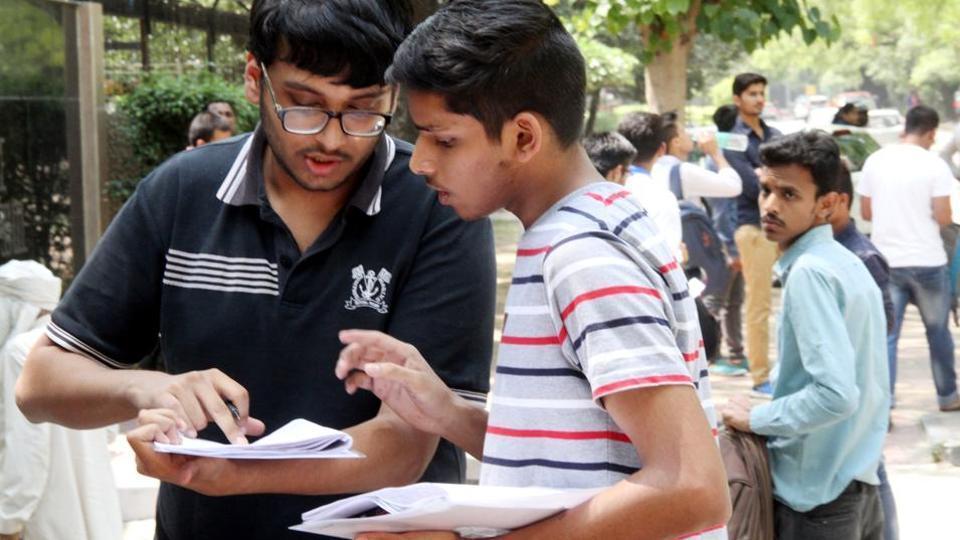
This year, it is being held from January 6 to 9 and April 3-9, 2020 in two shifts. The JEE Main acts as a screening exam for JEE Advanced and for getting admission in various NITs (National Institute of Technology). The exam takes place in an online mode (Computer Based Test) and is conducted by National Test Agency (NTA). The duration of the exam is three hours.
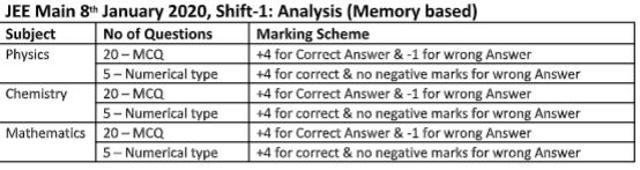
The paper comprises of 75 questions with 25 questions in each section. Each section has 20 Multiple Choice Questions (MCQs) and 5 Numerical Answer Type questions. The result of JEE Main January attempt is expected to be declared by NTA on 31st January 2020.
Below is the analysis for Day 2, morning shift exam:
1) The overall level of the exam was Moderate to difficult. As compared to last year, the exam was similar in pattern and difficulty level.
2) Physics section was Difficult as compared to last year. With majority of questions being asked from Thermodynamics, Electrostatics and Magnetism no questions were asked from ray optics, transistors , units and measurements.
3) Maths was difficult compared to last year. However, this year it was Moderate in difficulty. Most of the questions were asked from Calculus and coordinate geometry.
4) Chemistry was Easy. Questions from Inorganic Chemistry were NCERT based. But no questions were asked from equilibrium
5) Mostly questions were asked from NCERT from Chemistry.
6) The Numerical Answer Type questions were lengthy in nature.
7) For future slots, students are advised to focus on basics and conceptual clarity.
(Author Saurabh Kumar is Director Academics, Vidyamandir Classes. Views expressed here are personal)


