
 E-Paper



UGC's new curriculum & credit framework for UG courses: Check top 10 features
UGC Regulations for UG Degree: Ten things students should know about new norms for undergraduate degree courses.
Updated on: Dec 12, 2022, 19:01:54 IST

 Prefer HTon Google
Share via


Copy link

University Grants Commission (UGC) is on Monday announced new norms for undergraduate degrees according to whih students will now have to study for four years, not three, in order to get an UG ‘honours’ degree.
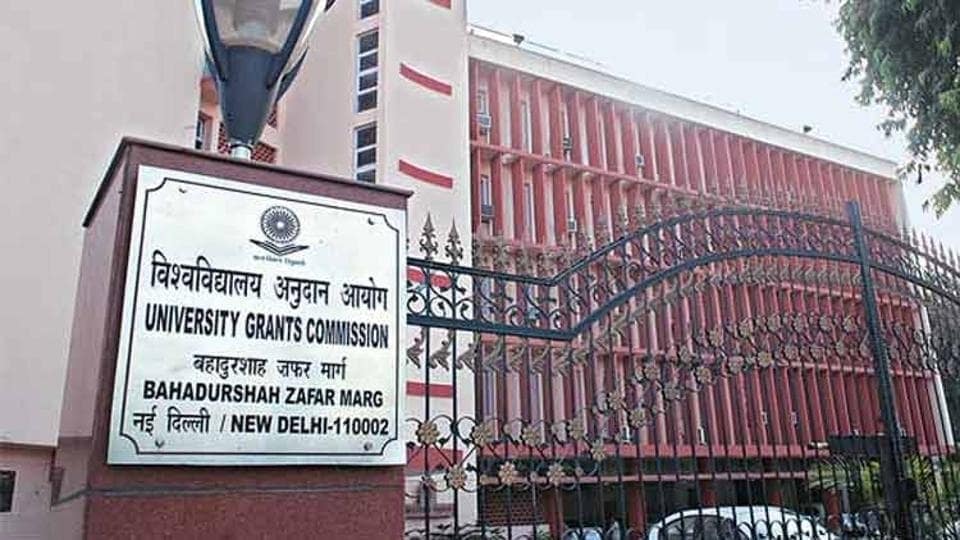
Here are ten things students should know about new UGC norms for undergraduate degree courses:
- Under UGC's 'Curriculum and credit framework for four-year undergraduate programmes', students will get a UG degree in three years on completion of 120 credits and a UG honours degree in four years on completion of 160 credits. Under the current system, it takes a student at least three years for an UG honours degree.
- Further, students who want to opt for research specialization at undergraduate level, have to secure 75% marks or above in the first 6 semesters. After that, they can choose a research stream in the fourth year. They have to do a research project or dissertation under the guidance of a faculty member and secure 160 credits, along with 12 credits in project/dissertation to be eligible for UG degree with honours and research.
- While it is now mandatory to complete at least 4 years of studies for a UG honours degree, the multiple exit feature of these regulations will also allow students to leave with a certificate after completing one year, if they secure 40 credits and one vocational course of 4 credits during the summer vacation of the first year. They can also re-enter the degree programme within three years and complete it within the maximum period of seven years.
- Students who opt to exit after completion of the second year with 80 credits will be awarded UG diploma if, in addition, they complete one vocational course of 4 credits during the summer vacation of the second year. They too will have the scope to re-enter and complete the degree programme.
- Existing students, enrolled and pursuing a three-year UG programme under the Choice Based Credit System (CBCS) will also be eligible to pursue a four-year undergraduate programme under new regulations. Universities can provide bridge course to help them transition to the new system.
- These new regulations are in line with provisions of the National Education Policy (NEP) 2020, which talks about four-year undergraduate degrees with multiple entry-exit. Several universities, including DU and have already introduced similar programmes.
- The new UGC document, however, doesn’t match with DU’s existing policy for providing undergraduate degrees. In Delhi University, students can get a degree with honours if they exit at the end of the third year.
- DU Vice Chancellor Yogesh Singh said the university has already enrolled students on the basis of its existing guidelines. “The Delhi University regulations have been approved by our statutory bodies and we will continue with that. We will give an honours degree after three years as we have been doing since 1980. We have no plan of doing away with honours degree after three years,” he said.
- The new curriculum and credit framework also has provisions for a single or double major. A student has to secure a minimum of 50% credits to be awarded a single major and 40% for a double major. For example, in a 3-year UG programme, if the total number of credits to be earned is 120, a student of Physics with a minimum of 60 credits will be awarded a B.Sc. in Physics with a single major. Similarly, in a 4-year UG programme, if the total number of credits to be earned is 160, the minimum credit required for a B.Sc. (Hons./Hon. With Research) is 80.
- Similarly, in a 3-year UG programme, if the total number of credits to be earned is 120, a student of Physics with a minimum of 48 credits will be awarded a B.Sc. in Physics with a double major. Further, in a 4-year UG programme, where the total number of credits to be earned is 160, 64 credits will be needed for B.Sc. (Hons./Hon. With Research) in Physics with double major.


