E-Paper



Odisha students travel to school to attend Youtube class of state government
The schools in Odisha are closed due to Covid pandemics, but students of a school in Koraput district have been coming to a school in distant Lamtaput block since Monday to attend the online classes.


The schools in Odisha are closed due to Covid pandemics, but students of a school in Koraput district have been coming to a school in distant Lamtaput block since Monday to attend the online classes.
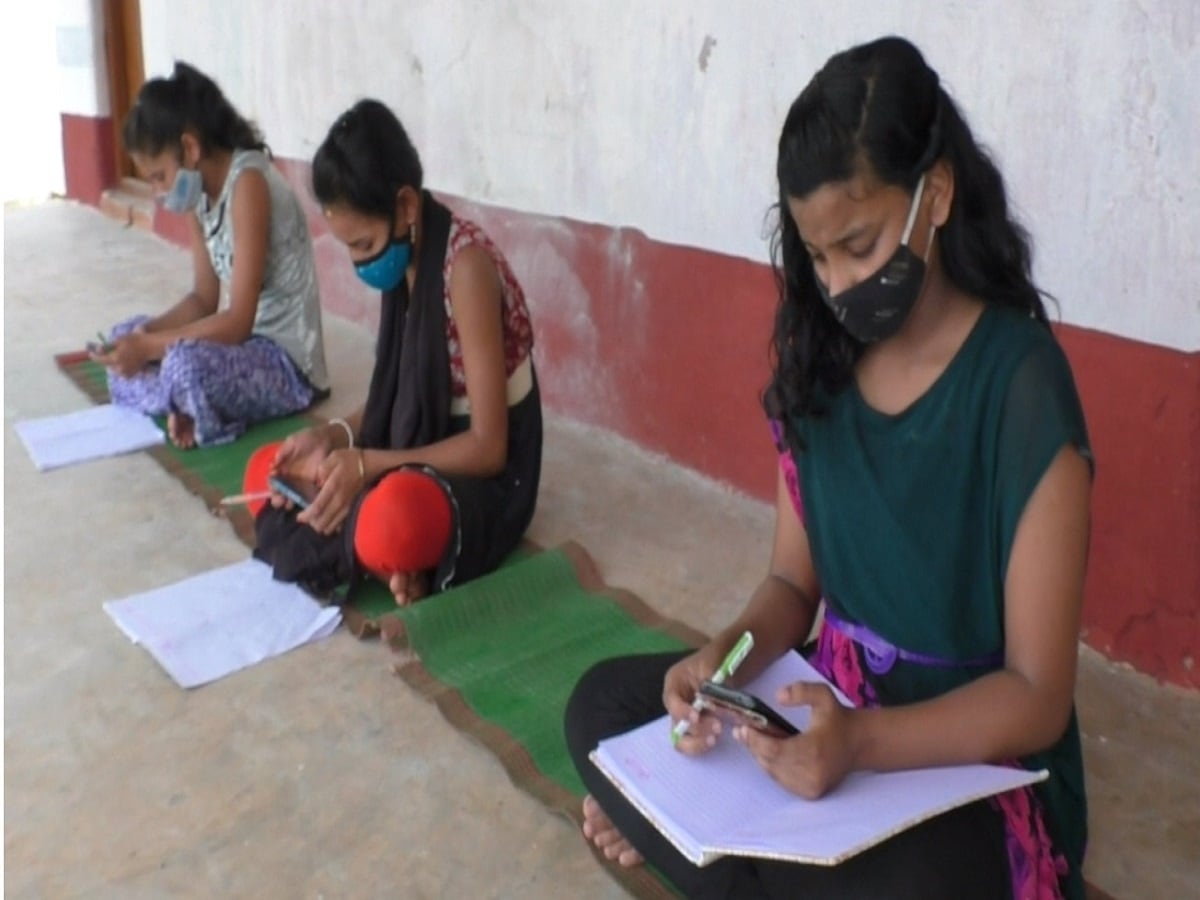
Since Monday, the students of primary School and high school in the campus of Project Upper Primary school in Ankadeli area of Lamtaput block of Koraput district have been coming to school as they can't attend the classes that the school and mass education department started through Youtube livestreaming.
On Tuesday, Payal Majhi, a student of Class 9 in the high school too travelled from her home in Machhkund area to the school as the BSNL tower could not provide the required bandwidth for the Youtube livestreaming class.
“I had to come to school as my mobile is not able to stream the Youtube classes. We also need a big datapack. We have a broadband at school which is good enough to watch Youtube classes being livestreamed," said Majhi. Like her, other students too travelled to school with their mobile so as not to miss out on the Youtube livestreaming.
As schools and colleges across Odisha have remained closed for months in view of the Covid-19 pandemic. To continue the education, the state government kicked-off online YouTube live streaming of classes 1-10 from Monday. While the online classes for 1-8 are being held in only 8 districts, the same for classes 9-10 is being organised in all the 30 districts. The classes are being streamed from 9 am to 10 am for Class 1 to 3 students, 9 am to 10.30 am for class 4 to 8. For classes 9 and 10, the classes are being held between 10.45 am and 1 pm.
While Odia, English, history, geography, Hindi and Sanskrit classes will be held thrice a week, science and mathematics classes will be telecast twice a week for Class X students. For Class 9, there would be four classes of Odia and English, and 3 classes of remaining subjects per week. The Odisha School Education Programme Authority early this month had written a letter to all district Education Officers and District Project Coordinators to make necessary arrangements and ensure smooth and successful implementation of the programme. The class will continue till July 2, but likely to be extended as there is uncertainty over opening of schools.
Koraput district education officer Ramachandra Nahak said that he is not aware of children going to school to attend online classes, but admitted that network connectivity was an issue in several blocks like Narayanpatna, Bandhugaon, Lamtaput and Boipariguda. "We can do little about improving network connectivity," he said.
The Youtube classes for the students have been started even as the state faces a great digital divide with the state school and mass education minister Sameer Dash admitting that of the 60 lakh students, last year just about 22 lakhs children - 33 per cent- could attend the online classes. There have bene photos of students climbing jackfruit trees in Mohana block of Gajapati district to catch mobile network.
As per Odisha Economic Survey, 2018-19, report, more than 20% of the 51311 villages in Odisha out did not have mobile phone connectivity. The State has just 28.22 internet subscribers for a population of 100, compared to the national average of 38.02. The report said the number of internet subscribers was an abysmal 16 per 100 people.
Retired professor Sushil Dutta who is funding the education of several kids in Mayurbhanj district, said the Youtube livestreaming was a good idea, but it may be unworkable. "Whole Odisha is not a city. There are thousands of schools (government, private or recognized private) at extremely remote villages, where kids or parents can't dream of having a phone or TV. Are they a part of this dream idea," he asked.
The Youtube classes have also come under criticism from Odisha Secondary School Teachers' Association which alleged that the idea was too expensive and would cause mental burden on students during the pandemic.
“Students of class IX and X will remain on-line for around six-eight hours a day for which a big data pack is required for uninterrupted internet connectivity. Where would they (students and guardian) get money to recharge data pack during the pandemic times. It would be expensive for the students and guardians," asked OSSTA general secretary Prakash Chandra Mohanty.
Mohanty said classes through television are cost effective and better than other modes of teaching during pandemic.