
 E-Paper



When Delhi University was witness to Independence
Travel back in time with us to Delhi University and other colleges like St Stephen’s, Hindu and IP before Independence

 Prefer HTon Google


As Independence Day approaches, let’s go back in the past to look at Delhi University (DU) and life as it was for students then. Many of them during the British Raj had bigger issues to take on, the most important being garnering support for an independent nation.
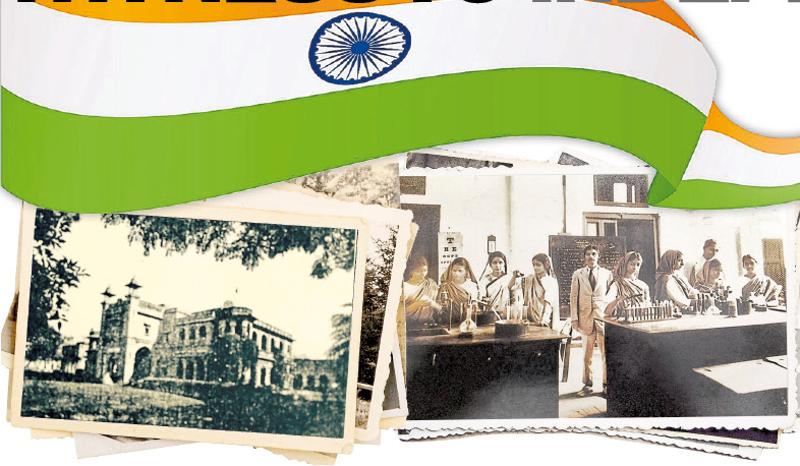
Octogenarian Dr Aparna Basu, a professor of history at DU and author of the book University of Delhi (1922-1997) Platinum Jubilee is a storehouse of information, a walking talking encyclopaedia on what life was like for students in the pre-Independence days. And this is what she has to say.
Watch video: 69 years ago, Delhi’s college students had a date with freedom
DU was established in 1922 as a unitary, teaching and residential university. Students were not encouraged to participate in political activities. College principals were forced to take strict action because the British, on many occasions, threatened to withhold government grants, which were essential for the survival of colleges. The university then received Rs lakh a year as funds from the government of India under the British rule, Basu says.

Only four colleges existed before Independence in Delhi. St Stephen’s College was founded in 1881, Hindu College in 1899 and Lady Hardinge Medical College for Women in 1916. Ramjas College was founded in 1917. All of them were then affiliated to Punjab University.
During the Civil Disobedience Movement in the 1930s, students of a DU college put up the national flag on the flags taff on campus. During the Quit India Movement on August 10, 1942 “a vociferous gathering of Hindu College students and ladies from Indraprastha College collected outside Stephens’ and urged Stephanians to join them in a procession to support the Congress leaders who had been jailed the previous day. The crowd marched down Alipur Road, passing enroute IP College whose authorities had shut the gates to prevent the girls from joining in. They resourcefully jumped down the walls assisted by willing Stephanian hands and the procession continued down Chandini Chowk, shouting slogans,” says the late veteran journalist Ajit Bhattacharya in Basu’s book.

In 1946, Sameeruddin Khan, a Stephanian, was successful in disrupting the morning assembly and with 50 to 100 boys boycotted classes to organise a protest march. They pulled down the Union Jack from the flagstaff.
According to Meena Bhargava, author of Women, Education and Politics The Women’s Movement and Delhi’s Indraprastha College, several students joined the All India Students’ Federation (AISF) formed in 1936 to defy the British Raj and participate in the national movement. Later, a girl students committee was also constituted to mobilise young women across the country.


