
 E-Paper



From Kismet to Dhurandhar and Ramayana: How Bollywood box office grew from ₹1 crore lifetime hauls to ₹100 crore in a day
Both Dhurandhar 2 and Ramayana earned over ₹100 crore in a single day at the Indian box office, taking Bollywood to a new era of box office aspirations.

 Prefer HTon Google


When Dhurandhar The Revenge did a hat-trick of ₹100-crore days at the Indian box office earlier this year, it was seen as an oddity, an anomaly. Trade pundits argued that the combination of high ticket prices and hype would be hard to emulate. Ramayana proved them wrong in just eight months. On its first Monday, the Nitesh Tiwari film minted ₹107.50 crore in India.

The two films have set and solidified this new standard for what a Hindi film can and should make at the domestic box office to be a red-letter day. It is remarkable that just over a decade ago, this figure was considered good enough for a film’s lifetime run. But the evolution of Hindi cinema’s box-office fortunes has always been that rapid. This evolution has seen the industry's blockbusters grow from earning ₹1 crore in their lifetime to ₹100 crore in a day.
Kismet and the birth of the blockbuster
Box-office tabulation wasn’t always systematic in Indian cinema. In the pre-independence era, footfalls were counted. Sometimes, films’ runs were measured by how long they ran in theatres. Dadasaheb Phalke’s Lanka Dehen, considered the first ‘hit’, ran for 23 weeks upon release in 1917. But it wasn’t until 1940 that independent bodies and film journalists began to calculate films’ earnings.
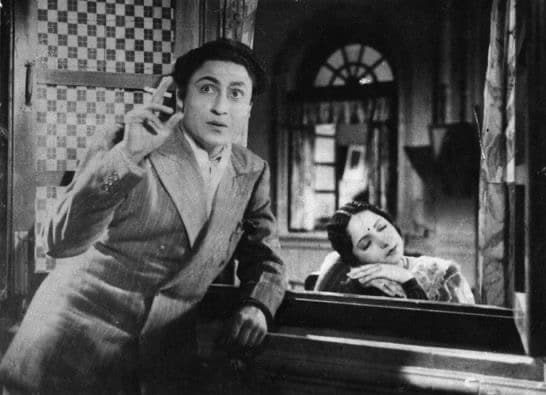
Three years later, Kismet emerged as Hindi cinema’s first blockbuster. The Gyan Mukherjee film, starring Ashok Kumar, rode the nationalistic wave and the thriller genre's appeal to mint ₹1 crore. It is estimated the film sold 3.75 crore tickets in India at the time (the same as Dhurandhar 1). Kismet held the record for five years until the Tamil film Chandralekha minted ₹1.55 crore in 1948, snatching the crown. But it laid the foundation for ‘crore’ to be used as a common term for Indian cinema’s box-office earnings.
The 100 crore hits
For the longest time, Indian films’ box-office earnings were measured solely by their domestic box-office takings. That is because most Indian films did not have a wide release overseas. There were exceptions. Awara and Sangam were hits in Russia, while Caravan had a great run in China. But the measure of a film’s success remained what it did in India. By that metric, Mithun Chakraborty’s Disco Dancer was a moderate success. It earned ₹6 crore in India upon release in 1985. Two years later, it released in Russia and became a cultural phenomenon. It remains one of the most-watched films in Russia even four decades later. After its release in Russia, Disco Dancer’s worldwide earnings grew to ₹100 crore. In the 90s, Indian films began to release overseas as the diaspora opened new markets for Bollywood. Hum Aapke Hain Koun and Dilwale Dulhania Le Jayenge rode on this overseas wave to cross ₹100 crore worldwide. But no Indian film reached the mark at the Indian box office for years.
The ₹1 crore a day films
From the 1950s to the 80s, Indian films almost always had staggered releases. Prints existed as large spools of reels. Transporting them across the country took time and effort. That is why most Indian films were released in some markets on one date and in others weeks or even months later. For instance, Amitabh Bachchan’s debut film Saat Hindustani released in Delhi in 1969 and in Bombay only two years later. This meant that the concept of an ‘opening day or weekend’ was absent. Films grew by word of mouth only.
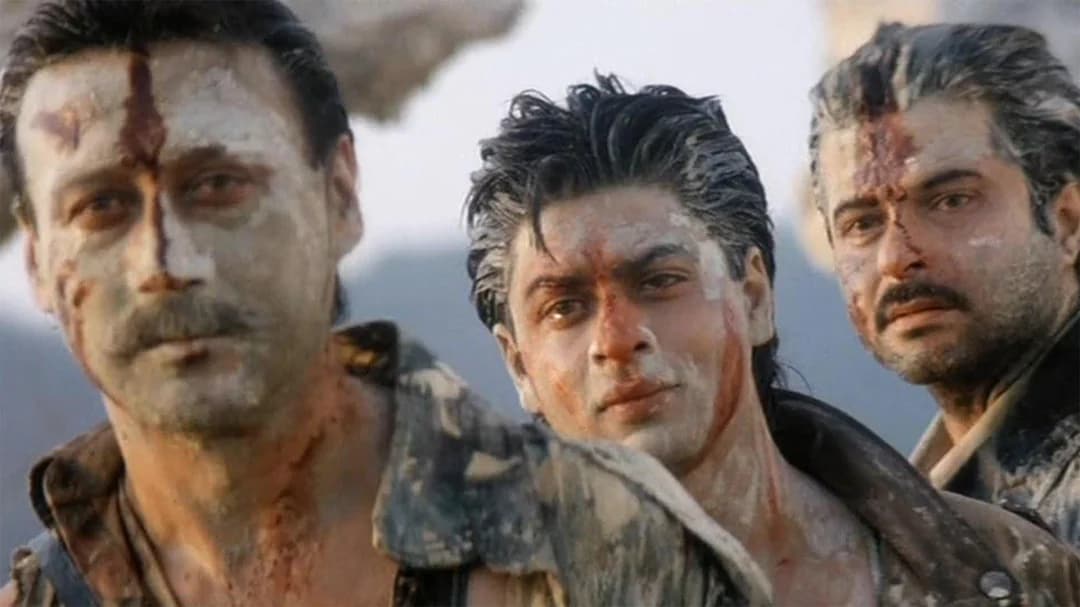
That changed in the 90s as the distribution network grew, allowing filmmakers to release films almost simultaneously nationwide. The first film to utilise this was Mukul Anand’s Trimurti. The action entertainer starred Anil Kapoor, Jackie Shroff, and Shah Rukh Khan. It came out two months after DDLJ, which had made Shah Rukh a big star. Anil and Jackie were already established names. The hype made Trimurti the biggest opener in Bollywood history. The film minted ₹1.06 crore on its first day. This feat made ₹1 crore an aspirational opening figure for Bollywood, a trend that persisted till multiplexes arrived a few years later.
The 100-crore club
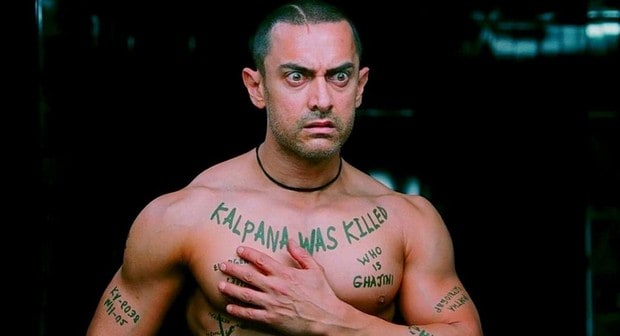
It was the multiplex era that guaranteed wide national releases as theatre chains allowed distributors to lock screens nationwide. This also led to an increase in ticket prices. According to Box Office India, the average ticket price in India increased from ₹25 in 2001 to ₹70 in 2008. This led to a boom in box-office earnings, too. And in 2008, a Hindi film finally earned ₹100 crore net domestically. It was Aamir Khan’s Ghajini that created the 100-crore club. Since then, over 150 films have joined the ranks from across languages and industries. This also created a new benchmark for measuring an Indian film’s success. It had to be a ‘100-crore hit ’.
The 1000-crore blockbusters
Two things defined the 2010s in Indian cinema: a continued increase in ticket prices and the rise of mass cinema. Salman Khan and Akshay Kumar were the flagbearers of these films in Hindi, while Rajinikanth spearheaded it in the South. Films’ earnings now also included overseas gross, and a new terminology - worldwide gross - made its way into Indian box office tracking. Thanks to this, Indian films were now crossing ₹500-600 crore. PK created a sensation in 2014, earning ₹769 crore worldwide. But it took a maverick from the South to breach the ₹1000-crore barrier.
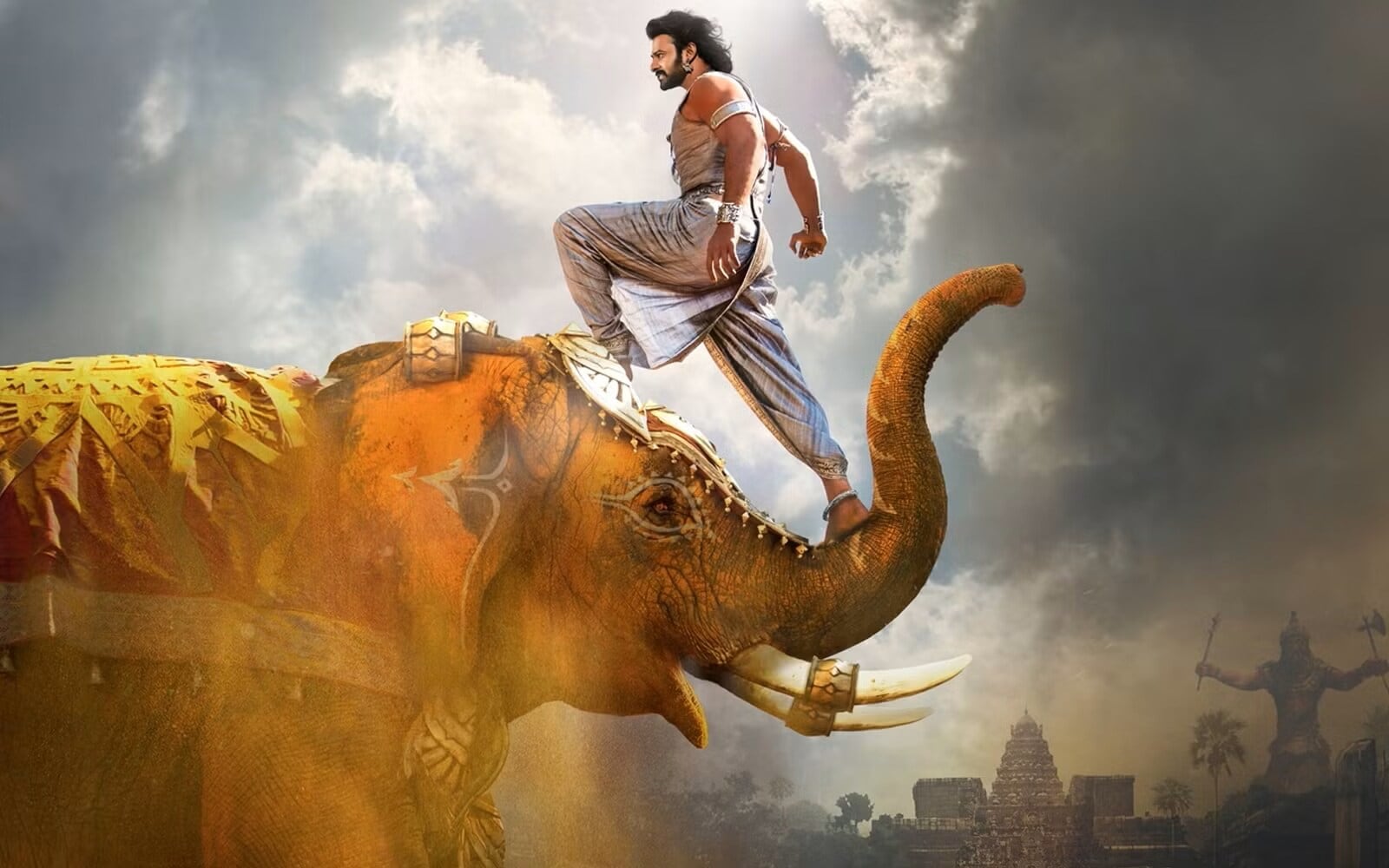
SS Rajamouli’s era-defining Baahubali 2 became the Indian film to gross ₹1000 crore both worldwide and in India. Dangal followed suit the following year with worldwide collections of over ₹2000 crore, thanks to windfall from China. Over the next few years, big blockbusters from the south continued to flirt with the ₹1000-crore earning, but Hindi films lagged behind. In fact, until Pathaan (in 2023), no Hindi film had reached that mark after Dangal. And then, in 2026, Dhurandhar 2 not only crossed ₹1000 crore worldwide but also in India, becoming the first Hindi film to do so.
The new normal? ₹100 crore in a day
It took 22 years after Trimurti for Indian cinema to travel from a ₹1-crore opening to a ₹100-crore opening. Baahubali 2 minted ₹122 crore net in India on its release day in 2017. Hindi films just could not match up to the ‘pan-India sensation’ anymore. Shah Rukh Khan summoned his fans to get Pathaan and Jawan ₹100+ crore openings, aided by overseas collections. In India, these films were still ₹30-40 crore short. Yet again, it was Dhurandhar 2 that broke the mould, minting ₹102 crore on its opening day, and following it up with two more 100-crore days for good measure. Eight months later, Ramayana became the first Indian film to earn ₹100 crore on a Monday. And suddenly, the conversation has shifted from ₹40-50 crore starts to a ₹100-crore day.
As ticket prices increase and Indian films find new markets overseas, there is no doubt that these marks will be surpassed as well. But for now, the benchmark to beat remains with films such as Baahubali, Dhurandhar, and of late, Ramayana.


Get more updates from Bollywood, Taylor Swift, Hollywood, Music and Web Series along with Latest Entertainment News at Hindustan Times.


