
 E-Paper



Blockchain's Transformation from Niche Novelty to Everyday Utility
From its initial use for a pizza purchase, Bitcoin's evolution has led to widespread acceptance as a payment method.

 Prefer HTon Google


"Bitcoin: A Peer-to-Peer Electronic Cash System,” Satoshi Nakamoto’s 2009 white paper outlining the concept of a decentralized, peer-to-peer payment system alternative to the traditional financial system, was hardly an overnight success.
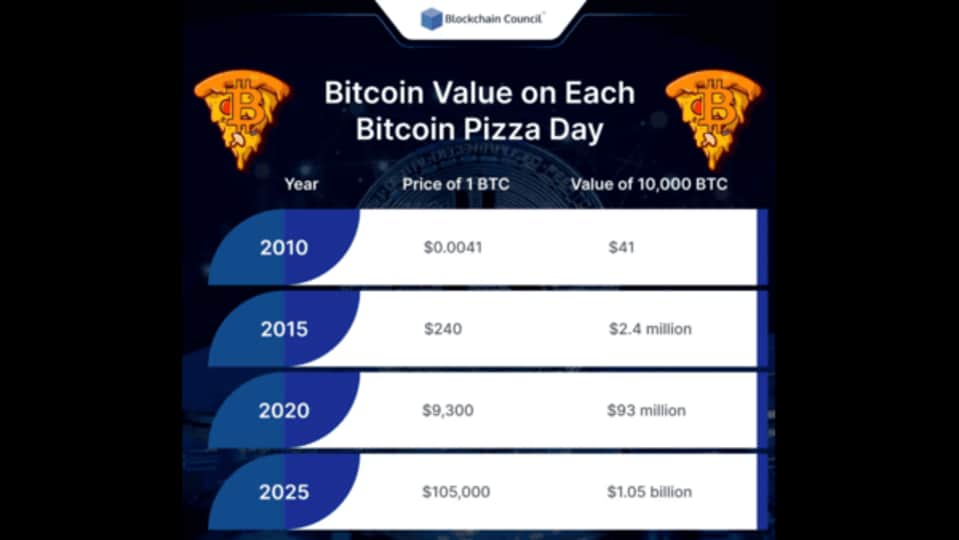
Yes, while the document gave way to Bitcoin’s launch later that year, it wasn’t until 2010 that Bitcoin was first used for a real life transaction. However, in the years that followed, Bitcoin’s usage as a payment method, as well as use cases for crypto and blockchain technology, grew exponentially.
In a recent interview, Binance CEO Richard Teng reflected on how much crypto has evolved, noting that “Fifteen years ago, crypto was about buying a pizza. Today, it’s about building robust payment systems, stablecoins, and real-life use cases that change lives.”
The evolution of crypto is far from over, as developers and other innovators continue to expand and enhance the blockchain infrastructure. Adoption and usage of cryptocurrencies also continues to grow as well.
Crypto Steady Entry into the Financial Mainstream
Initially, Bitcoin’s user base skewed toward the tech savvy, particularly among the tech savvy whose political philosophy matched up well with the decentralized nature of cryptocurrencies and the blockchain.
However, as the 2010s progressed, crypto’s user base began to steadily widen. The reasons for this are many fold. For one, access, availability, and education about cryptocurrencies increased significantly during this time frame. The rise of user-friendly crypto exchanges like Binance played a major role with this factor.
The community of active cryptocurrency users also expanded demographically during this time. Largely, due to crypto’s strengths as an alternative to traditional banking services, particularly in countries where access to traditional banking remains limited.
Yet even as blockchain economy participants grew from just a handful at the onset, to hundreds of millions of users worldwide by 2020, by-and-large mainstream financial institutions and institutional investors stayed on the sidelines, due to the space’s underdeveloped regulatory framework. It wasn’t until starting last year, when regulatory clarity in markets like the U.S. and Europe, started to emerge. Once this happened, crypto made a full leap into the financial mainstream.
No Longer Just for Pizza
Crypto usage has come a long way from the famed pizza order that first demonstrated its real-world utility. Today, scores of large and small businesses worldwide accept cryptocurrencies as a payment method. Some countries, most notably El Salvador, have even officially made Bitcoin legal tender. As usability increases so has the value of Bitcoin at each Pizza Day.
Demand for the availability of crypto-based payment options among consumers continues to rise as well. With this, the number of retailers accepting crypto as a payment method is expected to increase dramatically going forward.
According to a recent survey from a major U.S.-based bank, while just under 15% of retailers accept crypto as a payment method, 75% of retailers noted that they plan to begin accepting either stablecoin and cryptocurrency payments within the next two years.
As individuals continue to adopt crypto- based payment methods for the first time, more and more people are discovering their everyday utility.
The ‘Simple and Practical’ Alternative
Based on a recent survey of Binance users, it’s clear that using crypto for payments is far from a complex and cumbersome process. Take, for example, the experience of Sergio, a Mexican Binance user who detailed his experience using crypto for the first time to pay a restaurant bill. As Sergio noted, his usage of BNB as a payment method allowed him to see how “simple and practical” crypto can be as a payment method.
Dubai-based Codi reported a similar experience, when he used crypto to pay for a restaurant order while on vacation in Turkey. According to Codi, not only was his payment via stablecoin USDT “incredibly convenient;” the exchange rate using this method was more favorable than what his local bank offered.
In the case of Vietnamese crypto user Andy, we can see that not only are crypto-based payments anything but complicated, they can be a useful solution in a jam. If not for his crypto account, Andy wouldn’t have been able to make an urgent cross-border payment.
As awareness of this “simple and practical” alternative continues to grow, the transformation from niche novelty to everyday utility will continue.
Note To Readers: Hindustan Times/HTDS shall not, in any manner, be responsible or liable for the content of the article, advertisement, including the views, opinions, announcements, declarations, or affirmations expressed therein and is absolved from any legal action or enforceable claims. This content is for informational and awareness purposes only and does not constitute financial advice.
Want to get your story featured as above? click here!


