
 E-Paper



HFSS Foods: The Problem is not just in the food packet
Fat, Sugar and Salt hides in your kitchens and favourite eating joints too. Here’s what every family should understand before panicking.

 Prefer HTon Google


The word HFSS foods i.e. High Fat, Sugar and Salt foods have entered the public conversations relating food with nutrition and health. With rising concerns about obesity, diabetes, hypertension and other non-communicable diseases (NCDs), consumers are being encouraged to pay greater attention to what they eat. But this growing concern has also raised an important question: Should we be afraid of all packaged and processed foods?

The answer requires little more nuance.
Most people relate this term with chips, namkeen, chocolate, aerated beverages, cookies, etc, that is only half the story. HFSS is not only about what we eat but also about how much we eat, how often we eat and what we eat in an entire day and how do we actively live our daily lives.
HFSS is the nutritional classification prescribed by World Health Organisation (WHO) based on the cut-off percentages of fat, sugar and/or salt in our food. In India, National Institute of Nutrition under Indian Council of Medical Research (ICMR-NIN) released dietary guidelines for Indians in the year 2024 wherein minimising the consumption of HFSS foods is prescribed
Let’s understand this with everyday examples.
A 100 g cream filled biscuit yields nearly 500 calories, which are a result of about 20grams fat of which 10 grams is saturated fat (SF) and about 32 grams of sugar. This means that about 36% of energy comes from fat (18% from SF) and 26% from sugar. If one eats 2 biscuits, he/ she is consuming 5grams of fat and 8 grams of sugar amounting to 125 cal, i.e. about 2.3% of the day's calories from fat and 1.6% from sugar in a 2,000-calorie daily diet. Therefore, daily consumption of such food products should be avoided and one may consume these occasionally. Under FSSAI Labelling and Display Regulations, food business operators (FBOs) are mandatorily required to mention the serve size and number of servings on the labels of packaged foods. Therefore, it becomes important for the consumers to read the labels properly before procuring packaged foods.
How about our favourite restaurant’s dal makhani where a bowl (250g approx) of dal provides about 420 cal of energy, coming from about 28 g fat, out of which 15 g is saturated fat, resulting in about 60% of energy from fat and nearly 70% of the daily saturated-fat limit, or serving our homecooked shahi paneer, a bowl of which provides about 520 cal, coming from about 40 g fat comprising of 20 g saturated fat, meaning that about 69% of the energy is derived from only fat and accounts for 90% of the daily saturated-fat limit. What is important to understand is just not what is packaged is HFSS but what we consume in an entire day
Let’s understand Fats, Salt and Sugars without the added panic
Fats, sugar and salt are not necessarily bad. Good fats, such as omega 3 (found in flaxseeds, chia seeds, walnuts, fish, etc) and omega-6 (found in sunflower seeds, sesame seeds, groundnut, soy products etc.), support our brain and heart, build cells and support absorption of fat-soluble vitamins A, D, E and K. Ironically, while we dread fat from diet, but we end up purchasing omega supplements. Even cholesterol is required by our body in small amounts to produce hormones, vitamin D, and healthy cells. Special attention must be paid to the saturated fats and trans-fat, which, when consumed in significant amounts over a long period of time, will become a trigger for NCDs. Trans fats have been eliminated in packaged foods under FSSAI guidelines, but they still exist in vanaspati and reused cooking oil filtered and utilized by some of our favourite pakora and bhatura walas on the street corners or at homes. In fact, ICMR also included all deep-fried foods and foods prepared with high quantity of oil/fat such as French fries, samosa, kachori, puri, savories, desserts, biscuits, cookies, cakes, parathas or even some curries as high fat foods, even if they are prepared at home.
Furthermore, it is widely acknowledged that excessive sodium consumption (from salt) is major cause for hypertension and other heart related problems. However, completely eliminating sodium from diet is also not advisable. A small amount of sodium is essential for the body’s electrolyte balance, and proper nerve and muscle functions. It is recommended that a teaspoon (5 grams) of salt should be consumed in an entire day in all forms. That implies that if one is consuming prepared foods like savoury snacks, namkeen, papads and pickles, etc. from food packets or prepared at home, the salt content in the other meals/ foods need to be reduced to balance the sodium requirement.
Lastly, sugar provides glucose which is the primary fuel for our brain. In our diets, glucose is generally derived from grains, fruits, milk and a small amount of added sugar. Added sugar doesn’t give any added nutrients but just calories, so excessive consumption of sugar should be avoided. However, this does not imply that occasionally consuming a bite of chocolate, our calcium-rich ras malai or iron and calcium rich chikki or natural probiotic is bad.
The bottom like is that fat, salt and sugar are not bad. Each one has a function to perform in our body and contributes to maintaining our health. Only when we eat too much or too frequently, there could be health concerns. Solution is balance, and not terror.
Health is not shaped by a single meal or a single food product consumed occasionally but rather by the entire dietary pattern, portion sizes, frequency of consumption and lifestyle. It is essential to make nutrient dense food the foundation of our diets; let’s eat calorie dense, low in nutrients foods only occasionally, engage in regular physical activity, do not sit continuously for more than three hours and lead a healthy stress-free life style. The goal is not to eliminate foods, but to balance them within a diverse nutritious diet. In fight against NCDs, the messaging should be kept simple and focussed on ‘Eat wisely, include variety of foods, follow moderation, stay active and stress free. Do not let fear take over food literacy.
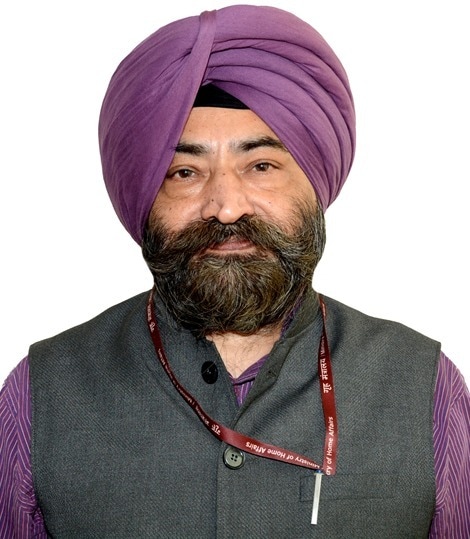
The article is written by Dr. Harinder Singh Oberoi, Director, NIFTEM-K , An Institute of National Importance, Ministry of Food Processing Industries (MoFPI)


