
 E-Paper



O Womaniya! 2025 Report: Indian Entertainment Faces an Uphill Task of Achieving Equitable Representation for Women
Five years in, Prime Video’s O Womaniya! report holds up a mirror to Indian entertainment, and the reflection is complicated.

 Prefer HTon Google


In the world’s most prolific film industry, stories are often celebrated as mirrors of society. Yet, the latest edition of the O Womaniya! 2025 report, the definitive annual study on female representation in Indian entertainment, suggests that the mirror is increasingly reflecting a lopsided reality. Championed by Prime Video, researched by Ormax Media, and produced by Film Companion Studios, the report serves as a health check for the industry. This year, it analysed 122 titles (films and series) released in 2024 across nine languages to measure gender parity both on-screen and behind the scenes.
The report’s primary purpose remains to provide an objective, data-driven baseline that moves the conversation beyond anecdotal "gut feelings" into actionable industry standards. However, the 2025 data brings with it a sobering reality. After years of incremental progress, the industry may have hit a regressive snag.
The Data Deep-Dive: A Stagnating Reality
While female representation in key Head of Department (HOD) roles, including direction, cinematography, editing, writing, and production design, reached 15% in 2023, the 2024 numbers show a decline to 13%. This 2% drop might seem marginal on paper, but in an industry where women are already significantly underrepresented, it signals a systemic withdrawal.
The report highlights a massive regional and platform-based chasm that stakeholders can no longer ignore:
The Regional Gap: While the Hindi film industry leads with 24% of titles analysed having female HODs, the numbers in the South remain a fortress of male dominance. Tamil and Telugu industries stand at 3%, Malayalam at 2%, and the Kannada industry reports 0% titles with female HOD representation.

The Streaming Advantage: Streaming platforms continue to be the industry's "platinum lining." Streaming films saw a 47% pass rate on the O Womaniya! Toolkit (measuring female agency on-screen), compared to a dismal 19% for theatrical films. The O Womaniya! Toolkit is a 4-point framework to help filmmakers eliminate bias. It measures:
- Agency: Do female characters drive their own stories?
- Impact: Do they make pivotal economic or plot-driving decisions?
- Voice: Do they have viewpoints central to the plot that conflict with the male lead?
- Representation: Does the content avoid normalising sexualisation or violence against women?

The 2025 report also shows that titles commissioned by women are twice as likely to pass this test, proving that gender diversity in the boardroom directly impacts the inclusivity of the stories told on screen.
- The Promotion Gap: Even in marketing, women are sidelined, accounting for only 29% of speaking time in trailers.

Insights from the O Womaniya! Roundtable
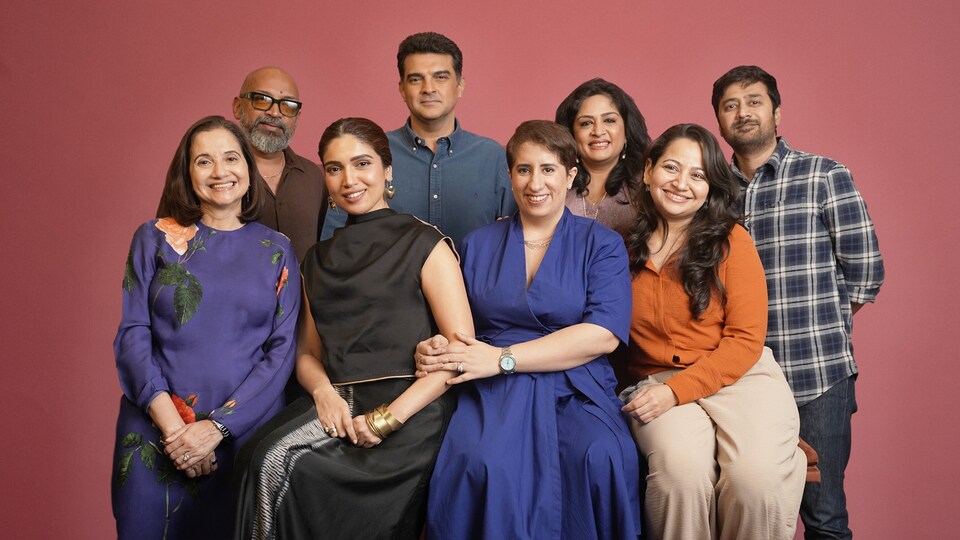
To discuss these findings, a powerhouse panel of industry leaders joined moderator Anupama Chopra. The group, comprising Bhumi Pednekkar, Siddharth Roy Kapur, Guneet Monga Kapoor, Rahul Ravindran, Shazia Iqbal, Suresh Triveni, and Stuti Ramachandra, delved into the systemic reasons behind these declining numbers.
Actress Bhumi Pednekkar pointed to a fundamental shift in the kind of stories reaching the big screen as a primary driver of this exclusion:
“I’ve been working for over a decade, and the number of scripts where women have substantial, dignified roles has drastically reduced. When overall opportunities shrink, it also explains why women in technical roles are being seen less, because within a conditioned hierarchy, men are naturally prioritised, even though it’s wrong. In my entire career, I’ve worked on a fully women-led set only once, and in the last three years, I’ve maybe done just two or three projects directed by women, even though I constantly chase those opportunities. It’s not about gender but about what someone brings to the table, though I do enjoy working with women because of shared experiences and sensitivities. A major reason for this decline is not just reduced work, but the kind of films being made today, they’re largely hypermasculine. I’m not the audience for them, and neither are many other women, which means a large section of viewers has been alienated, and women are pushed out of creative and technical spaces.”
Siddharth Roy Kapur, Founder of Roy Kapur Films, provided the business context for this shift. He noted that the post-pandemic box office has heavily favoured "hero-deification," making it harder for diverse stories to find theatrical space. "The kind of movies that are working have tended to be hyper-masculine, catering to a mass audience. Because of that, you’ve got a male-oriented, hero-deification sort of sensibility," he explained.
Director Suresh Triveni, acclaimed for his work in Jalsa and Tumhari Sulu, admitted that the market "greed" for a certain type of spectacle has made character-driven films a harder sell. He noted that releasing a film centered on a woman's daily life would be "harder today" than it was in 2017, as theatrical distributors are increasingly looking for "high-octane" male-centric tropes.
Countering the myth that women have stopped going to theaters, Rahul Ravindran cited his recent experiences in the South. “Our film The Girlfriend, led by Rashmika Mandanna, saw 70-80% female crowds in single screens. They were roaring and whistling. It’s not that women don’t go; it’s that we don’t give them a reason to,” he insisted.
Breaking the Glass Ceiling: Technical Hurdles and Intentionality
The discussion also touched upon the "First Film Trap" that prevents women from moving into high-budget technical roles. Shazia Iqbal, director and production designer, shared an insight regarding female Cinematographers (DOPs). She noted that male directors often hire female DOPs for their difficult, low-budget first films, praising their grit and vision. However, the moment those same directors secure a bigger budget for their second outing, they frequently switch to "the most shiny [male] name in town." "That is a repeated emotion which broke my heart," she shared.
To counter this, Stuti Ramachandra, Director & Head of Production and Post, International Originals at Prime Video India, emphasised that "good intention" is no longer enough. She called for "proactive, conscious" hiring mandates to prevent further percentage drops. "We have got to actually proactively, consciously keep at it," she said.
Guneet Monga Kapoor highlighted the massive untapped potential in the industry, revealing that a simple four-day call for mentorship received 250 projects from women filmmakers. “It really needs institutional support, which shows up month on month, festival on festival," she insisted, advocating for structured internship programmes to ensure a sustainable pipeline.
Watch the full Roundtable Discussion here:
Access the complete report and findings at: www.owomaniya.org"> www.owomaniya.org
Note to the Reader: This article has been produced on behalf of the brand by HT Brand Studio and does not have journalistic/editorial involvement of Hindustan Times.


