
 E-Paper



Uttarakhand Cabinet Clears Key Decisions on Anti-Drug Drive, Wages and Health Services
State government approves creation of dedicated Anti-Narcotics Force posts, minimum wages for forest workers, and expansion of ESI medical cadre.

 Prefer HTon Google


The Uttarakhand Cabinet approved a series of key policy decisions aimed at strengthening the state’s anti-drug campaign, improving worker welfare, expanding healthcare services and aligning state laws with judicial directives.
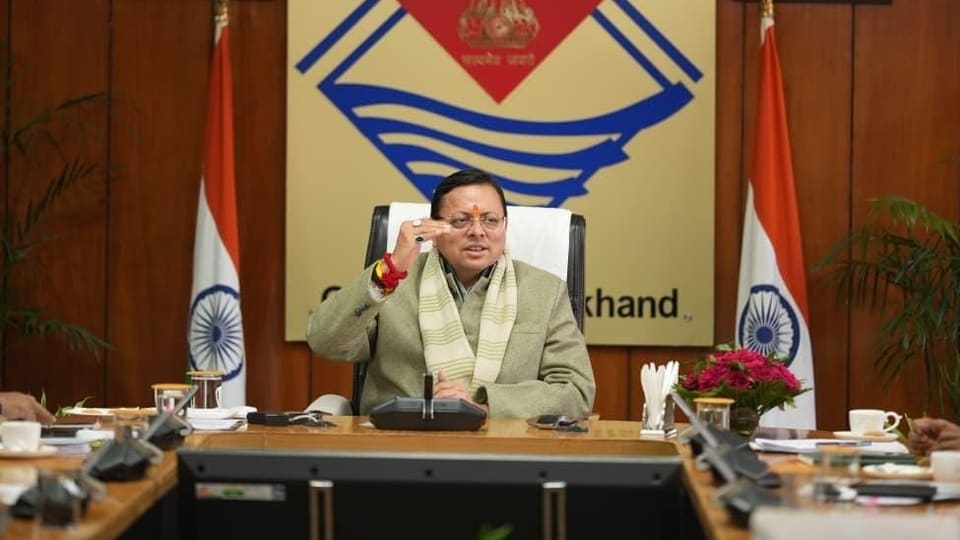
In a major push to intensify the drug-free Uttarakhand campaign, the Cabinet approved the creation of a dedicated organisational structure for the Anti-Narcotics Task Force (ANTF). Until now, the task force, formed in 2022, was functioning through personnel deputed from the police force. For the first time, 22 new posts have been sanctioned at the state headquarters, including one Deputy Superintendent of Police, two drug inspectors, one inspector, two sub-inspectors, four head constables, eight constables and two driver constables. The move is expected to significantly strengthen institutional capacity to combat drug trafficking.
The Cabinet also approved the payment of minimum wages to daily wage workers in the Forest Department. Based on the recommendations of a ministerial sub-committee, the government decided to provide a minimum monthly wage of ₹18,000 to 589 daily wage workers. Of the total 893 daily wage workers employed in the Forest Department and Forest Development Corporation, 304 workers were already receiving minimum wages.
In another important decision, the Cabinet notified the Uttarakhand Employees’ State Insurance Scheme (Labour Medical Service) Rules, 2026, defining service conditions for medical officers and senior posts under the ESI framework. Under the new rules, the sanctioned strength will rise to 94 posts, including 76 medical officers, 11 assistant directors, six joint directors and one additional director. Earlier, the ESI structure comprised only one CMO and 13 medical officers.
The Cabinet also approved the extension of the Mukhyamantri Micro Food Enterprise Upgradation Scheme till the end of the 2025–26 financial year. The decision aligns the state scheme with the Centre’s PM Micro Food Enterprise Upgradation Scheme, whose implementation period has been extended till March 31, 2026. The Cabinet further decided that any future extension by the Union government will automatically apply to the state scheme as well.
To comply with Supreme Court directions, the Cabinet cleared the drafting of the Uttarakhand Prisons and Correctional Services (Amendment) Bill, 2026. The amendment seeks to bring the definition of “habitual offenders” in line with existing state legislation and the Model Prison Manual. The draft bill will be reintroduced in the upcoming session of the Uttarakhand Legislative Assembly.
The Cabinet also decided to withdraw the Bonus Payment (Uttarakhand Amendment) Bill, 2020, which was introduced during the Covid-19 pandemic to provide relief to industries. The provision linking minimum bonus payments to the availability of allocable surplus had drawn objections from the Union Ministry of Labour and Employment. With pandemic conditions no longer prevailing and procedural constraints remaining, the state government opted to withdraw the bill.


