
 E-Paper



From second most polluted in India for 2 days, Gurugram air improves to ‘moderate’ level
According to data, Gurugram was the second most polluted city in the country on September 28 and 29, with AQI readings of 255 and 288, respectively.


The air quality of Gurugram improved on Sunday to ‘moderate’ level, with an air quality index (AQI) reading of 174, according to the Central Pollution Control Board (CPCB). Experts attributed the improvement to a low volume of traffic on Sunday, leading to fewer vehicular emissions.
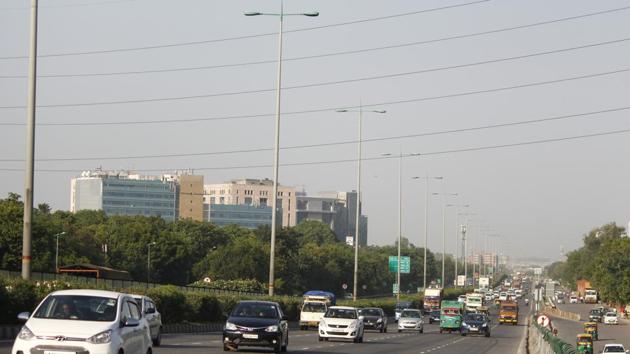
Prior to this, the air quality of Gurugram was in the ‘poor’ category for two days and was on the verge of worsening to ‘very poor’ on Saturday. According to the data, Gurugram was the second most polluted city in the country on September 28 and 29, with AQI readings of 255 and 288, respectively.
In comparison, the AQI on September 29 of neighbouring Delhi was 219, Noida was 258 and Ghaziabad was 244. Greater Noida was the most polluted, with an AQI of 289, just one index point worse than Gurugram.
PM2.5, i.e. particulate pollutants measuring less than 2.5 microns in diameter (about a third of the width of a human hair), continues to be the primary pollutant in Gurugram, largely due to vehicular exhaust and construction dust. On Sunday, the average daily reading of PM2.5 in Gurugram was 133 micrograms per cubic metre (ug/m3), more than double the safe limit of 60ug/mg3.
Since the last spell of rain in the national capital region on September 24, air quality in the region has been deteriorating rapidly due to shifting wind patterns, slower wind speeds and a drop in atmospheric moisture and temperature. Last Monday, when Gurugram received around 75mm of rain, the city’s air quality was found to be ‘satisfactory’, with an AQI score of 83.
Experts said that this spike in atmospheric pollutants is typical at the beginning of the winter cycle. “As winter progresses and the temperature falls, pollutants such as PM2.5 and secondary aerosols will start settling closer to the ground at shorter mixing heights. In summer, rising hot air carries these pollutants farther up into the atmosphere,” said Dipankar Saha, former head of the Central Pollution Control Board’s air quality lab in New Delhi.
A subdivisional officer in the Haryana State Pollution Control Board, who did not wish to be identified, said that the board was prepared to implement the Centre’s Graded Response Action Plan (GRAP) if air quality in the city stays ‘poor’ for over 48 hours. “The air quality is going to get worse. From around October 15, the GRAP for ‘poor’ quality air will be in effect,” the official said.

Stay updated with all the Breaking News and Latest News from Mumbai. Click here for comprehensive coverage of top Cities including Bengaluru, Delhi, Hyderabad, and more across India along with Stay informed on the latest happenings in World News.


