
 E-Paper



‘Housing boom’ in Gurgaon’s green areas
With migratory birds flying off to other destinations after their winter sojourn in the wetlands of the NCR, Gurgaon’s green areas are witnessing a different kind of ‘housing boom’.


With migratory birds flying off to other destinations after their winter sojourn in the wetlands of the NCR, Gurgaon’s green areas are witnessing a different kind of ‘housing boom’.
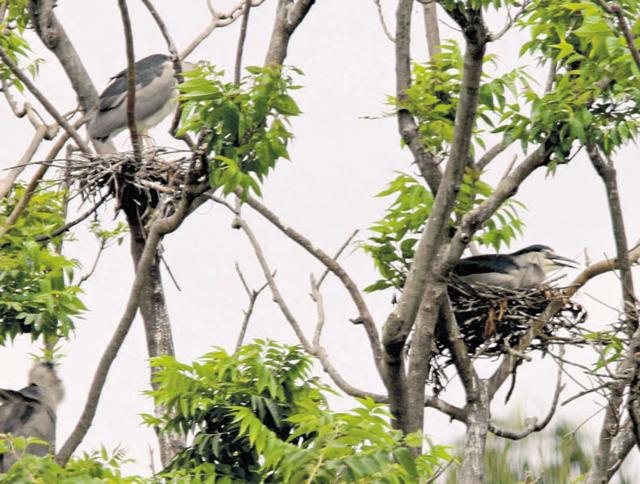
Indigenous birds are busy securing a place for breeding and are gathering nesting material, the most important activity of the season for birds. Since nests vary from habitat to habitat and must be adapted to fit a bewildering diversity of supporting structures, it is not surprising that an almost limitless variety of materials -- stones and mud, animal and plant products, and human-made artifacts -- have been incorporated into these bird-made wonders.
Bird watchers say most people only know about winter birds -- the exotic visitors that reach here after flying for miles and leave when the temperature starts going north.

People rarely know about the kind of hard work that the resident species put in to survive.
“Green pigeons and parakeets nest on branches; so do owls, and crows. The nests may be found at every level of the tree, from the crown to the understory. Cuckoos lay eggs in crow nests -- they do not build nests of their own,” said Tapas Mishra, a bird watcher.
Each species has a signature nest style and may build them anywhere -- on the ground, in trees, burrows, on the sides of cliffs and even in and on man-made structures.
Nests are built with material that can help cushion, insulate and keep the eggs and newborns safe. Birders say it takes weeks for some birds to build their nests.

“Birds also look for adhesive products that are required to bind and provide support to the nests,” said B Singh, a bird expert.
Some birds such as certain Sarus crane nests on the ground -- in grasslands and brushy areas, he explained.
On the birds and their nests that are typical to this region, bird watcher Abhisek Gulshan, who is part of the Delhi Bird Group, said, “Swallows build mud nests on the sides of buildings; woodpeckers and owls use cavities that they either make themselves or has been abandoned. They also use holes found in live and dead trees, stumps, cacti, and in old buildings.”

Those interested in watching the birds in Gurgaon can visit Sultanpur National Park, Basai wetland, Biodiversity Park and Manger in Aravalli forest area. “The region sees nesting season from May to August -- this is the time when birds build nests and lay eggs. Around September they are almost ready to fly,” said RK Bhatia, wildlife officer, forest department.
Describing the different types of nests that birds construct, an official from forest department said, “Burrow nests are very effective in protecting eggs and the young from predators. They also help in maintaining an appropriate microclimate for eggs and the young. Kingfishers usually construct their own burrows.”
Experts said birds usually look for a place that is abandoned as an ideal place for breeding.
“Lapwing, red wattled, yellow wattled, Indian thick knee, Indian peacock make their nest on the ground. Prinia, Indian robin, sparrow look for bushes for nesting,” said Pankaj Gupta, a birder.

Stay updated with all the Breaking News and Latest News from Mumbai. Click here for comprehensive coverage of top Cities including Bengaluru, Delhi, Hyderabad, and more across India along with Stay informed on the latest happenings in World News.


