
 E-Paper



Before August 15, January 26 was supposed to be India's Independence Day: The story behind the dates
For years, Congress marked January 26 as the day Indians publicly claimed complete freedom. Why August 15 eventually took its place.

 Prefer HTon Google


For 17 years before the Tricolour first rose above the Red Fort, Indians already had an Independence Day. It fell on January 26.
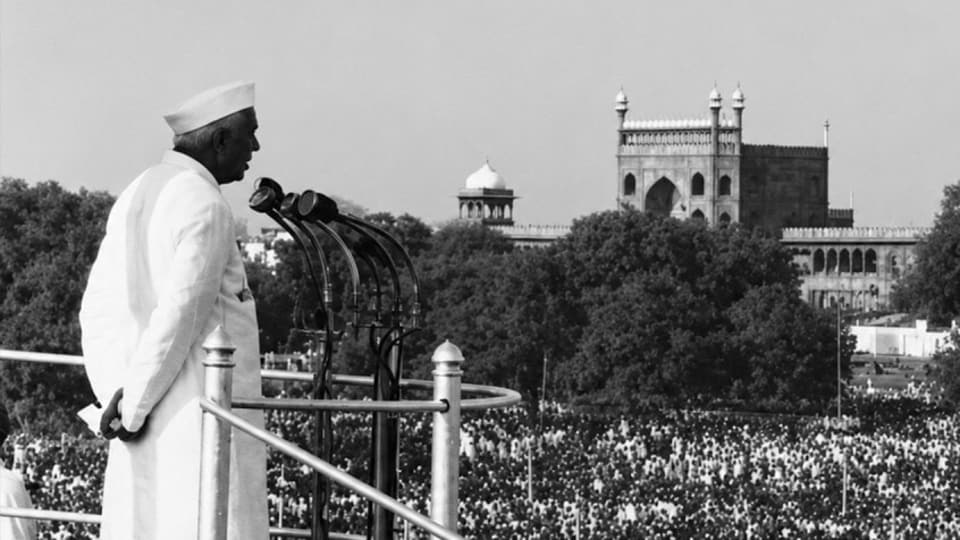
The Indian National Congress (INC) fixed the date in 1930 after resolving that nothing short of Purna Swaraj — complete independence — would satisfy the freedom movement. The date would carry that meaning through the rest of the struggle, and then acquire a second life on January 26, 1950, when the Constitution came into force and made India a republic.
Independence Day: Live coverage
From ‘dominion’ to complete independence
The path to January 26, 1930, ran through a late-1920s argument within the Congress about what independence should mean. One camp was willing to settle for dominion status — considerable self-governance, but with a continuing constitutional link to the British Crown. Others, Jawaharlal Nehru and Subhas Chandra Bose among them, wanted the link cut altogether.
The party had already tilted that way at its 1927 Madras session. A year later, however, it agreed to a compromise, giving Britain a deadline to grant India dominion status.
When London did not respond, the argument was effectively over.
At the Lahore session in December 1929, with Nehru presiding, the Congress adopted the Purna Swaraj resolution. Complete independence was officially the goal, and the party authorised preparations for civil disobedience. The Congress's archives describe Lahore as the moment Purna Swaraj became its ultimate objective.
The party then chose January 26, 1930, to take that demand to the country.
Also read: PM Modi announces free online coaching for competitive exams in Independence Day speech
Why January 26, 1930?
The Congress wanted the idea of complete independence to travel beyond its leadership and into towns and villages. In a statement to the press on January 6, 1930, Nehru said the working committee had fixed January 26 for a “country wide celebration” of complete independence as the immediate objective.
The plan was straightforward: hoist flags, hold public meetings, take the Purna Swaraj pledge. The Union ministry of culture's Azadi Ka Amrit Mahotsav archive records celebrations across several parts of the country. In Madras, now Chennai, the national flag was unfurled at multiple sites, processions were taken out, and the Purna Swaraj pledge was taken.
This was not independence in the legal sense — British rule continued. But politically, January 26 became a public declaration that Indians regarded complete freedom as their right.
The date did not fade after 1930. The Congress continued to observe January 26 as Independence Day through the rest of the freedom struggle.
The Gandhi Heritage Portal records that the first anniversary was marked on January 26, 1931, even as Mahatma Gandhi and several other freedom fighters were in prison. The annual observance kept the demand in public view, and gave the movement a date chosen by Indians rather than by the colonial administration.
Then came August 15, 1947
The Second World War altered years of weakening British position in India. Britain decided to transfer power, and Lord Louis Mountbatten arrived in Delhi as the last viceroy. A hand-over originally expected by June 1948 was pulled forward.
The Indian Independence Act, 1947, passed by the British parliament, provided for the creation of the two independent “dominions” of India and Pakistan, and named August 15, 1947 as the appointed day.
That is why August 15, and not January 26, became the date on which India became an independent nation.
Also read: Freedom the same night, but different dates: Why Pakistan marks its Independence Day on August 14
Why August 15?
Mountbatten later said the date had come to him rather suddenly. He wanted an early hand-over, and August 15 appealed because it was the second anniversary of Japan's surrender in 1945. As Supreme Allied Commander of the Southeast Asia Command during the final phase of the war against Japan, the anniversary was personally significant to him. It “came out of the blue”, he later said.
January 26, two-and-a-half years after the Union Jack came down, returned to the calendar as Republic Day, the day the Constitution of independent India came into force.


