E-Paper



Trial in absentia for Hafiz Saeed: The law that lets courts try absconding accused, and where it’s already being used
BNSS lets courts try, convict and sentence absconders in their absence. Hafiz Saeed could be the highest-profile test yet.

 Prefer HTon Google


A Mumbai court is expected to try Lashkar-e-Taiba founder Hafiz Saeed in absentia for his alleged role in the 26/11 terror attacks in the city, as Indian prosecutors turn to a two-year-old provision built specifically to bring elusive fugitives to justice.
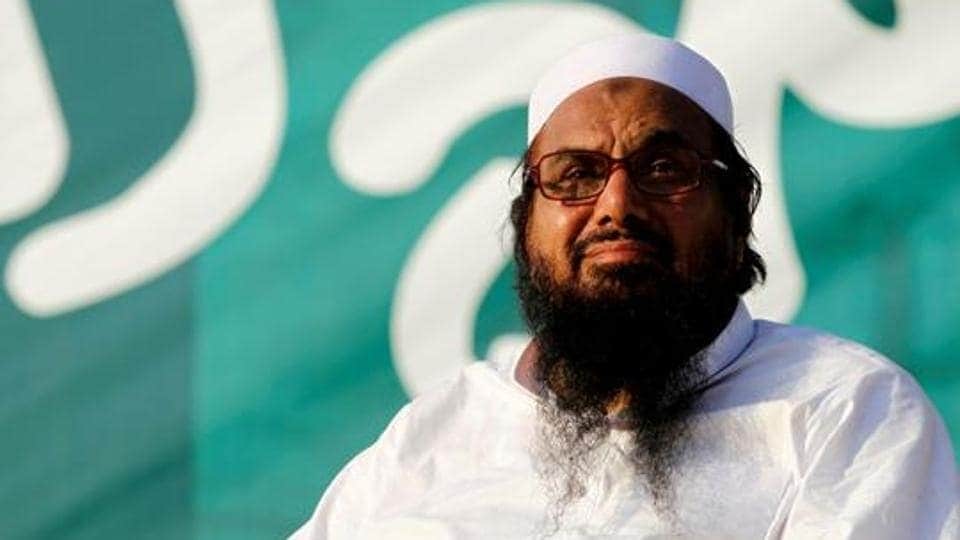
Special public prosecutor Ujjwal Nikam told the court last week that Mumbai Police have asked the ministry of home affairs to serve a proclamation order, through Interpol, on six absconding 26/11 accused — including Saeed and fellow LeT founder Zaki-ur-Rehman Lakhvi. All six are Pakistani nationals believed to be beyond Indian authorities’ reach.
The move opens a fresh round of prosecution against Saeed, a United Nations-designated global terrorist.
It follows a separate case: on July 14, a Jammu court issued a non-bailable warrant against Saeed for his alleged role in last year’s Pahalgam terror attack, after the National Investigation Agency asked the court to declare him a proclaimed offender and try him in absentia.
Also Read | 26/11 terror attack: Proclamation to be served on Hafiz Saeed, others via Interpol, say police
Both moves rest on Section 356 of the Bharatiya Nagarik Suraksha Sanhita (BNSS) — the provision that, for the first time, allowed Indian courts to try an accused, convict them, and hand down a sentence without their presence in court.
The BNSS replaced the colonial-era Code of Criminal Procedure (CrPC) in 2024.
What the provision says
Under Section 356, if a proclaimed offender has absconded to evade trial and there is no immediate prospect of arrest, the court may treat their continued absence as a waiver of the right to be present. Once the judge records this reasoning in writing, the trial can proceed to judgment as though the accused were in the dock.
Getting there, however, requires the prosecution to clear several steps.
It begins after charges are framed, when the court summons the accused. If they fail to appear, the court moves to issue an arrest warrant — first bailable, then non-bailable if that is ignored or if the accused is clearly evading appearance deliberately and repeatedly.
If the accused is charged with an offence carrying a sentence of ten years in jail or more, life imprisonment or death, the court can then move to declare them a proclaimed offender. Under Section 84 of the BNSS, if a warrant cannot be executed because the accused is absconding or hiding, the court issues a public proclamation requiring them to appear at a specified time and place, giving them at least 30 days to do so. If they don’t, they are formally declared a proclaimed offender.
Only at this stage can the prosecution seek a trial in absentia — and the court must still work through a four-step procedure before it can begin:
Two consecutive arrest warrants, issued at least 30 days apart, so the court cannot simply cite earlier unexecuted warrants and move straight to trial.
A notice published in a national or local newspaper circulating at the accused’s last known address, ordering them to appear and warning that trial may begin without them if they don’t, within 30 days of publication — a final public notice.
Word to any relative or friend of the accused about the trial’s commencement, so they cannot later claim ignorance of the proceedings.
Also Read | What Indian court's warrant against Pak-based Hafiz Saeed means for the Pahalgam terror trial
A notice affixed to the accused’s residence and displayed at the police station covering their last known address.
Even once all four conditions are met, the trial cannot start until 90 days have passed since charges were framed — a final window for the accused to appear.
Once underway, the trial runs like any other.
The prosecution must still prove its case beyond reasonable doubt, and the court must appoint a state-funded lawyer if the accused has none. Prosecutors don’t have to wait for a full trial to invoke the provision either — if an accused is declared a proclaimed offender during the investigation, a trial in absentia can begin as soon as the case reaches the chargesheet and document-scrutiny stage.
The safeguards extend to appeal. A convict cannot challenge an absentia conviction before an appellate court without first presenting himself, and no such appeal can be filed more than three years after the judgment.
A substitute?
Trial in absentia wasn’t entirely new. In theory, it existed under two provisions of the Code of Criminal Procedure, though they were rarely used and largely left to judicial discretion.
Section 299 of the CrPC allowed courts to record and preserve prosecution evidence against an absconder, but stopped short of a full trial. If the accused was later arrested mid-proceeding, the case had to restart from scratch, with witnesses re-examined — in effect, launching a fresh trial.
Section 317 gave a judge discretion to proceed with an inquiry or trial without the accused if satisfied their personal attendance wasn’t necessary for justice, if they were persistently disrupting proceedings, or if they were too ill to attend.
Neither offered a clear path to a verdict.
Delhi’s early test cases
Two cases from the capital show how the new BNSS provision is playing out in practice.
On July 9, then special judge Vishal Gogne of the Rouse Avenue Courts opened a trial in absentia against UK-based gangster Kapil Sangwan, booked under the Maharashtra Control of Organised Crime Act (MCOCA).
The court had declared Sangwan a proclaimed offender at the Delhi Police Crime Branch’s request during its investigation. Sangwan faces charges of extortion, murder, attempted murder, firing and criminal intimidation as part of an 11-member syndicate that police allege targeted builders, property dealers and businessmen across Delhi and its suburbs.
The case is being heard daily at the charge-framing stage, with Sangwan represented by a state legal-aid lawyer.
Delhi Police secured another absentia trial — the first by any investigating agency under the new law — on November 18 last year, in a kidnapping-and-murder case.
Ramesh Bhardwaj (68) went missing from his home in Outer Delhi’s Narela, and his employee, Jitender Mahto, disappeared around the same time.
Investigators concluded Bhardwaj had been killed by Mahto after a financial dispute.
They arrested Mahto’s son and Bhardwaj’s son, both allegedly involved in the crime, but could not trace Mahto, who was then declared a proclaimed offender. After the chargesheet was filed, the principal district and sessions judge at Rohini framed charges against the three accused, making way for a trial in absentia against Mahto.
How lawyers read the new framework
Public prosecutor Akhand Pratap Singh, who represents Delhi Police in the Sangwan case, said the provision’s biggest advantage is efficiency as it removes the need for a separate trial if an absconder is later caught.
“Earlier, a fresh trial was initiated against an absconder if he was arrested while the proceedings were ongoing. This led to case backlogs and a significant diversion of court’s resources,” Singh told HT.
“Now, in case an accused is arrested later on, trial in absentia allows re-examination of prosecution witnesses by him, subject only to the court's discretion,” Singh added.
Singh was referring to Section 356(4) of the BNSS, which allows a court, in the interest of justice, to let a later-arrested accused re-examine evidence already recorded against him in absentia, provided the accused can show reasonable grounds that he/she wasn’t made aware of the proceedings through warrants or public notices.
Also Read | Pakistan Army spokesman echoes terrorist Hafiz Saeed in fresh threat to India over Indus waters
Lawyer MS Khan said the earlier framework often left cases in limbo. “Files used to be consigned to the record room after one of the accused, either before the charge stage or mid-trial, used to flee the country, go into deep hiding, or simply refused to appear after being declared a proclaimed offender,” he said. Because the CrPC left the decision entirely to judicial discretion and applied only in limited circumstances, he added, “Even if the trial proceeded, a judgment could not be delivered due to lack of judicial framework.”
Khan argued the new provision still protects the accused’s rights. “Since trial in absentia proceeds like any other trial, this also gives a fair chance to the accused, despite his absence, to participate in the proceedings through a legal-aid lawyer, ensuring speedy justice for both the parties.”
The balance that courts must strike
Section 356 marks a shift in principle: an absconding accused is no longer a reason to keep prosecution in limbo, but deliberate evasion is no longer a bar to its conclusion either. Its procedural safeguards — the twin warrants, the published notices, the 90-day wait — are designed to ensure trial in absentia remains a measure of last resort, not a shortcut around an accused’s rights.
How far courts are willing to take it will likely be shaped by cases like Hafiz Saeed’s — long-absconding, high-profile, and testing whether the new regime can deliver verdicts without compromising the basic principles of criminal justice.