
 E-Paper



How can India meet its rising power demand?
This paper is authored by Disha Agarwal, Arushi Relan, Rudhi Pradhan, Sanyogita Satpute, Karthik Ganesan, and Shalu Agrawal, CEEW, New Delhi.

 Prefer HTon Google


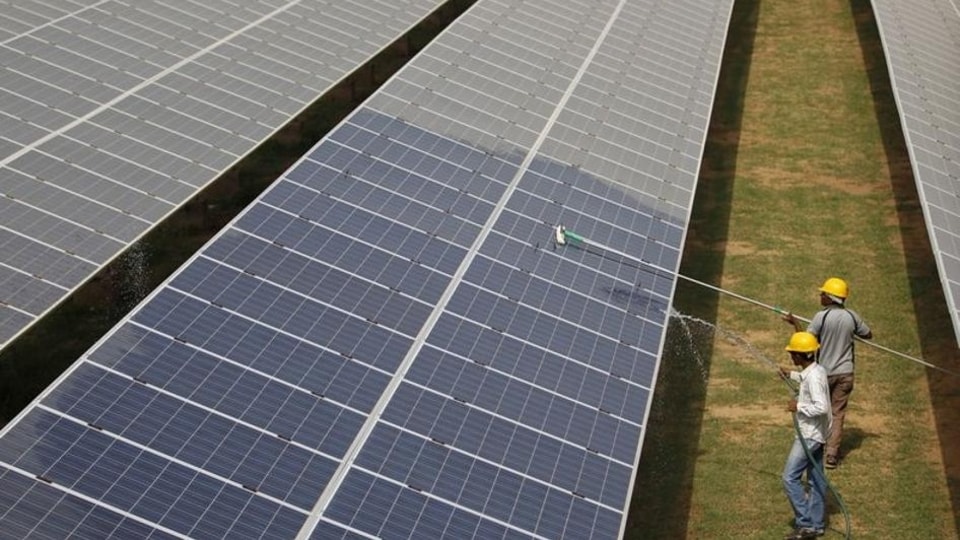
Since 2014, India has simultaneously improved access to electricity, addressed energy security concerns, and laid the foundation for a clean energy transition. India’s power system has evolved significantly since the 1990s. India became the world’s third- largest producer of electricity in 2019 (IEA 2021). By 2020, 96 % of the households were electrified (Agrawal et al. 2020). The country saw a fivefold increase in solar and wind power capacities between 2013 and 2022, making it amongst the top four renewable energy (RE) installers globally (PIB 2024a).
The Central Electricity Authority (CEA), in its 20th Electric Power Survey (EPS), projects that India’s FY30 electricity requirement and peak demand will both grow by 6.4 % per annum, from FY22 (CEA 2022a). However, recent trends show ~9 % annual growth in the electricity requirement since FY21, compared to an average of 5 % per annum in the decade before (CEA, n.d.-d). The EPS demand estimates for 2030 consider baseline projections for green hydrogen production, rooftop solar penetration, electric vehicles (EVs), and other sectors based on extant policies. One-third of this electricity demand is likely to be consumed by the industrial sector. Considering the push to decarbonise the industrial sector through electrification, the industrial electricity demand is expected to grow faster than anticipated. This would result in a higher electricity demand than that projected by the EPS. For instance, the impact of producing five million tonnes (MT) of green hydrogen in the context of an interconnected grid system could result in a 13 % higher electricity requirement than that projected in the EPS for 2030 (Pradhan et al. 2024). Additionally, economic growth, urbanisation, and climate–induced extreme weather events are likely to influence demand growth and make it more uncertain.
While the supply side has responded to the growing demand, capacity addition has been slow in recent years due to a combination of domestic and extraneous factors. For instance, as of August 2024, over 30 GW of coal capacity is under-construction, 19 GW of which was awarded before 2019 (CEA 2024c). Simultaneously, India has deployed only 3 GW of hydro and nuclear capacities and about 90 GW of RE capacities between 2019 and 2024, resulting in around 218 GW of total non-fossil-based capacity (CEA, n.d.-b).1 The country still needs to deploy around 56 GW of non-fossil-based capacity every year between 2025 and 2030 to meet its 500 GW of non-fossil capacity target by 2030 (CEA, n.d.-b, PIB 2023d).
These trends raise a critical question: how should India plan for adequate resources to meet its energy and peak power requirements by 2030? Answering this question requires an assessment of alternative scenarios the country may face and be prepared for such possibilities. For instance, would India be able to reliably meet its 2030 power demand with its existing and planned generation and transmission capacities? If the country faces higher demand than that projected by the EPS, what might be some cost-effective strategies to enhance the capacities? Further, if India does not meet its 2030 non–fossil capacity target of 500 GW, how much new thermal capacity would be required? In choosing a desirable pathway to ensure energy security, how can India maximise the social and environmental outcomes while limiting the financial burden on its already strained electricity sector? Finally, what kinds of policy signals and market mechanisms are needed to achieve the energy trilemma of securing clean, affordable, and reliable electricity access by 2030?
This paper can be accessed here.
This paper is authored by Disha Agarwal, Arushi Relan, Rudhi Pradhan, Sanyogita Satpute, Karthik Ganesan, and Shalu Agrawal, CEEW, New Delhi.


