
 E-Paper



India’s growth story is complete. Our leadership story isn’t
This article is authored by Priya Kumar, CEO, PKTS and Fire Light Films.

 Prefer HTon Google


Every week, it seems like India hits another impressive milestone. A new unicorn pops up, a major IPO steals the spotlight, and valuations are skyrocketing. Founders are trending, and growth numbers are being celebrated all over social media.
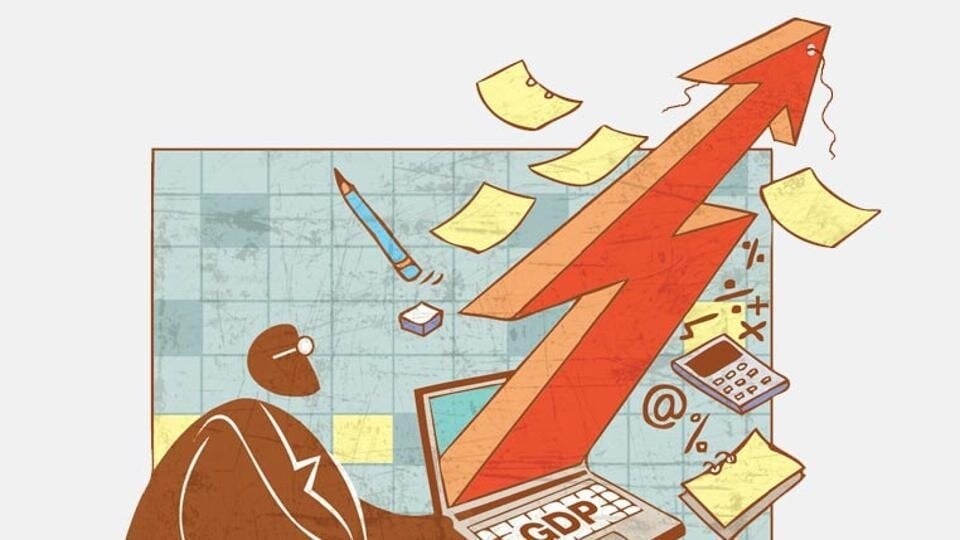
India today is no longer a country trying to prove that it can grow. That question has been answered — decisively. We have scale, speed, confidence, and a global voice that is finally comfortable in its own accent. Our markets are deep, our entrepreneurs restless, and our institutions ambitious. Growth, in every visible sense, has arrived.
And yet, sitting behind this success is a more uncomfortable question—Have we grown our leadership with the same care, patience, and depth with which we have grown our economy? It’s not easily answered, because there is no set metric.
Over the last three decades, my work as a biographer has placed me in a privileged position. I have had long, reflective conversations with some of India’s most consequential leaders, founders and chairpersons. Of course, their scale and success are impressive but what has moved me every single time has been their temperament.
They were not in a hurry to speak of their successes. They carried memory of fragile beginnings, earlier downturns, and decisions that could have gone wrong. Continuity was more important for them than expansion. Who would take over, how culture would survive growth, and whether the institution would still recognise itself after they were gone where matters of primary concern. Leadership, for them was custodianship.
Somewhere along the way, as India accelerated, our definition of leadership began to change. Visibility started to masquerade as authority, and speed began to substitute judgement. The dominant voice in the room increasingly claimed the mantle of leadership, while restraint and reservation were mistaken for hesitation. This is a phase most fast-growing nations pass through.
But leadership does not reveal itself in moments of acceleration. It shows itself when momentum slows, when decisions must be made while risk looms, when responsibility outweighs reward, and when the long-term must be protected from the temptations of the immediate.
What concerns me is not ambition. India has never lacked it. But amnesia. Many of the leaders who built enduring institutions were shaped by scarcity. They remembered failure. That memory tempered their confidence and sharpened their judgement. Today’s leaders are being raised in abundance. That is a gift, but it also removes a natural teacher, falls and failures. Without memory of comebacks, leadership risks becoming performative rather than anchored.
True leadership is remarkably unglamorous. It is consistent and predictable rather than charismatic. The leaders who endured were those whose teams knew exactly where they stood. Their values were steady and their authority came from trust built slowly over time.
This quality is the difference between institutions that survive founders and those that collapse once the spotlight moves on.
India stands today at a subtle inflection point. We have moved from asking whether we can build, to assuming that we will. The next challenge is more demanding: Can we steward what we build? Can we pass judgement, culture, and restraint across generations of leadership without diluting them in the process?
This is not a pessimistic view. On the contrary, it is an optimistic one. Leadership is best shaped in moments of transition, and India is very much in one. We have the opportunity to move from founder-centric success to institution-centric continuity, from personality-driven narratives to principle-driven leadership. More than new policies, that shift requires deeper conversations in boardrooms, in families, and within leaders themselves.
India’s growth story is no longer in doubt. It is robust, admired, and irreversible. But leadership is not automatic. It must be cultivated deliberately. And so, the next chapter of India’s rise will not be written by numbers alone. It will be written by the quality of judgement we reward, the restraint we respect, and the leaders we choose to remember in the pages of history after growth has done its work.
That story is still unfinished. And that is both our responsibility — and our opportunity.
This article is authored by Priya Kumar, CEO, PKTS and Fire Light Films.


