
 E-Paper



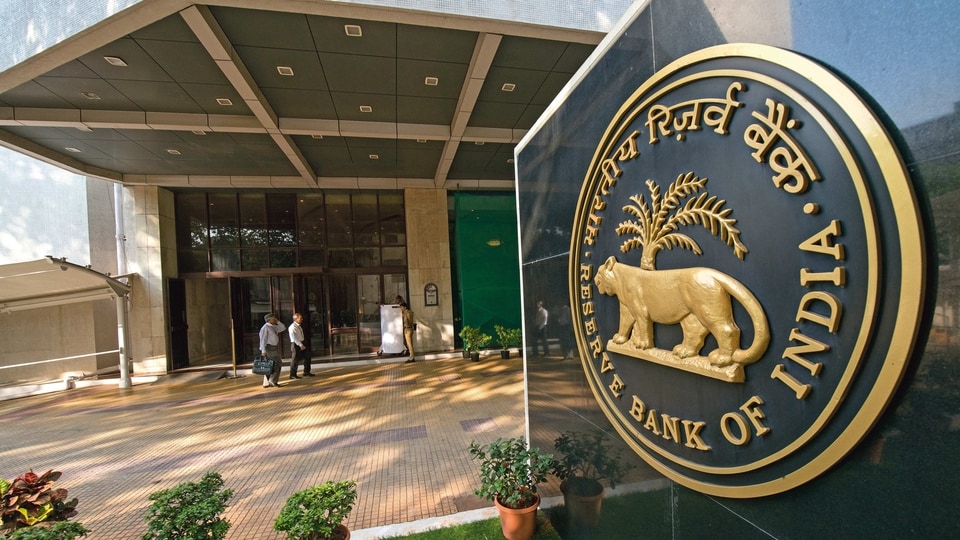
RBI must maintain a calibrated approach
This article is authored by KV Subramanian, professor of finance, Indian School of Business and former executive director, International Monetary Fund.

 Prefer HTon Google


As the drums of war in West Asia have grown louder, oil prices have gone from $65 to over $100. And right on cue, the familiar chorus is returning: The Reserve Bank of India (RBI) must tighten monetary policy.
It is the wrong instinct.
India is about to repeat a policy error it has made too often by fighting supply-side inflation with demand-side weapons. The result is predictable: growth takes a massive hit as the blunt tool of raising interest rates must be stuck deep contain inflation.
According to the latest Household Consumption Expenditure Survey and RBI credit data, the share of the Indian consumption basket that is genuinely sensitive to interest rates is remarkably small. Housing and vehicle purchase together account for about 3.5% and 6.5% of total household consumption expenditure respectively, cumulating to 10%.
Even the 10% figure is a generous upper bound. Much of the housing weight reflects rent and imputed rent, not loan-financed purchases. Much of the vehicle weight reflects outright purchases or informal financing. Once these adjustments are made, the share of consumption that responds to changes in the repo rate converges toward 2-4%. This is why interest rates are an extremely blunt tool to bring down inflation in India.
In advanced economies, raising interest rates is far effective because households borrow extensively to consume including vacations, retail, entertainment, and everyday discretionary spending. In India, households borrow primarily to build homes and small businesses or buy vehicles. Routine consumption runs on income, not credit. So, when rates rise, demand does not collapse. It bends only slightly, at the margin.
This is why raising rates in response to an oil shock is shadow boxing. An oil shock is not excess demand. It is an imported tax that is unavoidable, regressive, and entirely beyond the reach of domestic monetary policy. Raising the repo rate in Mumbai will not lower the price of Brent crude or ease the problems in the Strait of Hormuz. It will simply add a cost on borrowers, on firms, on anyone attempting to invest.
At this point, the standard rebuttal is the following: even if rates do not directly affect current inflation, they anchor expectations and prevent a wage-price spiral.
That logic is sound but in the advanced economies, not in India.
The expectations channel of monetary policy operates through the Phillips Curve. In advanced economies with formal labour markets, higher inflation prompts workers to demand higher wages, firms pass those costs forward, and inflation feeds on itself. This is the classic spiral that central banks are designed to interrupt.
But India's labour market does not work that way. A large proportion of India's workforce is informal. The house help, the driver, or the construction worker do not receive automatic wage adjustments when inflation rises. Their wages are not indexed, their contracts are not enforceable, and their bargaining power is structurally limited. In short, the expectations-augmented Phillips Curve is significantly flatter in India. Higher inflation does not translate reliably into higher wages, and without that transmission, the self-reinforcing spiral that monetary tightening is designed to break is far less likely to materialise in the first place.
This matters enormously for policy. It means the RBI is tightening to prevent a wage-price spiral that India's informal labour market structure makes structurally improbable.
There is, of course, a genuine concern about the external sector. If India tolerates higher inflation while global peers tighten, the rupee could weaken, making oil more expensive in rupee terms and amplifying the original shock. While this risk is real, it does not justify reflexive rate hikes. It calls for coordinated policy action. If the shock originates in oil markets, the first line of response must be fiscal: Calibrated adjustment of fuel taxes not just by the central government but also by state governments, active management of buffer stocks, and targeted logistics reform. Monetary policy should avoid compounding the damage by choking the domestic investment cycle.
As consumption barely responds to rate changes, the burden of tightening falls entirely on investment. Every capital project in the economy, whether it is undertaken by a large corporate or a smaller enterprise, is sensitive to the cost of borrowing. When rates rise, marginal projects disappear. Expansion plans are deferred. Private capital expenditure slows.
This would be a manageable concern if investment were booming. It is not. Private investment in India has been the missing engine for over a decade. The nascent recovery in private investment that we are witnessing will be nipped in the bud if rate hikes happen.
The conceptual error runs deep. India's monetary policy framework continues to import Phillips Curve logic from formal, wage-indexed labour markets and apply it to an economy where the wage transmission mechanism is structurally weak.
The path forward is clear. The government must treat inflation management as a shared Cabinet responsibility, not outsource it entirely to Mint Street. Supply-side shocks require supply-side responses. The RBI, for its part, should maintain a calibrated stance, where it is neither dismissive of price stability nor reflexively punishing an investment cycle that India cannot afford to lose.
This article is authored by KV Subramanian, professor of finance, Indian School of Business and former executive director, International Monetary Fund.


