
 E-Paper



India’s Space Journey and the next frontier of cooperation
This article is authored by Suresh Naik, former group director, ISRO.

 Prefer HTon Google


India’s space programme has always served a wider national purpose. Its early satellite missions supported communication, weather forecasting and remote sensing. Later missions, including Chandrayaan, extended India’s scientific and engineering reach. Today, a growing commercial sector is adding new capabilities and opening another chapter in that journey. Each phase has expanded both the practical uses of space technology and India’s capacity to undertake more demanding missions. National Space Day, was observed on August 23, commemorating Chandrayaan-3’s successful landing in 2023. India became the fourth country to land on the Moon and the first to land near its southern polar region. Yet the achievement did not begin with the launch of Chandrayaan-3. It rested on decades of institution-building, research, engineering and the steady development of dependable indigenous launch systems.
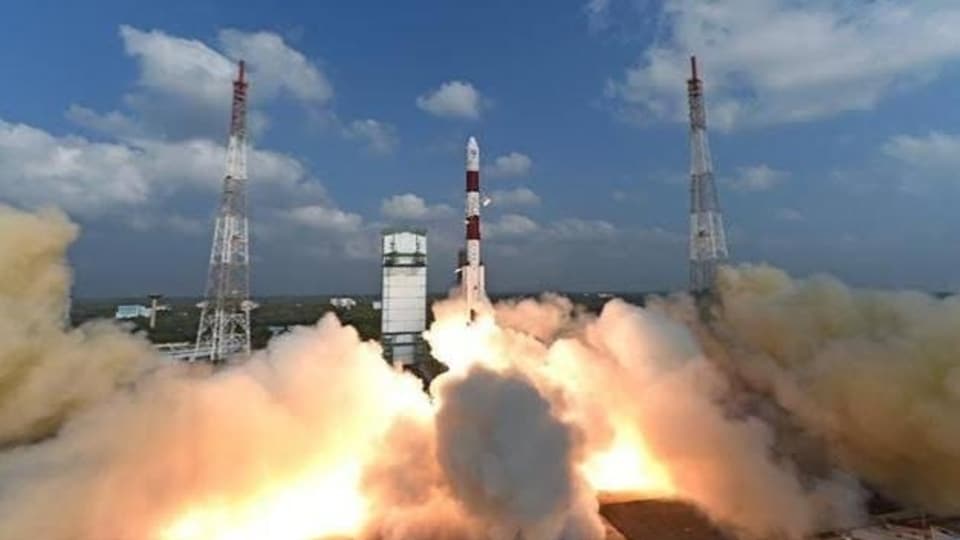
India’s space relationship with Israel forms a less discussed part of this history. It began well before the present expansion of commercial cooperation and showed how the two countries could combine complementary strengths. On January 21, 2008, ISRO’s PSLV-C10 placed Israel’s 295 kg TECSAR satellite into orbit. This was the PSLV’s second commercial launch and its first mission to place a satellite in an elliptical orbit at medium inclination. The mission demonstrated that India could adapt its launch capability to the precise requirements of an international customer. Cooperation also extended to satellite technology. On April 20, 2009, PSLV-C12 launched the approximately 300 kg RISAT-2 radar-imaging satellite. Its Synthetic Aperture Radar enabled observation in darkness and through cloud cover. Although designed for a four-year life, RISAT-2 continued to provide useful payload data for 13 years before re-entering the atmosphere in October 2022.
These missions reflected an important shift. India was no longer developing space systems solely for domestic needs. It had built a reliable launch platform for international customers and was forming technical partnerships with countries whose capabilities complemented its own. That position matters even more now that India has opened the sector to private enterprise. The country had one registered space start-up in 2014. By 2026, it had more than 400. Investment in Indian space start-ups has crossed $500 million, while the domestic space economy is valued at around $9 billion. India aims to increase that figure to $44 billion by 2033. Policy reform has supported this expansion. The Indian Space Policy 2023 permits non-government entities to undertake end-to-end space activities, subject to authorisation by IN-SPACe. Liberalised foreign investment rules, a ₹1,000 crore venture capital fund and a ₹500 crore Technology Adoption Fund have widened access to capital and encouraged private participation across the value chain.
The next challenge is industrial. India must connect research, manufacturing, launch services, satellite operations, data applications and finance in a stronger commercial ecosystem. Government missions such as Gaganyaan will remain central to national capability. But companies, universities and research institutions will shape much of the technology and many of the services that follow. This is where India and Israel have a practical opportunity. Israel has strong capabilities in miniaturised systems, sensors, satellite communications and advanced electronics. India offers engineering depth, manufacturing capacity, competitive launch services and a large base of technology enterprises. Cooperation makes most sense where each side contributes something distinct. The India-Israel Joint Statement of February 2026 recognised this potential. It welcomed ongoing cooperation between ISRO and the Israel Space Agency and called for closer ties between the two countries’ space industries through joint ventures, innovation partnerships and knowledge exchange.
The priority should now be to translate that intent into workable projects. Indian and Israeli companies could jointly develop small payloads, satellite subsystems, propulsion technologies, geospatial tools and downstream applications. Universities could run shared research programmes, while investors and public institutions could help promising technologies move from the laboratory to commercial use. Such work would build a broader base for cooperation without depending on a single flagship mission.
India’s progress in space has never rested on one moment, however historic. Chandrayaan-3 drew upon knowledge and capability accumulated over generations. The commercial sector now has a policy framework from which to build, but its success will depend on execution, investment and sustained technical collaboration. National Space Day should therefore mark more than the memory of a lunar landing. It should remind us of the patient work that made the landing possible and of the opportunities that capability now creates. India has moved from using space mainly for national development to supplying launch services, technology and expertise to the world. The next frontier lies in building partnerships that convert those strengths into shared innovation, useful applications and lasting commercial value.
This article is authored by Suresh Naik, former group director, ISRO.


