
 E-Paper



Rethinking food security for a changing India
India’s rising food production and agricultural exports have not resolved the wider challenge of food security.

 Prefer HTon Google


What does it take to feed a nation?
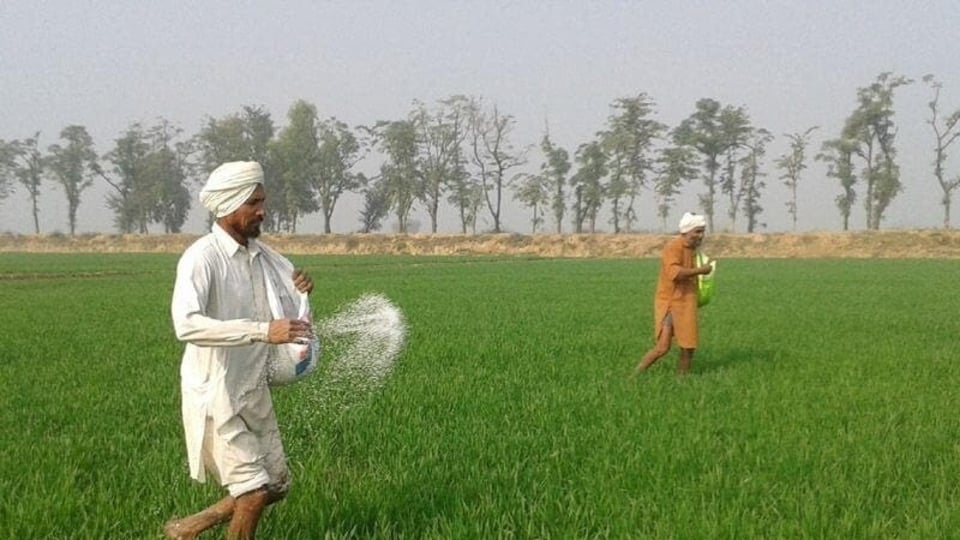
If food production alone determined food security, India would have much to celebrate. By the measure of agricultural output, India has made significant strides. Over the past decade, India’s foodgrain production rose by approximately 50%--from 251.54 million tonnes in 2015–16 to over 376.56 million tonnes in 2025–26.
Yet, yield output or producing enough food represents only one part of the food security equation.
The greater challenge and the more consequential one is ensuring that food is nutritious, affordable and accessible; agricultural resources are used responsibly to meet the needs of a growing population; and farmers who make this possible earn a viable livelihood.
Recent disruptions to global supply chains, rising input costs and India’s dependence on imported raw materials for fertiliser manufacturing add to these challenges. These pressures are likely to persist amid continuing geopolitical uncertainty.
The task before us, therefore, is to build an agricultural system that is resilient to geo-economic realities, efficient in its use of natural resources and aligned with the country's nutritional needs.
In the 1960s, the Green Revolution addressed India’s food scarcity. By empowering farmers with scientific advances, improved seeds and fertilisers, it marked a turning point in the domestic yield output.
Six decades later, India under its Viksit Bharat aspirations, is a leading global exporter of agricultural products. The value of agricultural exports increased by approximately 64% between 2014–15 and 2025–26.
Agricultural progress, in the present era, should thus extend beyond yield sufficiency to include crop-led dietary diversity, sustainable farming practices, affordable access to nutritious food and better returns for farmers.
This shift demands an integrated approach to soil health and balanced nutrient management. Farmers, particularly in remote regions, need scientific guidance on soil and crop nutrient requirements, along with practices tailored to local cropping patterns and water availability. Scientific, data-driven crop diversification tailored to local conditions, along with optimal agri-nutrient use, can strengthen farming-system resilience. Achieving this, however, this requires appropriate agronomic guidance and reliable market access for farmers.
Fertilisers play an important role in this context. But their benefits depend on appropriate and balanced use. Initiatives such as PM-PRANAM and Urvarak Ki Paathshala, supported by government–industry collaboration, promote balanced agri-nutrient management and sustainable soil health. At the same time, India's dependence on imports for certain fertilisers and key raw materials exposes the agricultural sector to global supply disruptions and price volatility. Government–industry partnerships must therefore support stronger domestic fertiliser production capabilities and a more reliable supply of essential agricultural inputs.
The government’s policy push towards green and organic fertilisers is a step in the right direction for protecting soil health and the environment. However, these alternatives are still at an early stage of development. Scaling up production to meet the country’s demand while ensuring commercial viability will require detailed planning, continued research and manufacturing readiness. Equally important will be greater farmer awareness and close collaboration between the government and industry.
Technology is opening new possibilities for agricultural productivity and resource use. Innovations such as nano-fertilisers, drones and precision agriculture can help farmers use inputs more efficiently. Artificial intelligence (AI) and machine learning (ML) can complement farmers' experience with data-led insights on crop selection, nutrient requirements and resource use, supporting more informed decisions across the agricultural cycle. Wider access to these technologies, backed by scientific guidance and practical training, will be essential to translating innovation into real, on-the-ground benefits for farmers.
The economic viability of this approach hinges on one question: Can farmers translate changing consumer demand into reliable income? Stronger coordination among farmers, agricultural scientists, processors and markets can align what is grown with what is needed and rewarded. Such partnerships can also improve price realisation, reduce intermediary costs and enable farmers to capture a greater share of the value they create.
By strengthening the connections between what the country needs to eat, what its farmers grow and what the market rewards, India can advance nutritional security while creating more viable and sustainable livelihoods for farmers.
World Food Month was observed in October with the global theme “Innovate today. Nourish tomorrow.” This highlights the need to build agrifood systems that nourish people, enhance farmers’ livelihoods, and use natural resources responsibly. Achieving these vital objectives will require sustained collaboration among policymakers, industry leaders, the scientific community, and farmers alike. By aligning policies, scientific advances, and stakeholder priorities with these goals, India can build a more resilient, sustainable and competitive agricultural future.
(The views expressed are personal)
This article is authored by Ashwin Muthiah, chairman, SPIC and founder, Chairman, AM International.


