
 E-Paper



What gets counted, counts
This article is authored by Somya Jain and Sagarika Parab.

 Prefer HTon Google


Sixteen years have passed since India last counted its people in the decadal Census. With the next Census finally notified to collect data till March 1, 2027, the country is set to fill a critical gap in its data landscape. Since 2011, several laws and policies have been introduced, often in the absence of updated, reliable data. Yet, one of the most persistently overlooked areas remains the education of children with disabilities.
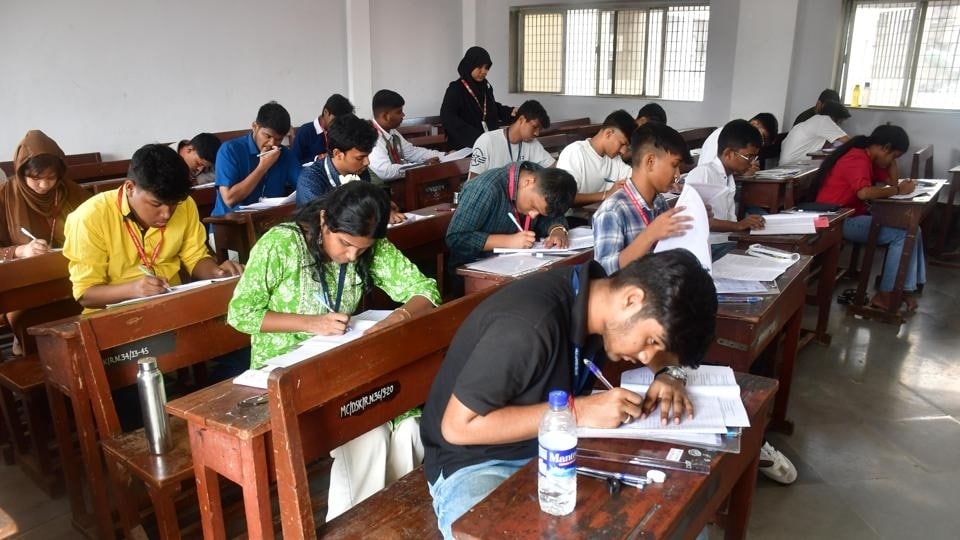
The last decade-and-a-half has seen a major shift in the way India approaches education for children with disabilities. The country has moved from segregated or integrated models to a more inclusive system, where children with disabilities study alongside their peers. This shift has been formalised through the Rights of Persons with Disabilities Act, 2016 (RPWDA), which guarantees inclusive education as a right, and the 2011 amendment to the Right to Education Act, 2009, which extended the right to education to children with disabilities.
On the policy front, schemes like the Samagra Shiksha Abhiyan and the National Education Policy 2020 have laid out a framework for inclusive education. But, amidst all these sweeping changes, one thing has remained unchanged--the absence of comprehensive data on children with disabilities. It would be inaccurate to say that no efforts have been made to gather data, but the real question is: Have they been adequate? Or are we still building policies on an incomplete picture?
The primary source of data on children with disabilities in India remains the outdated Census 2011. While it provided insights on total numbers, age and gender distribution, and school enrolment, it only accounted for seven categories of disabilities–far fewer than the 21 recognised under the RPWDA. A more recent effort, the 76th National Sample Survey (2018), offered limited insights on school enrolment, but lacked disaggregation by age or type of disability.
Two other datasets offer some insights. The first is the 8th All India School Education Survey (2009), which is now outdated and of limited relevance. The more current and comprehensive source is the Unified District Information System for Education (UDISE) 2023–24. It captures key indicators like enrolment, drop-out rates, accessible infrastructure, special schools, and teacher training. Importantly, it also recognises all 21 disability categories under the RPWDA. Yet, even UDISE has significant blind spots. It excludes data on out-of-school children and those receiving home-based education and does not disaggregate the data by disability.
As a result, there is currently no single, comprehensive, and up-to-date source that captures the full picture of children with disabilities in education.
As discussed, the absence of updated and intersectional data leads to policies that wander aimlessly. But the cost of poor data goes beyond ineffective governance. When we don’t know the scale of a problem, it fails to trigger urgency. Take, for instance, the NFHS 2016 findings on child malnutrition and anaemia in women, which spurred public concern and led to the launch of the Poshan Abhiyaan in 2018.
When data is lacking, the issue itself becomes invisible in public discourse and sidelined in policy. This has long been the case with children with disabilities. Consider this: As per Census 2011, India had 78.6 lakh children with disabilities. Yet, according to UDISE 2023–24, only records 21 lakh enrolled in schools. What happened in these 16 years? Did the number decline drastically, or are millions simply out of school? This data vacuum fosters a dangerous complacency, weakening both public pressure and government response.
The 2021 Census, now rescheduled for completion by 2027, offers a long-overdue opportunity to correct course. It can close the data gap for children with disabilities, but only if designed with intentionality. At a minimum, it must align with the RPWDA and recognise all 21 legally defined disability categories. It should also collect disaggregated data by age, gender, and location, and include specific questions on school enrolment and educational access.
But better questions are only the starting point. The quality of disability data depends significantly on how it is collected. Enumerators must be trained to sensitively identify all forms of disability, the language and format of questions must be accessible and inclusive, and caregivers and community workers should be involved in the process. As NITI Aayog’s Strategy for New India@75 notes, accurate identification remains a challenge, as many families hide disabilities to avoid discrimination.
At the same time, a decadal exercise alone cannot anchor inclusive planning. Census data, while useful for macro-level analysis, is too infrequent to reflect the dynamic realities of children’s lives, such as transitions in and out of school or changing support needs. That’s why the Census must be complemented not replaced by robust, annual, and integrated data systems that monitor the full journey of children with disabilities, from enrolment to learning outcomes and transitions to higher education or employment. This requires strengthening databases like UDISE to include out-of-school children and those in home-based education, and disaggregating key indicators by type of disability. It also calls for better coordination across ministries to build a shared understanding of needs.
For children with disabilities, the absence of data is not just a technical flaw, it signals exclusion. What isn’t counted isn’t seen, and what isn’t seen isn’t served. The Census is not just a chance to update numbers; it is a test of our national commitment to inclusion. If designed well, it could catalyse a decade of data-driven reform. But it cannot stand alone. Real accountability means treating disability data not as a one-time exercise, but as an ongoing responsibility. Inclusion begins with visibility.
This article is authored by Somya Jain, research fellow, disability, inclusion & access and Sagarika Parab, senior resident fellow, Vidhi Centre for Legal Policy, New Delhi.


