
 E-Paper



A review of India-Russia energy partnership
This article is authored by Sitakanta Mishra, Dean, School of Liberal Studies, Pandit Deendayal Energy University, Gujarat, India.

 Prefer HTon Google


The contemporary global geopolitical landscape is marked by shifting alignments, sanctions regimes and growing strategic uncertainty. Its impact is pervasive and disconcerting, especially in the energy security domain, marked by supply chain disruptions. Additionally, tariff restrictions and the use of economic interdependence as a strategic tool to assert pre-eminence have given rise to an alarming environment characterised by systemic volatility, economic instability and geopolitical unpredictability. To navigate this world adrift, cultivating and sustaining institutional trust have become increasingly vital in international engagements. Against this backdrop, India’s energy partnership with Russia continues to demonstrate diplomatic endurance in international affairs and a resilient bilateral engagement anchored in institutional depth, long-term cooperation and pragmatic alignment of interests.
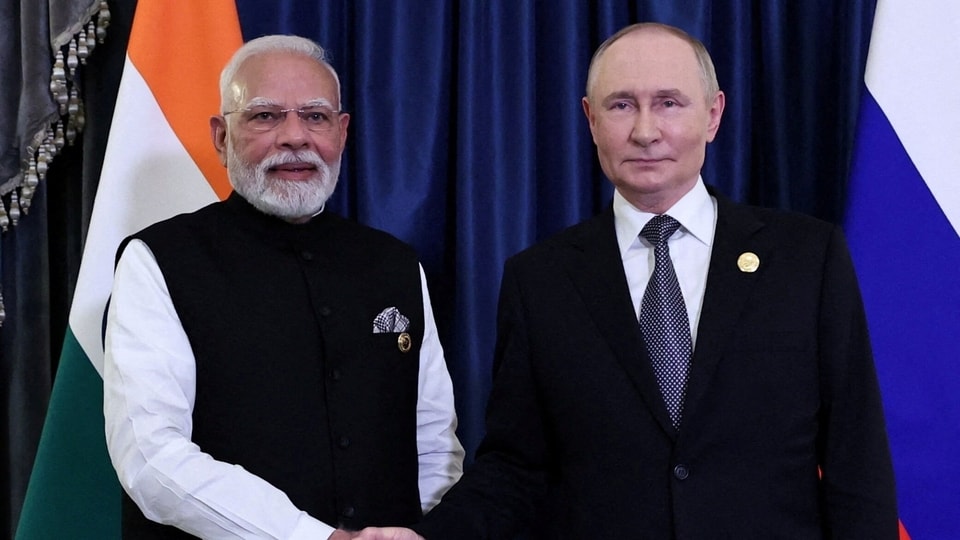
India’s vision of economic development and trajectory makes energy security a foundational concern. The country’s manufacturing ambitions, expanding digital infrastructure, data centres, transport electrification and urbanisation are placing sustained pressure on the grid. Ensuring uninterrupted and affordable supply of energy is, therefore, an operational imperative connected directly to economic growth, investment flows and long-term industrial competitiveness. Given India’s heavy dependence on imported crude oil, its effort to ensure sustained energy supply and energy partnerships is crucial. However, energy availability and supply processes are not immune to geopolitical vagaries; therefore, dependable and viable partnership is warranted, especially for India, which has very limited energy supply choices.
Among India’s handful of trusted energy partners, Russia occupies a prominent space. In fact, the energy partnership between India and Russia is the foundational pillar of their privileged strategic partnership anchored in multi-billion-dollar cooperation across all sectors including oil, natural gas, and nuclear. In recent years, Russian crude oil has played an important role in India’s import basket, particularly during periods of global price volatility. Access to cost-effective and efficient energy has contributed to macroeconomic stability at a time when inflationary pressures were affecting economies worldwide. While India continues to diversify its energy sourcing geographies, the reliable flow of hydrocarbons from Russia during this critical period reflects a mutual strategic partnership driven by India’s need for affordable and reliable energy sources and Russia’s shift in export flows in response to changing global trade conditions.
Yet hydrocarbons represent only one aspect of the India-Russia strategic and energy partnership. The deeper and more enduring pillar is civil nuclear cooperation. The Kudankulam Nuclear Power Plant, developed with the support of Russia’s state nuclear corporation Rosatom, stands as a flagship technological collaboration and a testament to bilateral strategic resilience between the two countries. Nuclear energy cooperation is not just a transactional arrangement. It necessitates harmonisation of safety standards, fuel supply, technical training, regulatory mechanisms, and long-term maintenance frameworks. As reactor lifespans often exceed sixty years, fuel cycles and service agreements extend far beyond the technology transfer period. India and Russia have sustained and expanded nuclear energy cooperation from the Soviet era to the present, which underscores a relationship structured around continuity rather than episodic diplomacy. Besides, nuclear energy cooperation with Russia strengthens India’s efforts to achieve climate change goals, clean energy transition and net-zero emission goals.
Another important outcome of this partnership is the evolution of adaptive mechanisms in response to, and to manoeuvre through, global constraints such as sanctions and financial restrictions. Rather than disrupting their bilateral cooperation, such barriers have reinforced their national resolve and institutional character to sustain bilateral engagement.
Meanwhile, India’s privileged partnership with Russia does not hamper its non-alignment or multi-alignment credentials. Its engagement with the West continues to expand without contradicting its engagement with Russia. India’s strategic autonomy remains intact irrespective of its close connection with Russia as a special partner with long-term commitment. The energy relationship contributes to India’s autonomy by adding resilience to India’s overall energy portfolio. It reduces overdependence on any single geography and enhances negotiating leverage in global markets.
In this era of uncertainty, international engagement is often measured by dramatic announcements or rapid alignments or realignments; endurance of strategic engagements and stability of partnership are among the most important aspects of geo-technology. Endurance of partnership is crucial for fostering engineering coordination, building regulatory trust, sustainable supply chains, and long-term financial commitments. The India–Russia energy engagement reflects this reality, not just reciprocal transactions in idealistic terms.
While exploring and diversifying energy technology options, India needs to carefully evaluate emerging technologies such as Small Modular Reactors (SMRs). Even though the idea sounds lucrative and novel, especially amid growing global interest from players such as Rosatom, their commercial deployment experience remains limited. Deployment frameworks and long-term economics are still evolving. Growing global interest reflects the strategic importance of next-generation nuclear technologies. India must adopt a balanced strategy towards SMRs while sustaining its ongoing indigenous three-stage nuclear programme.
(The views expressed are personal)
This article is authored by Sitakanta Mishra, Dean, School of Liberal Studies, Pandit Deendayal Energy University, Gujarat, India.


