
 E-Paper



Delays and disparities in Pakistan's electoral landscape
This article is authored by Soumya Awasthi, consultant, ministry of defence, government of India and expert, Centre on Armed Groups, Geneva.

 Prefer HTon Google


In the backdrop of Pakistan's eagerly awaited general elections, the nation finds itself entangled in a web of complexities, ranging from the delayed electoral process to egregious atrocities against minorities, public discontent, and regional dynamics shaping the political landscape.
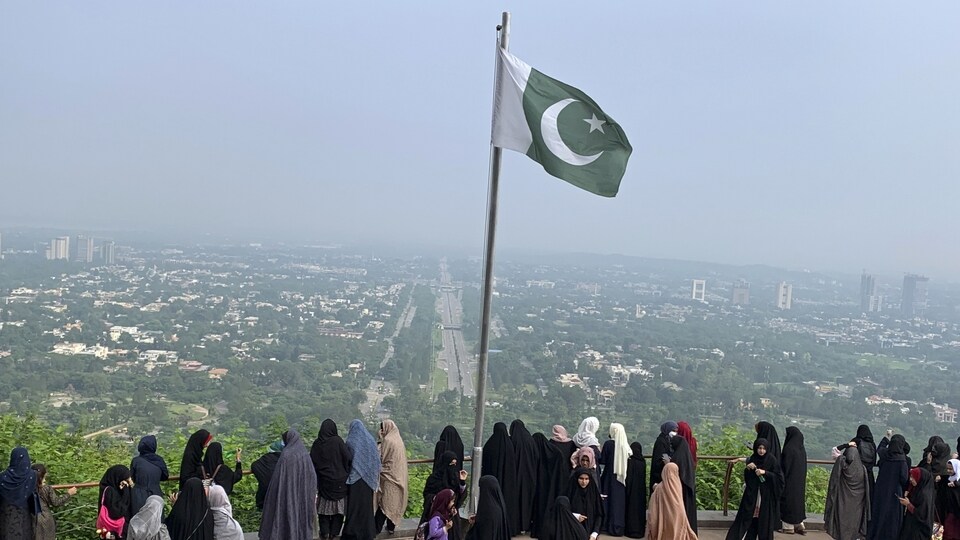
The prolonged delay in the general elections, following the dissolution of the National Assembly in August 2023, has not only stirred up political upheaval but also unveiled stark challenges to democratic principles. Amidst the power struggles between civilian leaders and military figures, the Senate's announcement of an indefinite postponement, citing "security concerns" and the delineation of constituencies based on the latest census, raises eyebrows. Notably, the resolution was passed with a mere 15 members present out of 100 in the upper house, triggering concerns about the equitable balance of power in Pakistan's domestic and global political dynamics.
The intricate interplay between democracy and hypocrisy becomes apparent in Pakistan's tumultuous journey toward democratic governance since its inception in 1947 as the world's sole Islamic republic.
The democratic narrative in Pakistan is marred by persistent atrocities against minorities, creating a pressing concern for the international community. The August 2023 Jaranwala incident, where properties of the Christian community were set ablaze, serves as a reminder of the systemic challenges faced by religious minorities. The plight of Shia Muslims, Christians, Ahmadis, Hindus, and Sikhs, subjected to discrimination and violence, underscores the urgent need for government accountability. The legal framework, particularly the draconian blasphemy law, exacerbates the marginalisation of minority communities, as they face persecution and accusations used as tools for personal vendettas.
Various benchmarks illuminate the state of democracy in Pakistan, encompassing freedom of speech, press independence, the electoral process, and adherence to the rule of law. A critical facet of democracy, the freedom of speech and press autonomy, has been challenging to secure in Pakistan, ranking 150 out of 180 countries on the 2023 World Press Freedom Index.
The electoral process serves as another vital gauge of democratic maturity, with Pakistan ranking 104 out of 167 countries on the Democracy Index in 2022. Evaluating the rule of law is equally crucial, revealing pervasive corruption, political influence, and a lack of accountability. The judiciary, often criticised for delay, inefficiency, and susceptibility to corruption, remains a significant concern. Discriminatory measures, particularly against religious minorities, further tarnish democratic credentials. The August 2023 Jaranwala incident stands as a testament to the acts of terror perpetrated against Pakistan's minorities, particularly the Christian community, whose properties were reduced to ashes.
Shia Muslims, Christians, Ahmadis, Hindus, and Sikhs, constituting the minority community in Pakistan, consistently face discrimination under both civil and military rule. Despite political rhetoric in favour of minorities, fundamental rights such as worship space, crematoriums, and medical facilities remain elusive. Furthermore, instances of vandalism targeting places of worship and residences, fuelled by accusations of blasphemy, persist.
Apart from disenfranchisement, the minority community contends with violence from militant Islamist factions, with legal statutes effectively endorsing persecution, especially against the Ahmadiyya community. In the run-up to future elections, the caretaker government, led by prime minister Anwar ul Haq Kakar, has faced accusations of rejecting 3,000 nominations, including that of the Balochistan National Party-Mengal (BNP-M). Calls for increased minority representation and constitutional amendments prohibiting non-Muslims from crucial leadership positions underscore the shrinking political space for minorities in Pakistan.
The forthcoming elections in Pakistan risk impartiality and equity unless the minority community is inclusively engaged in the electoral process. Disputes over religious beliefs should not impede individuals' voting rights. Pakistan must prioritise creating a comprehensive and equitable framework for minority participation in the upcoming general elections, as recommended by the National Commission on Human Rights (NCHR), before contemplating the establishment of a separate ministry for minorities.
Throughout Pakistan's history, political parties have courted Islamist factions, as exemplified by the blasphemy law, where pressure from these groups marginalises minority religious communities. The evaluation of politicians and decision-makers based on their adherence to a specific brand of Islam often overshadows policy assessments.
As the nation grapples with these issues, a discernible public outcry has emerged, highlighting the concerns of citizens who demand accountability and adherence to democratic principles. However, the political landscape is further complicated by the nuanced response of Imran Khan's supporters. The followers of the prime minister, who came to power promising a "New Pakistan," find themselves torn between allegiance to their leader and acknowledgement of the challenges confronting the democratic fabric. Balancing the admiration for Khan's governance with a critical assessment of the government's handling of minority rights becomes a delicate tightrope walk for his supporters. On January 10, 2024, around a dozen Pakistan Tehreek-e-Insaf (PTI) workers protested in Islamabad against the alleged sale of party tickets in Khyber Pakhtunkhwa (KP). The protesters, who travelled from KP, gathered outside the PTI office in G8, accusing the party of being hijacked. Saud Shah Roghani, a nominee from the PK-55 constituency, accused the establishment of undermining Khan and the PTI, alleging that the party tickets were being sold, with a reported price of ₹40 million for one ticket. Roghani criticised the flawed intra-party elections in KP, claiming elected office-bearers had no value and were selected based on personal interests.
The forced ouster of Afghan refugees and the contentious merger of the Federally Administered Tribal Areas (FATA) are pivotal factors shaping the prelude to the elections. The government's policies, including the eviction of Afghan refugees, not only amplify concerns about humanitarian crises but also impact the socio-political landscape. The forced merger of FATA has triggered protests from separatist groups against the recent census and forced merger of FATA, notably the Qabail Tahafuz Movement (QTM), which vows to boycott elections until the supreme court addresses the constitutional concerns regarding constituency delineation. These regional dynamics introduce an additional layer of complexity to the electoral narrative, affecting the perceived legitimacy and inclusivity of the upcoming polls. The constitutionality of the census and constituency delineation is contested, casting doubt on the representation of true political sentiments.
The various complexities of the 21st century Pakistan political landscape suggest that elections in Pakistan primarily fulfil formal obligations, meeting constitutional mandates while serving the interests of the political elite. Until there is a fundamental shift away from this entrenched pattern, the nation is likely to grapple with enduring political instability across generations.
In navigating the democratic dilemmas surrounding the general elections in Pakistan, a comprehensive analysis must encompass the atrocities against minorities, the nuanced response of Imran Khan's supporters, and the regional factors influencing the electoral landscape.
As the nation stands at the crossroads of democratic principles and challenges, addressing these multifaceted issues becomes imperative for fostering a truly inclusive and accountable system. The upcoming elections will not only shape the trajectory of Pakistan's political future but will also be a litmus test for the resilience and adaptability of its democratic institutions in the face of complex and interwoven challenges.
This article is authored by Soumya Awasthi, consultant, ministry of defence, government of India and expert, Centre on Armed Groups, Geneva.


