
 E-Paper



Gaza’s lifeline: Humanitarian aid needs more than UN
This article is authored by Ananya Raj Kakoti, scholar, international relations, Jawaharlal Nehru University, New Delhi

 Prefer HTon Google


In Gaza today, aid is the difference between survival and collapse. Since October 2023, more than 61,700 Palestinians have been killed, and about 90% of the strip’s 2.1 million people have been displaced. Satellite assessments suggest that 70% of structures have been damaged or destroyed. This is not just a humanitarian crisis; it is a systemic failure. Every day that trucks are delayed, every pallet of medicine stranded at a crossing, is another day when the bare minimum of humanity is withheld from an entire population.
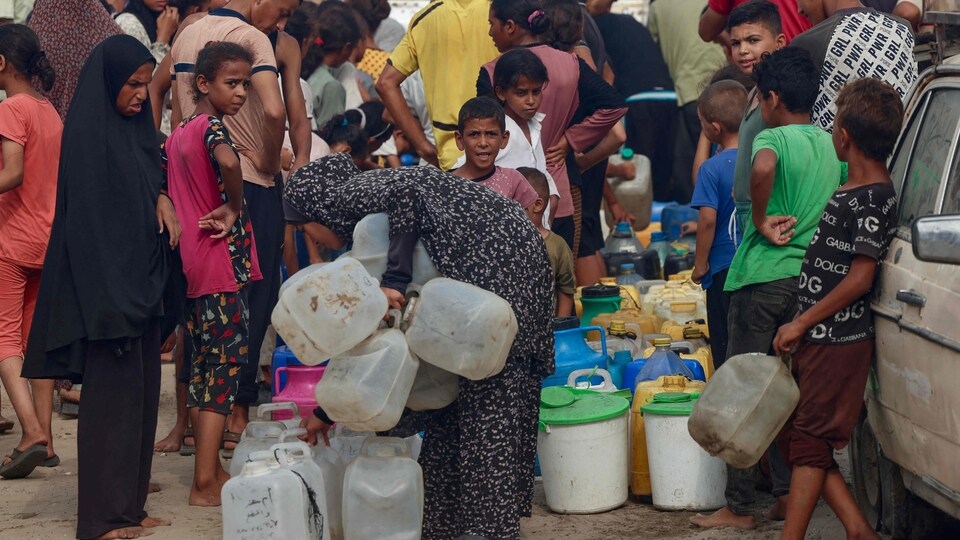
The United Nations is the backbone of relief operations. UNRWA, WFP, and WHO have kept Gaza from falling into total collapse, delivering food parcels, vaccines, and shelter materials under extraordinary conditions. Yet the UN’s ability to act has been constantly compromised by politics. Border closures, inspection bottlenecks, and funding cuts have made its job nearly impossible. Israel points to figures of 300 to 370 trucks entering on some days through Kerem Shalom and Zikim, but aid groups on the ground counter that consignments are often rejected or delayed, leaving desperately needed supplies stacked in warehouses just across the fence. Rafah, Gaza’s southern gateway, has become a political choke point, opening and closing with Cairo’s calculations. Meanwhile, the much-publicised US sea pier, hailed as a creative workaround, was dismantled after weather and insecurity made it unviable.
The result is a humanitarian system held hostage to geopolitics. In July, famine thresholds for food consumption were reached in most parts of Gaza, while acute malnutrition among children in Gaza City crossed famine levels. UNRWA has reported a six-fold increase in child malnutrition since March. These statistics are not abstractions; they represent small bodies shrinking from hunger and hospitals where doctors must decide who gets the last packet of fortified milk.
Funding is another weak link. UNRWA, without which no aid system can function at scale, faces structural shortfalls. The freeze on US funding, imposed in early 2024, remains in place. Although the European Union has boosted its contributions, with allocations climbing to €170 million this year, and countries such as Germany, Spain, and Qatar have filled gaps, the agency continues to warn of possible collapse. In this sense, the battlefield is not only in Gaza but also in donor capitals. Without predictable, multi-year financing, the relief architecture is bound to falter.
Other states have played decisive roles. Qatar has provided critical cash injections, while Turkey has delivered hospitals and food convoys. Jordan has coordinated hundreds of airdrops with partners ranging from the UAE to Germany and Indonesia, collectively moving hundreds of tonnes of food and medicine. Yet airdrops remain a symbol of desperation, not a substitute for open crossings. Meanwhile, the European Union and its member states have pledged significant sums, but pledges often move slower than need, leaving gaps in critical services. At the same time, some donors have reduced contributions, succumbing to political pressure. The patchwork of generosity and hesitation makes for a fragile lifeline.
The scale of human need also highlights how interdependent this crisis has become. Hospitals in Egypt have had to take in injured Palestinians when Gaza’s system collapsed. Lebanese and Jordanian air corridors have been used for aid airdrops. European states have absorbed the political debate over funding UNRWA, while the Gulf has been forced to balance its financial support with broader regional diplomacy. The humanitarian crisis is no longer Gaza’s alone; it has become a regional and global fault line, testing whether international institutions can still function in moments of extraordinary stress.
What is needed now is political will. Aid cannot depend on the charity of neighbours or the ingenuity of logisticians. Ceasefires and humanitarian pauses must be treated not as bargaining chips but as moral imperatives. Donors must deliver funds in concert, through mechanisms that reduce duplication and guarantee continuity. And states that obstruct aid flows, whether through outright denial or bureaucratic inertia, should face international scrutiny. The UN can convene, but it cannot compel. Only governments can open the gates and pay the bills.
History will not remember how carefully the world counted the trucks or calibrated inspections. It will remember whether an entire people were left to starve and suffer in plain sight. In Gaza today, aid is not charity. It is humanity’s bare minimum.
This article is authored by Ananya Raj Kakoti, scholar, international relations, Jawaharlal Nehru University, New Delhi.


