
 E-Paper



Nepal’s youth protests: A warning for South Asian democracies
This article is authored by Brabim Karki, author, Nepal.

 Prefer HTon Google


Nepal’s recent youth-led protests are not just a domestic political rupture. They are a warning signal for democracies across Asia about the perils of generational alienation. The protests, initially triggered by anger over a brief government ban on social media, were fuelled by deeper frustration over corruption and economic hardship. At least 77 people were killed and many injured. The September 8-9 protests by Nepal's Gen Z led to the fall of the KP Sharma Oli government, the dissolution of parliament and the appointment of a new interim prime minister. Sushila Karki, the former chief justice and anti-corruption crusader, was installed as prime minister of an interim government on September 12 after a four-day power vacuum. Parliament, courts and government buildings were left in flames. From this upheaval, a new call has emerged. Young people are demanding change and justice. New elections are slated for March 5, 2026.
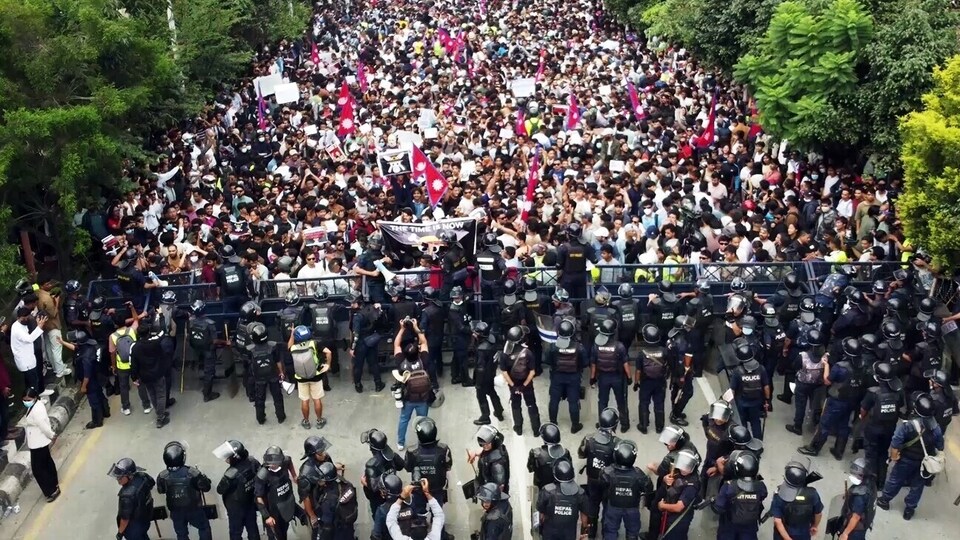
There are a total of 18,903,689 eligible voters for the election, including 800,000 taking part for the first time. They will elect members to the 275-seat House of Representatives, with 165 chosen through direct votes and 110 through proportional representation. As restrictions imposed by the Election Commission on the launch of election campaigns ended on Sunday, political parties have officially begun campaigning.
Nepal's youth protests have changed the political conversation and the rules of power. The country has finally broken free from the politics that held back the Himalayan nation for years. If young protesters succeed in channelling this energy into electoral gains, it could redefine democracy. This was not mere youthful rebellion, but a call for democratic renewal and reinvention.
Nepal's youth have the energy to shake the system. They could inject new life into politics, but only if online passion translates into real-world action. Their success would demonstrate the power of digital movements to deliver lasting change.
Nepal has struggled with political instability for decades. For India, Nepal’s democratic trajectory is not a distant concern. India has invested heavily in Nepal’s infrastructure, disaster resilience and governance capacity, positioning itself as a long-term partner in South Asia. A politically disengaged Nepali generation would weaken the very institutions India has spent decades supporting.
Since 2008, Nepal has seen 14 governments, none completing a full five-year term. Youth unemployment stands at around 20%, pushing thousands into migrant labour. Their remittances make up nearly a third of Nepal’s GDP.
A generational gap in political communication has further widened the divide. Political parties still rely on rallies, slogans and patronage networks that resonate poorly with digital natives. Gen Z organises online, debates policy in fragments and demands transparency. The challenge now is whether this energy can survive the transition from street politics to electoral politics.
Young people deserve a say in shaping their future. To turn that right into engagement, political parties must adopt policies that address youth concerns and open their doors meaningfully. Youth wings should influence candidate selection and policy platforms. Campaigns must speak honestly about jobs, education and governance.
Election authorities and civil society must invest in voter education that treats Gen Z as partners. Explaining how policies are made, how coalitions function and where accountability lies can bridge the gap between protest and participation. Youth voices must be integrated into policymaking so their ideas translate into action.
Finally, political finance transparency is essential. Voters’ rights can be protected only when parties are accountable and transparent, including in their financial dealings. The Election Commission should advocate comprehensive public financing backed by strict accountability measures.
Nepal’s upcoming elections will not solve everything. No election ever does. But they can mark a turning point if political leaders listen to what the streets are already saying. Gen Z is not asking for perfection. It is asking for a system that responds. Whether Nepal’s democracy passes this test will depend on what happens when protest energy meets the ballot box.
For Nepal and its neighbours, the real test will be whether leaders treat Gen Z not as a disruption to be managed, but as citizens whose participation will determine the country’s democratic future.
This article is authored by Brabim Karki, author, Nepal.


