
 E-Paper



Prospects of India–Central Asia cooperation in Afghanistan
This article is authored by Pravesh Kumar Gupta, associate fellow (Eurasia), Vivekananda International Foundation, New Delhi.

 Prefer HTon Google


The recent visit of the Taliban’s foreign minister, Amir Shah Muttaqi, to New Delhi marks a quiet but significant turning point in India’s regional diplomacy. After years of cautious distance since the Taliban’s return to power in 2021, India seems to be testing a more pragmatic approach. This approach aligns with the evolving strategy of the Central Asian Republics (CARs). Both sides are converging on a shared recognition that Afghanistan, however complex, cannot be ignored. It remains the geographical and strategic heart of Eurasia and its stability, or instability, directly affects the region’s collective future.
For both India and the Central Asian States, the initial reaction to the Taliban’s takeover was marked by uncertainty. New Delhi closed its embassy, fearing a repeat of the 1990s when the Taliban–Pakistan nexus had facilitated cross-border terrorism against India. The Central Asian States, especially Tajikistan and Uzbekistan, were worried about border insecurity, refugee inflows, and the resurgence of extremist groups.
However, over the past three years, the situation has gradually evolved. The Taliban regime, though not internationally recognised, has consolidated domestic control and shown a degree of willingness to engage on issues like trade and infrastructure. Meanwhile, regional powers such as Russia, China, Iran, and the CARs have all established channels with Kabul, often driven by pragmatic security and economic considerations rather than ideological alignment. India, which long relied on its goodwill with the former Afghan republic, now risks being sidelined unless it re-engages in some form. Thus, India’s cautious outreach to the Taliban through aid, quiet diplomacy, and now direct dialogue is part of a broader recalibration that mirrors Central Asia’s own approach.
Both India and Central Asia face a common set of security challenges emanating from Afghanistan. Foremost among these is the threat of terrorism. Groups such as the Islamic State Khorasan Province (ISKP), remnants of Al-Qaeda, and various regional jihadist networks continue to operate within Afghanistan’s porous borders. These entities threaten not only Indian interests but also the fragile security architectures of Tajikistan and Uzbekistan. Equally worrying is the narcotics trade, which fuels organised crime across the region. Afghanistan remains a major producer of opium, and the trade routes through Central Asia are active once again. Both India and the CARs have an incentive to strengthen counter-narcotics cooperation and border control measures.
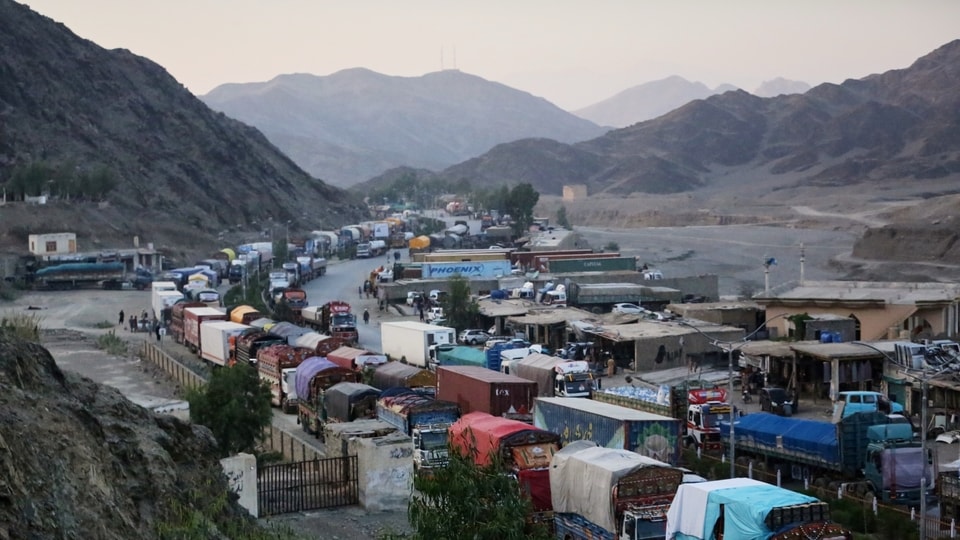
Another shared concern is the risk of political instability spilling over into Central Asia, triggering refugee crises and undermining connectivity projects. Both India and the CARs, therefore, view engagement with the Taliban as a way to manage instability rather than endorse it. Where the convergence of interests becomes most tangible is in the realm of connectivity. For years, India and Central Asia have discussed the need to link their economies, but geography, specifically, the lack of direct access through Pakistan, has been a major barrier. Afghanistan remains the natural land bridge between South and Central Asia.
India’s long-standing investment in Chabahar Port in Iran now offers a viable alternative route. The development of a Chabahar–Zaranj–Delaram corridor could extend into Afghanistan and onward to Central Asian markets. Uzbekistan, Turkmenistan, and Kazakhstan have already shown interest in joining such linkages to diversify their trade away from Russia and China. The synchronisation of these initiatives could form the backbone of a new India–Central Asia–Afghanistan connectivity partnership.
Institutionally, India and the Central Asian States already have a diplomatic framework in place for cooperation. The India–Central Asia Summit mechanism was launched in 2022. This format, which also emphasizes Afghanistan’s stability as a regional priority, could evolve into a coordination platform for humanitarian aid, infrastructure development, and counter-terrorism policy.
Additionally, both India and the CARs are members of the Shanghai Cooperation Organisation (SCO), which includes Afghanistan as an observer State. Although dominated by China and Russia, the SCO provides a multilateral venue where India and the CARs can push for joint strategies on counter-extremism and narcotics control. Beyond the SCO, the Moscow Format and the Heart of Asia–Istanbul Process provide additional platforms for coordinated regional diplomacy.
India’s strength in Afghanistan has always been its soft power. Even during the most violent years, Indian projects, such as schools, hospitals, and infrastructure, enjoyed widespread public support. Central Asian countries also emphasise educational exchange and development assistance. A coordinated humanitarian approach could amplify both India’s and the CARs’ credibility in Kabul. Joint scholarship programs for Afghan students, regional training in health and governance, and the rebuilding of social infrastructure could serve as non-political, people-centred initiatives. They would not only stabilise Afghanistan but also project a regional alternative to the Chinese or Pakistani economic footprint.
Yet, this convergence is not without hurdles. The non-recognition of the Taliban regime still constrains official engagement. India and the CARs must walk a fine line between pragmatic interaction and legitimising a government that continues to face criticism for its treatment of women and minorities. Secondly, China’s expanding presence through the Belt and Road Initiative (BRI) and Pakistan’s deep security linkages with the Taliban may marginalise Indian or Central Asian influence. Furthermore, the CARs themselves are not entirely unified. Turkmenistan prefers neutrality, Tajikistan remains sceptical of the Taliban, and Uzbekistan prioritises economic over political dialogue. Finally, the Taliban’s internal dynamics- lack of cohesion, limited administrative capacity, and ideological rigidity, could derail external projects at any time.
Despite these challenges, the logic of regional interdependence is undeniable. For India and Central Asia alike, disengagement from Afghanistan is no longer a strategic option. What is emerging, therefore, is a realistic convergence, a low-profile, issue-based cooperation focused on stability, security, and connectivity.
India’s outreach to the Taliban and its coordination with Central Asian partners reflect not a policy reversal but an adaptation to new geopolitical realities. As Eurasia undergoes transformation, with shifting alignments among Russia, China, and the West, India and the CARs have a shared interest in ensuring that Afghanistan does not once again become a source of instability.
If New Delhi and the Central Asian capitals can harmonise their approaches, combining India’s developmental expertise with the CARs’ geographical proximity and political leverage, Afghanistan could evolve from a contested buffer into a bridge of cooperation linking South and Central Asia. The path forward will be cautious, but it holds the promise of reshaping the regional order around shared pragmatism rather than old mistrust.
This article is authored by Pravesh Kumar Gupta, associate fellow (Eurasia), Vivekananda International Foundation, New Delhi.


