
 E-Paper



Strategic imperatives for India amid Pakistan's domestic turmoil
This article is authored by Shrestha Medhi, doctoral candidate, Department of African Studies, University of Delhi.

 Prefer HTon Google


While Pakistan faces no imminent collapse, its mishandling of widespread citizen anger must be closely monitored by India. From Karachi to Kabal, public anger is mounting. As these disjointed protests gain traction, New Delhi’s approach toward Islamabad requires sharp, calculated analysis over loud political rhetoric.
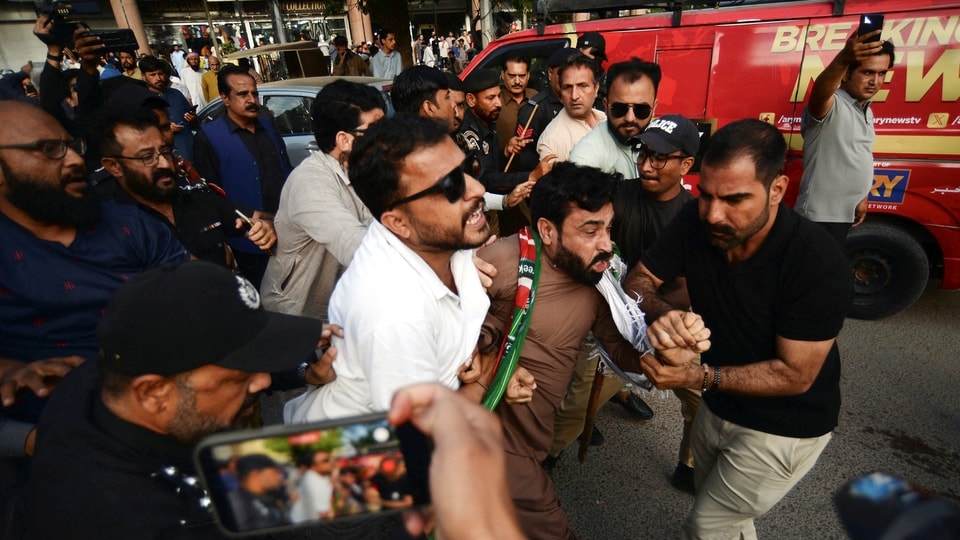
Pakistan Tehreek-e-Insaf (PTI)'s "Black Day" rallies on August 5, Jamaat-e-Islami's highway blockades on August 7, unrest in Pakistan-occupied Jammu and Kashmir (PoJK) amid discontent over local elections, the Baloch rights movement, and security protests in Khyber Pakhtunkhwa (KP) look unrelated on the surface. But look closer, and each is really about the same broken promise. PTI wants Imran Khan freed and political space restored. JI wants relief from crushing fuel and power prices. PoJK's Joint Awami Action Committee wants representation and an end to force used against protesters. Baloch activists want answers on enforced disappearances that have gone unaddressed for years. And in KP, citizens are protesting simply to be protected from suicide bombers striking antimilitant peace rallies. None of these groups answers to a common leadership. But they all point to the same failure: A State that excludes people politically, squeezes them economically, and cannot keep them safe. Layered on top of this is Pakistan's long-running conflict with separatist and militant groups, including the Baloch insurgency in the southwest and the Tehreek-e-Taliban Pakistan's resurgence in the northwest, both of which have intensified rather than faded in 2026, turning routine law-and-order problems into recurring bloodshed. For India, the real story is not one crisis but a State generating crises faster than it can manage them, a pattern that Indian strategic analysts have tracked closely as Pakistan's post-2022 order has grown more brittle.
The Balochistan Liberation Army's growing attacks on soldiers and energy infrastructure, and the Taliban-linked militancy spreading through KP, show Pakistan's old playbook turning against itself. But India's own strategic community has warned against assuming Pakistan's chaos is automatically good news for India. A country that is broke and internally fractured does not always become calmer. Sometimes cornered governments, especially those holding nuclear weapons, look outward rather than inward to hold themselves together. Behind every one of these protests sits the same economic squeeze. Inflation in July stood at 9.2% year-on-year, with transport costs up over 15% and food prices spiking even faster. Petrol and electricity price hikes, driven by IMF-linked reforms, are landing on a population already worn down by years of currency depreciation and stagnant wages. This is not simply politics; it is a society under sustained economic stress, where every new price hike becomes fresh fuel for street anger, regardless of which party organises the protest. When people cannot afford daily essentials, party lines start to blur, and grievances that once remained separate begin to look for common ground.
Add to this the further complication of Prime Minister (PM) Shehbaz Sharif's foreign policy. He is positioning Pakistan as a mediator in the US-Iran conflict, winning praise from Washington and quiet goodwill from Beijing. This diplomacy is not irrational; Pakistan depends heavily on Gulf energy and remittances, so calming a regional war does serve its own interests. But the optics matter. While Sharif negotiates ceasefires abroad, Pakistanis at home are dealing with blocked highways, internet shutdowns in PoJK, and suicide bombings at peace rallies. The gap between visible diplomacy overseas and slow, invisible reform at home is exactly what protesters are reacting to. Foreign policy success cannot substitute for domestic governance, and Pakistanis are increasingly saying so out loud.
India's current posture toward Pakistan, described by analysts as "strategic indifference," focused on deterrence rather than negotiation, remains broadly sound, but it needs fine-tuning, not complacency. Three adjustments matter.
- First, border and intelligence posture along the Line of Control should assume that a Pakistani establishment under domestic pressure may look for distraction abroad, not just when it feels strong but especially when it feels weak.
- Second, India should track Pakistan's renewed international standing carefully; its mediating role in the Iran war has earned goodwill in Washington and Beijing that India's earlier isolation strategy did not anticipate.
- Third, India should comment on Balochistan and PoJK's human rights record based on facts, not as leverage, since the Pakistani State media is quick to blame India for every internal problem it faces.
The current domestic turbulence in Pakistan is not projected to remove PM Shehbaz Sharif from office in the near term. However, it may reinforce the militarised status quo, which historically leverages geopolitical friction with India to sustain its domestic legitimacy. Consequently, India's strategic imperative is to refrain from reactive celebration. New Delhi must systematically fortify its border security, diplomatic frameworks, and strategic communications to manage an eastern neighbour defined by structural, long-term instability.
(The views expressed are personal)
This article is authored by Shrestha Medhi, doctoral candidate, Department of African Studies, University of Delhi.


