
 E-Paper



The revolution in Indian health care
This article is authored by Puneet Anand, vertical head, corporate affairs, corporate communication and social, Hyundai Motor India Limited.

 Prefer HTon Google


India’s health care system is charting a transformative course buoyed by significant advancements in infrastructure, accessibility, and innovation. With evolving needs and rising expectations, there’s a growing shift towards more inclusive and decentralised health care delivery. This transformation is being driven by a shared understanding that quality healthcare must not only be available, but also accessible, irrespective of geography or socio-economic status. The foundation laid by public health care initiatives has been instrumental - and it is through continued collaboration among government bodies, private enterprises, and civil society that these efforts can be further strengthened.
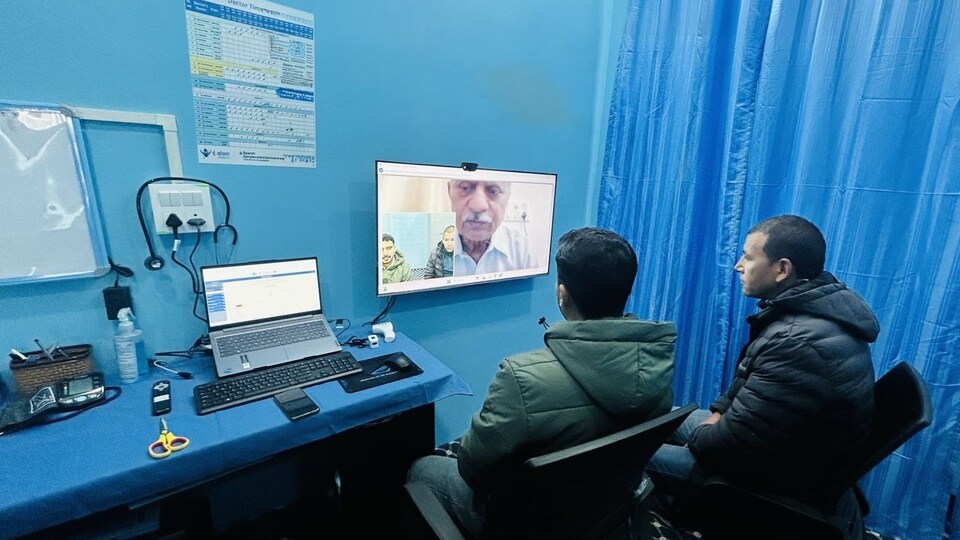
One of the most impactful examples of this progress is the Government of India’s flagship initiative, Ayushman Bharat, which has significantly expanded access to free treatment across both public and empanelled private hospitals. The initiative has not only reduced financial burden on millions of families but has also advanced health equity by bringing primary health care services to the last man, in the last mile. Continuous efforts to scale health and wellness centres and broaden coverage, reflect a sustained commitment to accessible health care for the masses. However, for a geographically expansive nation as ours, physical health infrastructure needs integration with digital interventions, thus reimagining how care is delivered - particularly at the last mile.
One of the most impactful developments in this direction is the government’s own push towards mobile health care delivery systems, especially in underserved regions. Through initiatives like Mobile Medical Units (MMUs) under the National Health Mission, state health departments are deploying vehicles equipped with doctors, nurses, and diagnostic tools in underserved regions. These MMUs have become crucial in delivering primary health care services to people in remote areas, conducting immunisation drives, maternal care, and routine check-ups, where permanent facilities are yet to come up.
The aim is clear: To make health care more agile and community-centric, making it a part of people’s daily reality, rather than a distant aspiration.
Building upon this, corporate collaborations can catalyse progress. By aligning their corporate social roadmap with government frameworks, corporate entities can complement State-driven services with innovation, agility, and localised interventions.
The automotive sector, traditionally focused on transportation, is increasingly contributing to this transformation. Clinics on Wheels - designed and deployed through public-private partnerships, are extending a lifeline to a large population that remains on the fringes of mainstream health care delivery. These mobile clinics are equipped to provide a range of services from basic check-ups and diagnostics to specialised consultations.
In rural Haryana, for instance, villagers once compelled to lose workdays for basic tests, who are now able to receive them right at their doorstep. Tamil Nadu’s mobile medical health units for maternal healthcare have demonstrated how portable ultrasound machines can help expectant mothers avoid hours-long travel. These small but significant changes are reshaping the health care story, one village at a time.
When corporate programmes work in tandem with government services and local stakeholders, the impact is multiplied. Telemedicine projects that connect village health care workers with urban specialists, or mobile vans that double as health care classrooms, succeed not just because of the technology - but because they are adapted to local realities.
The pandemic further validated the importance of these models. With hospitals overwhelmed and mobility restricted, telemedicine and MMUs became vital in maintaining continuity of care in the hinterland. Post-Covid, these solutions remain central to strengthening the resilience of our healthcare infrastructure. They allow for scalable, cost-effective mobile approaches that reduce burden on tertiary centres while improving early detection and regular treatment. Such initiatives also significantly reduce carbon footprint generated during to and fro travel of patients to urban areas in search of health care amenities.
Corporate initiatives, when integrated into existing public health frameworks, have also trained ASHA workers to use basic diagnostic equipment creating lasting capabilities within the community. By supporting, but not duplicating government efforts, these projects extend the reach and sustainability of care delivery.
True progress lies not just in data points or financial investments, but in human outcomes. When an elderly woman in the far reaches of India receives a cataract screening at her doorstep, or a tribal teen is treated for menstrual issues in time; that is the real proof of health care becoming accessible for one and all.
These stories of dignity and access are the real milestones, and they serve as a reminder. A truly inclusive healthcare revolution requires all stakeholders - government, corporates, and communities to move in sync, with the shared goal of leaving no one behind. That is when we can truly become a Swasth Bharat and Viksit Bharat.
This article is authored by Puneet Anand, vertical head, corporate affairs, corporate communication and social, Hyundai Motor India Limited.


