
 E-Paper



Dil Chahta Hai’s to Animal: The loss of vulnerable men
Farhan Akhtar’s Dil Chahta Hai highlighted men’s vulnerability, contrasting today's toxic masculinity in films like Animal, suggesting a shift in Bollywood

 Prefer HTon Google


About two-thirds into Farhan Akhtar’s Dil Chahta Hai, Shalini (Preity Zinta) takes Akash (Aamir Khan) for an opera show. It is the Greek tragedy of Troilus and Cressida, emerging out of the siege of Troy — part of a larger story which has been the flavour of the summer because of another film.
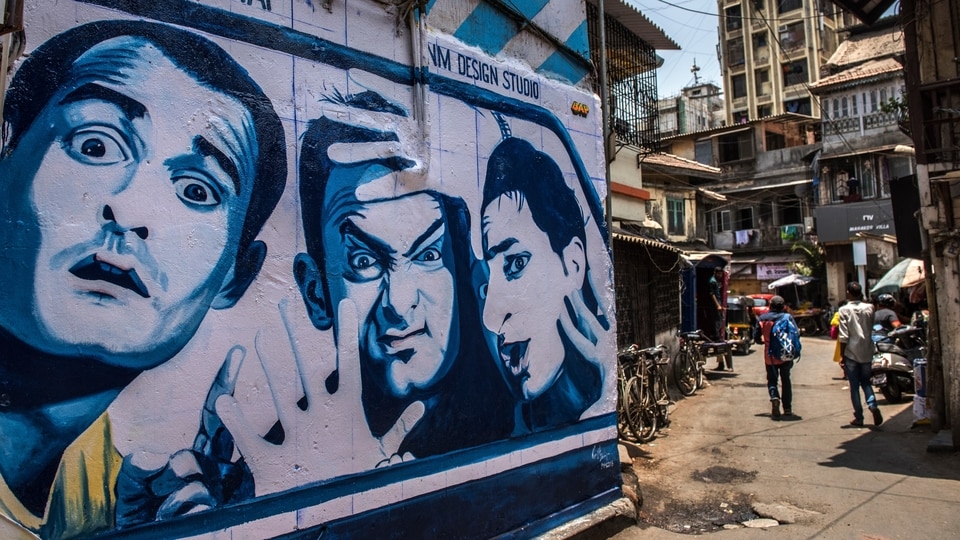
Akash is bored out of his mind, trying hard to keep awake. But as the opera unfolds, Shalini is in tears. Also, something unexpected is happening. Akash seated next to her appears shocked to witness the tragedy on the stage. On Shalini’s request, Akash shuts his eyes and comes to the realisation that he is actually in love with her. The facade he has built around himself starts to crumble.
Soon after, when Shalini departs for India with her fiancé, Akash is heartbroken and devastated, as Sonu Nigam sings Tanhayee in the background. He sits down to call his friend Sameer while tears roll down his eyes.
Dil Chahta Hai has been praised for narrating the story of three friends who talked naturally, joked and laughed, wore normal clothes like regular millennials (although Khan was at least 10 years older than the character he played).
But Akhtar’s 25-years-old landmark film also told us that it was okay for these men to be sad, to cry. It was perfectly cool for men portraying characters who did not care much for serious issues in life to also show their vulnerable side.
Hindi cinema has often shown the lead men singing tragic songs, going back to Dil Jalta Hai from Pehli Nazar (1945) sung by Mukesh in his very KL Saigal voice. And nearly three decades later, Mukesh, again, sang Koi Jab Tumhara in Purab Aur Paschim (1971).
But a character like Manoj Kumar’s Bharat in Purab Aur Paschim was driven by a mission and the message that the East was better than the West when it came to culture and tradition. The post-college buddies in Dil Chahta Hai were on no such mission. Their goal was to live off their parents’ wealth and have fun in life. Until the bolt of lightning struck them and they discovered that love really exists.
In 25 years, as the three characters of Dil Chahta Hai would have reached middle age, the mood of the audience seems to have shifted. There is the acceptance of toxic masculinity and misogyny in works by Sandeep Reddy Vanga (Arjun Reddy, Kabir Singh, Animal), and in Aditya Dhar’s recent testosterone-laden and heightened jingoistic hit films (Dhurandhar and Dhurandhar: The Revenge).
The gentler men such as Akash and his friends Sid and Sameer seem to be from another era. Instead, we have men like Ranbir Kapoor’s Ranvijay Singh in Animal whose sadness and ultra-violent behaviour emerges out of the daddy-issues he suffers from. But Animal does not analyse or attempt to resolve Ranvijay’s daddy-issues. Instead, it justifies the stylised gore, violence and misogyny in the film, blaming it on Ranvijay’s traumas. And if Ranvijay cries in the end of the film, it is only after an over-the-top, melodramatic confrontation with his father.
But did the vulnerable men of Dil Chahta Hai really vanish, or is Bollywood taking a pause? In the times of filmmakers like Vanga and Dhar, are there still spaces for heartfelt films that are closer to reality where men can show their vulnerable shades?
It is hard to say if Bollywood will now only go in the direction of loud, testosterone-packed films. But the slow, evolving success of Imtiaz Ali’s love-in-the-time-of-Partition tale — Main Vaapas Aaunga — thanks to a strong word-of-mouth publicity, is a clear indication that all hope is not lost.
And vulnerable men cry in Main Vaapas Aaunga. Sometimes audiences do not notice the gems when they fall in our midst. Unlike the two Dhurandhars, Sriram Raghavan’s Ikkis rationalises people-to-people contact between India and Pakistan. Without resolving to machismo and jingoism, it is a clear-headed story that suggests a different path and solution to decades old animosity between the two neighbouring countries.
And as Ikkis walks into our hearts, it tells us it is okay to cry.
Aseem Chhabra is an author and actor. The views expressed are personal
(This is a Hindustan Times digital exclusive)


