E-Paper



The scientific way to look at BMI and the weighing scale
An expert commission set the line for obesity at 23 and abolished “overweight” for Asian Indians altogether.

 Prefer HTon Google


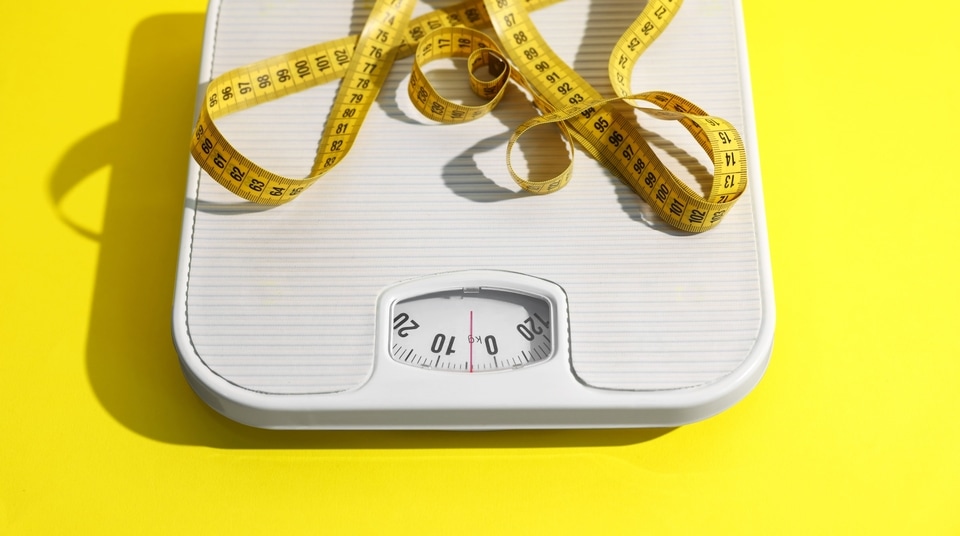
Medicine for the most part has spent years defining obesity the same way, as a body mass index above 25 with a band below it called overweight. BMI is a person’s weight in kilograms divided by their height in metres squared. Early last year, both were established to be irrelevant for the Indian population. An expert commission set the line for obesity at 23 and abolished “overweight” for Asian Indians altogether.
India has an estimated 101 million adults with diabetes and 136 million more whose blood sugar is high enough to be heading there. Obesity is among the biggest modifiable causes, and the threshold at which a doctor calls it obesity holds implications for who gets investigated, who gets treated, and who is told their weight is fine.
The January 2025 revision came from the India Obesity Commission, but it has mostly remained on paper. Neither the Indian Council of Medical Research nor the health ministry has endorsed it yet, though many specialists are now beginning to adopt it. As things stand, an Indian adult at a BMI of 24 is overweight under one and obese under the other, depending on which their doctor follows.
BMI above 23 now calls attention
The revised definition appeared in Diabetes & Metabolic Syndrome: Clinical Research & Reviews in January 2025. Anoop Misra of the Fortis C-DOC Hospital for Diabetes and Allied Sciences in Delhi led the commission, with Naval Vikram of AIIMS Delhi and around 115 members. It replaced a single cut-off with a two-stage diagnosis, and the stages are meant to distinguish whether the extra weight has begun to affect how the body works.
Stage 1 is increased adiposity — the accumulation of fat — above a BMI of 23, with no effect on organ function or daily activity. Stage 2 requires a BMI above 23, mandatory, plus an excess waist — 90 cm or more in men, 80 cm or more in women — or a waist-to-height ratio above 0.5, plus either symptoms that limit daily activity or a listed condition such as type 2 diabetes, high blood pressure, non-alcoholic fatty liver disease, obstructive sleep apnoea or osteoarthritis of the spine and lower limbs.
These thresholds are lower since Indians and other South Asians have been — in increasing scientific consensus — shown to develop type 2 diabetes and heart disease at lower body weights than Europeans. The World Health Organization’s expert consultation set lower Asian action points on that basis in 2004, and Misra’s Indian consensus statement adopted BMI 23 in 2009.
Why South Asian bodies behave this way is still argued over. The 2025 revision attributes it to fat carried inside the abdomen, around the liver and pancreas, rather than under the skin. Imaging studies in South Asians have complicated that account since 2007. The leading alternative holds that the layer beneath the skin can store only so much fat before the surplus goes elsewhere. The researchers who proposed it call it a hypothesis, and say the data behind it are cross-sectional.
Misra sets out why the framework keeps BMI but adds waist measurement to it. “BMI is an imperfect measure that does not distinguish between body fat, muscle mass, and bone density,” he told this newspaper. “BMI is still an important risk factor, but if it is beyond 23, then one should measure their waist circumference.” On the second measure: “If the waist is more than half of the height, that means there is excess waist-to-height ratio, which is now a factor of consideration for heart disease and diabetes.”
If you’re at stage 2, the guideline calls for early drug treatment alongside intensive lifestyle change, with GLP-1 receptor agonists first line for patients who also have type 2 diabetes. Stage 1 allows drugs too, but for people at a BMI of 27.5 or above, or gaining more than 10% despite optimal lifestyle measures. To be sure, the paper’s competing-interests declaration records that Misra and co-author Amerta Ghosh have financial relationships with pharmaceutical companies whose products include obesity therapies. Rommel Tickoo, senior director of internal medicine at Max Healthcare, who prescribes the drugs, said they are misread. “People shouldn’t see it as merely a weightloss drug. There’s much more to these weightloss drugs; it improves your overall health and brings down the risk of so many serious health conditions if prescribed to right people who have severe obesity-related comorbidities.”
The BMI debate
In 2025, a second commission made its report the day before and was more cautious about what to make of BMI, if anything at all. The Lancet Diabetes & Endocrinology Commission on Clinical Obesity, with 58 commissioners and 76 endorsing organisations, holds that BMI “should be used only as a surrogate measure of health risk at a population level, for epidemiological studies, or for screening purposes, rather than as an individual measure of health.”
Under its criteria, excess adiposity is confirmed by a direct measurement of body fat, by one waist-based measure alongside BMI, or by “at least two anthropometric criteria... regardless of BMI” — body measurements such as waist circumference, waist-to-hip ratio or waist-to-height ratio.
Clinical obesity requires evidence that an organ or tissue has stopped working properly, or that daily activities are significantly limited. Where the fat is excessive and organ function is intact, the Commission calls it preclinical obesity, a state of risk rather than an illness.
This is to say that the diagnosis of being obese is now off the scale and onto how the body is working. The Indian framework makes BMI necessary and waist supplementary. The Lancet commission asks whether the fat has damaged anything, rather than how heavy the person is. Two people the same size can get different answers.
“We see many patients where BMI may be normal but other factors are present that make the person severely high-risk,” says Tickoo. “The patient may be lean and thin but will have abdominal fat or fat at all the wrong places.” Only BMI, he said, “is never the answer — we always look at the larger picture.”
Three different yardsticks
Misra says the revision has not reached the people who would use it. “Unfortunately, there is not enough dissemination of this new information. When I say lack of awareness, it is both from patients’ side as well as clinicians,” he said. “While BMI is still important, it’s the other factors that will impact how risk-factors are managed. Awareness is key to identifying the real problem and then looking for remedial measures.”
Where it has reached, like in the case of Tickoo’s, the change reflects in what is being advised as follow on tests. “We always look at the larger picture. Things are evolving and even raised LDL cholesterol no longer is the sole criterion, as there are other factors in lipid profile that can lead to major complications such as cardiac disease, stroke. We have to have a wholistic approach.”
But some doctors say there are practical limits. “Adding other measurements is always going to be difficult — more labour intensive,” said Nikhil Tandon, senior endocrinologist at AIIMS Delhi. “I anticipate difficulty in doing these measurements over and above height and weight.”
The ICMR-INDIAB survey, reported in the Lancet Diabetes & Endocrinology in 2023, still measures generalised obesity at a BMI threshold of 25 — the superseded number. It found it in 28.6% of Indian adults, against abdominal obesity in 39.5%, a difference of roughly 97 million people who carry the fat distribution without the weight that would flag it. Sanjay Kalra and colleagues, writing in Clinical Obesity this year, record that “there remains a lack of consistent guidelines for obesity management or definition in India.”
What can be measured without a clinic
Misra’s answer to the workload is that the measurements are simple enough to be taken at home. “Most risk-factors can be assessed with these simple solutions at home,” he said, “and if there is an increased BMI, waist circumference, and waist-to-height ratio, then one needs to see a doctor right away.” Where BMI alone is raised and the other readings are normal, he said, three to six months of dietary change and exercise should come first, and a consultation if nothing moves.
But some signs warrant a consultation regardless of the numbers. Misra lists a family history of diabetes or high blood pressure; thickened dark skin at the back of the neck, which he says marks susceptibility to diabetes and liver disease; skin tags; a double chin; and extra skin at the base of the neck, which reflects insulin resistance.
On what to change, he is specific. A low-carbohydrate, high-protein diet means less roti, rice and bread, and more dal, rajma and sprouts. The World Health Organization recommends 30 minutes of moderate activity five days a week; for Indians, Misra puts the target at 300 minutes a week, made up of 45 minutes of brisk walking, five to 10 minutes of resistance exercise, and a five to 10 minute break every two hours at a desk.
Both sets of authors say in their own papers that BMI cannot locate body fat, and both then build a diagnosis on measurements of body size, because establishing where fat is stored takes imaging that exists in research units rather than clinics. That is the limit every version of the definition runs into, and moving a threshold does not move it.
(Vital explains the science and the conversations at the frontier of healthcare and wellness. It isn’t medical advice — what to do with it is a conversation for you and your doctor. )