
 E-Paper



Fantastic Four: First Steps doesn’t just bring back Marvel’s original comic book family — it brings back the fun
Fantastic Four: First Steps isn’t just Marvel’s best reboot in years — it’s a reminder that superhero movies can be silly, heartfelt, and self-contained.

 Prefer HTon Google


For a studio once capable of turning obscure comic-book characters into global billion-dollar phenomena, Marvel has spent the post-Endgame years behaving like a magician who’s forgotten how to pull a rabbit out of a hat. After a string of bloated sequels, forgettable series, and increasingly tangled timelines, the studio has finally delivered something that feels like… well, a movie. Fantastic Four: First Steps may not reinvent the genre, but it does something arguably more impressive — it makes the superhero film fun again.
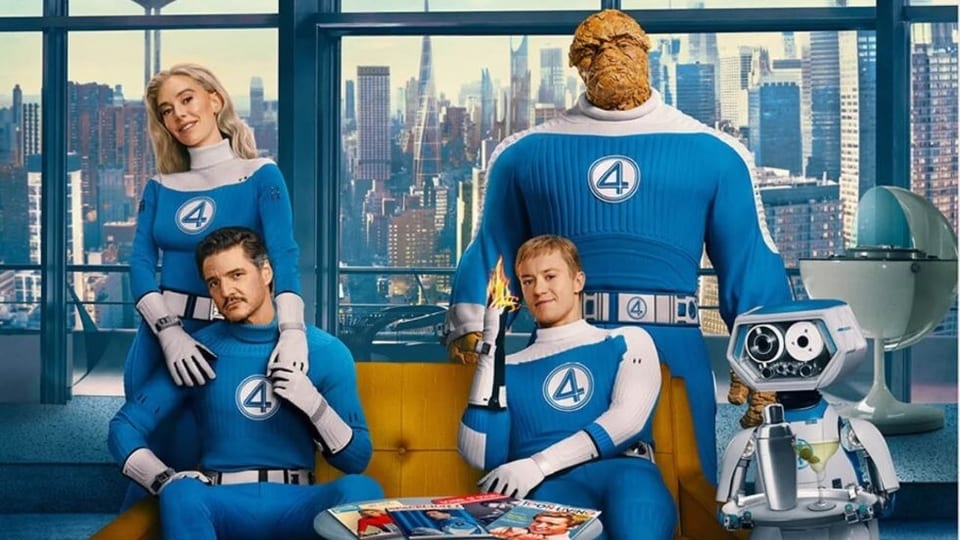
Directed by Matt Shakman (WandaVision), this much-needed reboot brings Marvel’s First Family back to life with a kitschy, retro-futurist twist set in an alternate 1960s New York — a world where the Cold War rages, the Baxter Building glows, and superhero uniforms look suspiciously like blue pajamas. The film stars Pedro Pascal as Reed Richards, Vanessa Kirby as Sue Storm, Joseph Quinn as her fire-happy brother Johnny, and Ebon Moss-Bachrach as the lovably grumpy Ben Grimm. And unlike past iterations, this one skips the tedious origin story and assumes the audience has at least a Wikipedia-level familiarity with the quartet. A wise choice.
The Fantastic Four are already famous when we meet them — beloved by the public, doing variety shows, and fighting off quirky comic-book baddies like Mole Man (Paul Walter Hauser) and the Super-Apes (sadly just name-dropped). They live together in the stylish Baxter Building, where domestic bliss looks like a cross between The Jetsons and a Mad Men-era sitcom. Sue has just discovered she’s pregnant — a miracle in any timeline, but especially one where everyone’s DNA has been fried by cosmic rays. Reed, ever the scientist, is unsure what powers their child might inherit. Ben, cursed with a rock-like exterior and sensitive soul, longs for a connection with local schoolteacher Rachel (Natasha Lyonne). Meanwhile, Johnny has a spark — pun intended — with the Silver Surfer (a gender-flipped Shalla-Bal, played with chrome-plated intensity by Julia Garner), who arrives bearing a warning: Galactus, the planet-devouring god-thing, is en route. Yes, the world is ending again. But for once, the apocalypse has style.
The good
The biggest triumph here is tone. Mark’s direction leans into the weird, the whimsical, and the genuinely warm — a welcome break from Marvel’s recent obsession with existential dread and time travel. The 1960s setting is gorgeously realised, full of neon signs, futuristic kitchen gadgets, and a robot butler named Herbie who doubles as childcare.
Pedro Pascal plays Reed with a bemused detachment that works — less tortured genius, more science dad with a stretch problem. Vanessa’s Sue is quietly formidable, grounding the film with emotional heft (and looking suspiciously well-rested for a woman about to give birth in space). Joseph nails Johnny’s reckless charm, and Ebon’s Ben is the soul of the film — a CGI creation with real pathos and a deadpan delivery that hits just right.
Michael Giacchino’s score gives the film a nostalgic buoyancy, and the production design leans heavily — and successfully — into comic book absurdity. Also: any film where The Thing earnestly reads Dr Spock’s Baby and Child Care deserves points for originality alone.
The bad
Yes, there’s a big third-act battle. Yes, another city folds in on itself. No, Marvel still hasn’t figured out how to end a movie without throwing buildings at the sky.
The gender-swapped Silver Surfer will raise eyebrows among comic-book purists, and her shiny design — somewhere between Terminator 2 and an avant-garde shampoo ad — is more distracting than intimidating. Also, while the film mostly stands on its own, Marvel can’t resist teasing future conflicts and characters, and the film occasionally feels like it’s winking at sequels we haven’t asked for yet.
The verdict
Fantastic Four: First Steps isn’t just Marvel’s best reboot in years — it’s a reminder that superhero movies can be silly, heartfelt, and self-contained. It’s not perfect, and it’s not trying to be. But after years of convoluted cinematic calculus, watching a group of mismatched heroes argue in a pastel kitchen while the world teeters on the brink feels oddly refreshing.
The film lives up to its subtitle: this is a genuine first step forward. And for Marvel, that’s a giant leap back toward what made it great.


