
 E-Paper



All you need to know about the rare mushroom that made it to the President’s table
President Droupadi Murmu’s dinner for Swiss President Guy Parmelin put the spotlight on prized gucchi. Here’s why the Himalayan morel is so rare and coveted.

 Prefer HTon Google


At Monday evening’s banquet at Rashtrapati Bhavan, President Droupadi Murmu hosted Swiss President Guy Parmelin and First Lady Caroline Parmelin with a menu spanning delicacies from Jammu and Kashmir to Ladakh.
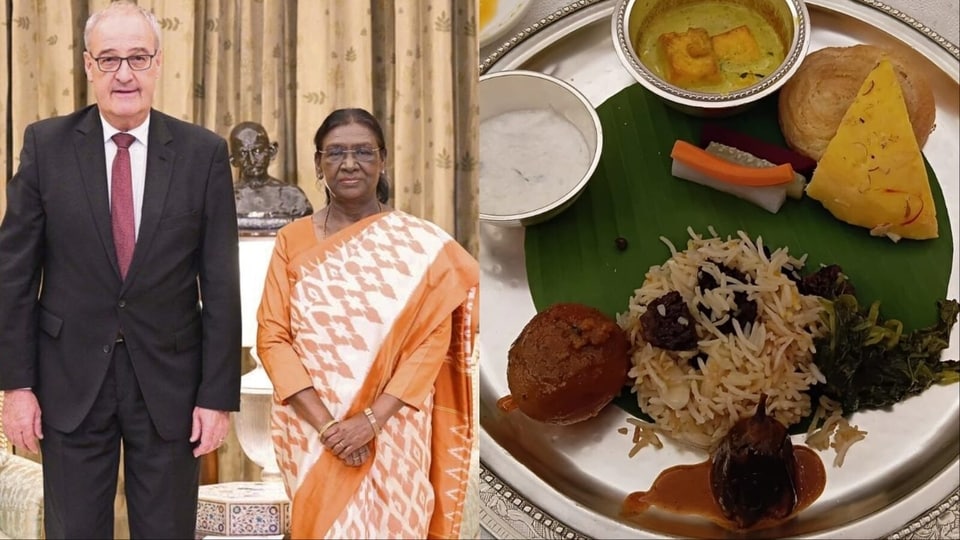
The spread featured Kashmir’s famed gucch pulao, khatte baingan (Tsok Wangun), and sheermal roti. The dessert selection included Kashmiri favourites such as phirni and shufta.
The standout was the gucchi, or wild Himalayan morel, used in the pulao. Chef Nishant Choubey describes its appeal: “It tastes earthy, nutty, woody and very meaty. Also, the honeycomb texture gives a wonderful bite, which is lacking in other mushrooms, and it retains its texture even after cooking.”
What is gucchi?
Fresh gucchi is foraged in the Himalayan regions, typically after the snow melts in spring, with the season lasting into early summer. These mushrooms grow on decaying wood, leaf litter and humus-rich soil, making them impossible to cultivate commercially. Their scarcity and labour-intensive harvesting also make them expensive, with premium varieties fetching up to ₹25,000- ₹40,000 a kilogram.
Gucchi mushrooms are rarely available fresh, while dried varieties are available year-round and are commonly used in Kashmiri cooking. Choubey recommends choosing dried morels that range from honey to dark brown in colour, are firm and aromatic, and storing them in an airtight container. Once rehydrated, strain the mushrooms and save the water to use in pulao, soups or curries.
Chef Pooja Sachdev, Creative Head and Co-Founder of Gourmetly Yours, says, “The best pairings that elevate rather than overpower the morel are butter, ghee, cream, garlic, shallots, black pepper, fresh herbs and mild cheeses. In Indian cooking, they can also work beautifully with delicate spices and a little saffron. The key is to let the morel remain the hero rather than masking its natural earthiness.”
Beyond Kashmiri preparations, Choubey also suggests trying morels in risotto, gnocchi, cream sauce or simply on toast.


