
 E-Paper



FIFA World Cup 2026: How pubs in India are preparing for football fever after the broadcast deal
The FIFA World Cup 2026 is finally here, and across Indian cities, bars and pubs are gearing up for a month of football-fuelled nights

 Prefer HTon Google


For months, Indian football fans were locked in a frustrating game of collective breath-holding. With the FIFA World Cup 2026 kicking off, the big question wasn't who would lift the trophy, but where on earth we’d even watch it. Thankfully, a massive, last-minute breakthrough saw ZEE Entertainment secure the broadcasting rights up until 2034, saving millions from the dreaded fate of sketchy, lagging live-streams.
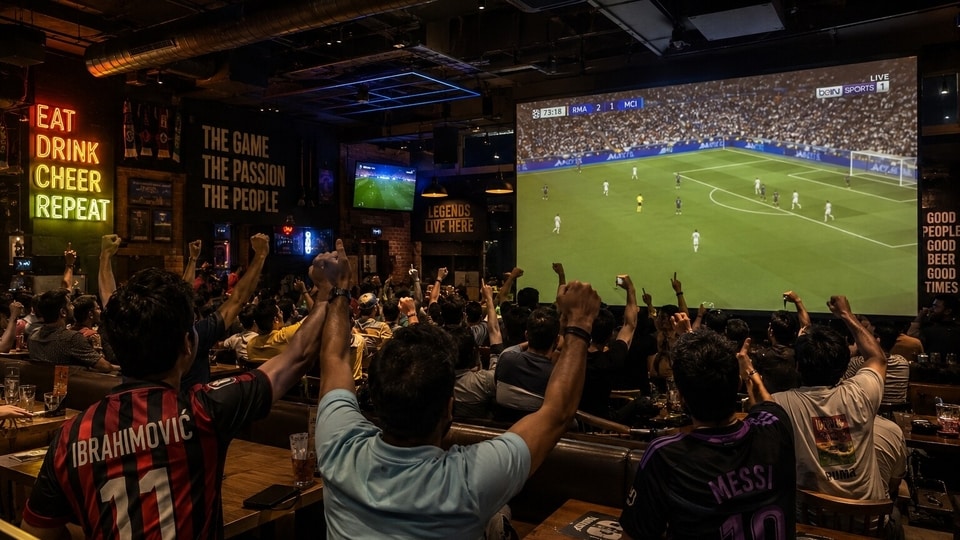
"Honestly, I was panicking alone in my room, checking for broadcast updates every five minutes thinking India wouldn't even get the live matches," recalls Advita Chowdhary, 20, capturing the baseline anxiety felt by the community. "It was such a chaotic, last-minute save. That’s why watching it at a bar is going to hit different—we all went through that exact same stress, so being in a crowded room celebrating the fact that we’re actually getting to watch it together is going to be pure relief and chaos."
Chowdhary isn't alone in wanting to escape the isolation of a bedroom screen. While you could stream the 104 high-stakes fixtures from the comfort of your couch, the real magic of a 48-team World Cup isn't meant for a solo screen. The broadcast scare has only supercharged the city's pub culture, turning local haunts into emotional hubs. "Watching football alone in your room just doesn’t compare," says Aarav Laal, 20. "You need that collective energy—the shared gasp when a shot hits the crossbar and that chaotic explosion when a goal goes in. It’s the crowd that makes it memorable."
Across the city, bars and pubs are transforming into local stadiums to meet this exact demand, pivoting their entire operational playbooks to elevate the match-day experience. For many, it's about reclaiming a beloved social calendar anchor. "For me, it’s less about just watching the screen and more about the ritual," explains Arnav Singh, 27, an entrepreneur. "It’s that exact moment the weekend hits: a cold pint in hand, the game on a massive projector, and trading banter at the table. It’s the perfect, effortless way to unwind before the chaos of the work week starts again."
However, creating that seamless night out requires immense behind-the-scenes effort from the hospitality industry, where the pre-tournament stress mirrored that of the fans.
"The anxiety before the broadcast deal was finalised wasn’t just felt by the fans—we were stressed too," admits Kabir Marwah, 38, a city restaurateur and pub owner. "A World Cup is a massive revenue driver. The moment the news dropped, we immediately went into overdrive, setting up high-definition projectors and restructuring our staff shifts. We’re pushing our closing hours to the absolute legal limit because we know fans don’t want to be asked to leave right when extra time begins."
Recognising that global kick-off times don't always align with standard closing hours, local hotspots are securing late-night extensions, ensuring that kitchens keep roaring and taps keep flowing well into the early morning.
"We’re treating this World Cup like a month-long festival," says Riya Anand, 32, Operations Director at a local taproom. "Because of the timezone differences, we've curated special late-night half-time menus—think quick-bite finger foods and match-day pitcher deals—so the kitchen can keep up with the 1 AM crowd. We've also extended our operating hours specifically for the knockout stages. You can't replicate that stadium atmosphere at home, and we want to make sure the energy stays high until the final whistle blows."


