E-Paper



100 endangered vultures killed by suspected insecticide poisoning in Assam
The vultures belonged to the Himalayan Griffon species while the eagle was a Stepee Eagle—both birds are listed in Schedule 1 of the Wildlife Protection Act, 1972 as endangered species that need rigorous protection.

 Prefer HTon Google


A 100 endangered vultures and an eagle have died in Assam’s Chaygaon area due to suspected insecticide poisoning, officials informed on Saturday.
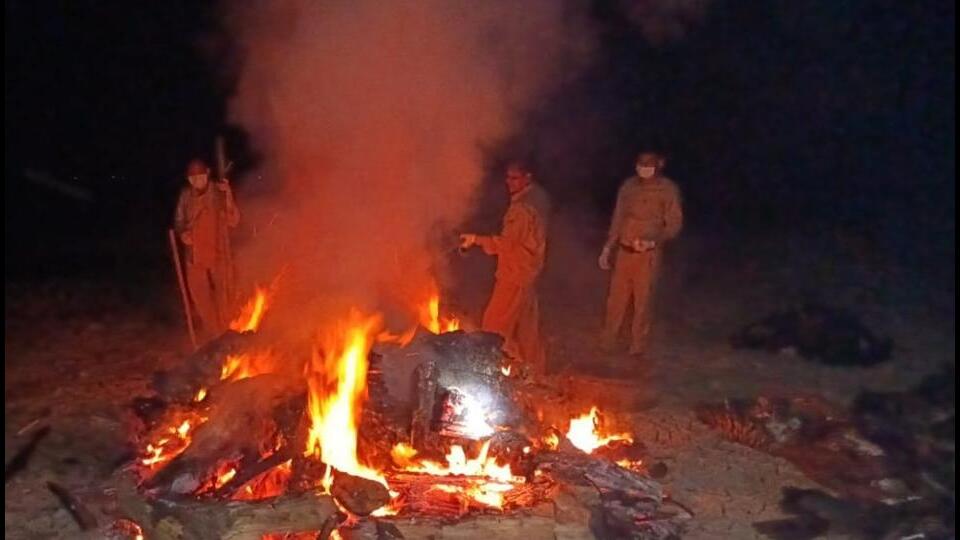
According to forest officials, the incident took place at Milanpur in Chaygaon, nearly 45 km west of Guwahati, on Thursday night after the birds consumed meat from the poisoned carcass of a small animal, probably goat or dog.
“We got information about deaths of vultures in the area on Thursday night. A team found 97 dead vultures in a field. We were able to rescue 11 vultures and 1 eagle from the spot,” said Dimpi Bora, divisional forest officer Kamrup (West) forest division.
Despite attempts by officials to save the birds by inducing them to vomit, three more vultures and an eagle died on Friday.
The vultures belonged to the Himalayan Griffon species while the eagle was a Stepee Eagle—both birds are listed in Schedule 1 of the Wildlife Protection Act, 1972 as endangered species that need rigorous protection.
“We recovered bones of a small animal, probably a goat or dog, covered with a powdery substance, close to where the birds were found. Carcass of a cow was also found nearly a kilometre away. From the symptoms it appears that the vultures consumed meat covered with insecticide,” said Bora.
“The exact details will be confirmed after reports of the forensic tests are out. Investigation reveals villagers could have poisoned the carcass to get rid of stray dog menace in the area, but the vultures became the victims. The other rescued vultures are stable at present,” she added.
The dead vultures and the eagle were burnt by forest officials on Thursday and Friday close to where they were found.
“It’s a really sad day for Assam. Losing 100 vultures due to use of organophosphate (a type of insecticide) by villagers, mainly aimed at killing stray dogs ultimately hit vultures. Requesting chief minister’s office and Assam police to check easy sale of organophosphates,” Bibhab Talukdar, secretary general of Aaranyak, a wildlife NGO, tweeted.
There have been several instances of vultures dying after consuming carcass of poisoned animals in Assam in the past few years. In January and February last year, 56 vultures died in Tinsukia district in two separate incidents after consuming poisoned carcasses of cows.
In April, 2020, 19 vultures had died on a single day in Sivasagar district after consuming meat of a dead cow. In March 2019, 39 vultures had died in the same district after consuming poisoned meat.