
 E-Paper



16% Muslim girls took TCs from MU colleges after hijab ban
As per the data provided by Mangalore University, in response to a query filed under the Right to Information (RTI), these dropouts were reported from government and aided colleges.

 Prefer HTon Google


Amid a controversy over hijab ban in Karnataka, particularly in the coastal region, 16% Muslim girl students studying in colleges affiliated to Mangalore University (MU) have taken transfer certificates.
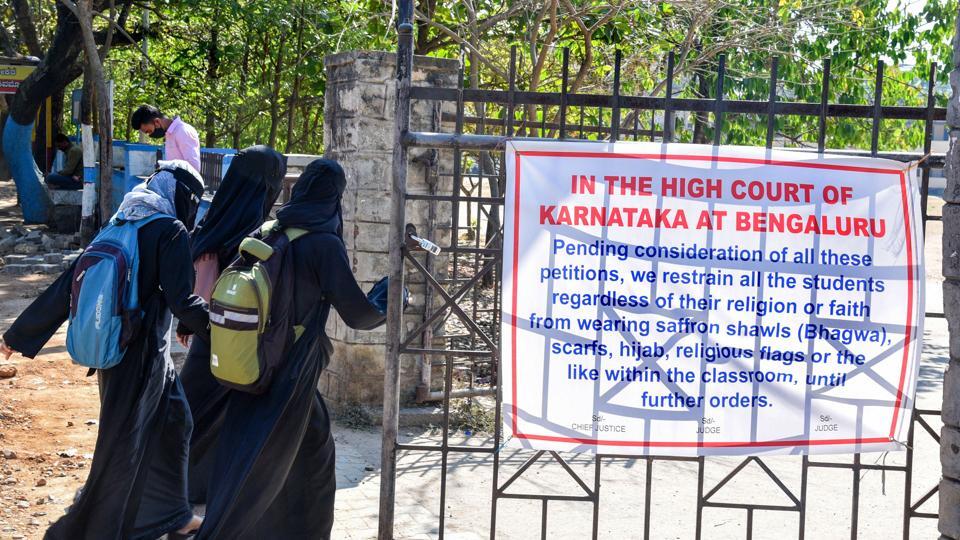
As per the data provided by Mangalore University, in response to a query filed under the Right to Information (RTI), these dropouts were reported from government and aided colleges.
Out of the total 900 Muslim girl students, who had enrolled for various courses in 2020-21 and 2021-22, 145 had collected their TCs from government, aided and constituent colleges of MU in Dakshina Kannada and Udupi districts.
A closer look at the data shows that a higher number of TCs were reported in government colleges, while the number was lower in aided colleges. There are 39 government and 36 aided colleges in Dakshina Kannada and Udupi districts.
When compared with the data across the state, the number of Muslim girls students, who got TC in Udupi district, was 14%, while in Dakshina Kannada district the percentage was 13%. Both districts were at the epicentre of the hijab controversy.
In Dayananda Pai Government College in Mangaluru, where a confrontation took place between two groups of students when some Muslim students came to the college wearing hijab, 35 out of 51 Muslim girl students collected their TCs. In Government First Grade College in Haleangadi, 20 girl students sought transfer. Government First Grade College in Ajjarkad, the epicentre of the hijab row, saw nine students collecting their TC.
Among the government-run colleges, Muslim girl students have collected the highest number of TCs from Ujire’s SDM College (11) and Kundapur’s Bhandarkar College (13).
According to local media, while some students have taken admission in colleges where hijab is allowed, others have dropped out due to reasons like inability to pay the fee. However, in Kodagu district, all 113 Muslim girl students continue studying in their colleges. There are 10 government, aided and constituent colleges of MU in Kodagu district.
Gausia, who studied till fifth semester at University College, Mangaluru was one of the students in the forefront of the fight for the right to wear hijab. After getting the TC from the college, she took admission in a private college.
“The reason for the dropouts is education minister BC Nagesh. His policies, which are part of his religious politics, resulted in these TCs. Even though students asked for their right to education, which is provided by the constitution. Many Muslim students were denied education because of the government’s policy,” said Gausia.
Responding to the information and student’s statement, the vice-president of the Development Committee of the Udupi Government PU Girls’ College, Yashpal Suvarna, said those not ready to follow the rules should leave the college.
“They have said that the minister is responsible for them not getting education, but the truth is that they don’t know the importance of education. Now, if they want to leave and join other colleges, let them do. We don’t care. For us, in our college, we won’t give any special privilege to anyone. For us, our admission numbers have gone up this year, which means people still believe in our college. What some mislead people do is beyond us,” said Suvarna.
In December last year, at least eight Muslim girl students were stopped from entering class wearing the hijab. On January 1, the college development council (CDC) passed an order banning the hijab inside campuses, leading to students sitting outside the college building, but within the campus, in protest.
College authorities maintained that the hijab was never allowed inside classrooms. By February, as the controversy spread across the state, there were counter-protests with some students wearing saffron shawls.
On February 3, a video of the government PU college principal shutting the gates on at least 25 hijab-wearing students in Udupi’s Kundapura turned the issue into a wider movement. The controversy has since manifested in ugly ways in Karnataka where right-wing groups have extended demands to ban halal meat, azaan prayers on loudspeakers, restricting Muslims from taking part in temple fairs and getting the Hindu community to stop doing business with Muslims.


