E-Paper



170 districts in ‘red zone’, govt also lists 207 areas with Covid-19 clusters
A letter from India’s health secretary Preeti Sudan to the chief secretaries of states lists 170 districts classified as hot spots, or in the “red zone” .

 Prefer HTon Google


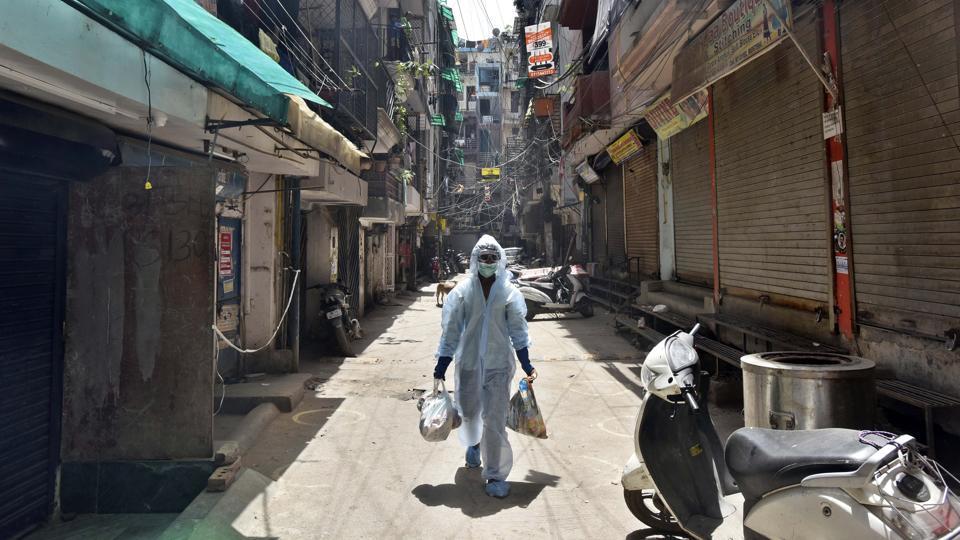
Containment zones across between a fourth and half of India’s districts will not see any easing of lockdown restrictions after April 20.
A letter from India’s health secretary Preeti Sudan to the chief secretaries of states lists 170 districts classified as hot spots, or in the “red zone” . It adds that 123 of these districts have seen large outbreaks of Covid-19 infections and 47, clusters . The letter, a copy of which has been seen by HT, also lists 207 more districts where there are “clusters” of infections. All other districts are in the “green zone” .
The letter, sent on Wednesday, is significant because it comes after the home ministry issued an order explaining guidelines for easing lockdown restrictions after April 20, with the explicit rider that this would not apply in containment zones. Home secretary Ajay Bhalla subsequently wrote to the chief secretaries emphasising that permitted activities would not be allowed in “containment zones within hot spots, demarcated by the states/union territories/district administrations as per guidelines of the ministry of health”. He also made it clear that the states and UTs “cannot dilute restrictions imposed” through the guidelines but “can impose stricter restrictions” depending on the local requirement of the areas. HT has reviewed a copy of the letter.
States have defined containment zones within districts, ranging in size from a single building to an entire city or the district itself. While many of the containment zones are likely to be in red zones, some are also in the districts with “clusters”. That’s because most states do not have a protocol for declaring containment zones.
The health ministry letter defines hot spot districts as “high caseload districts” where the number of cases double in four days or less. It asks states to review the list every Monday on the basis of the preceding week’s data. It recommends “strict containment measures” in the hot spot districts and “containment measures” in other districts reporting clusters of infections. When there are no new cases of Covid-19 in such hot spot districts for 14 days, they transition to the “orange zone” according to the letter. And if there are no cases for 14 more days, the districts in the orange zone transition to the “green zone”, it added.
“In the high-risk districts, the states have been directed to strictly implement measures meant to contain large outbreaks and cluster containment. For those districts in the green zone, our effort will be directed at ensuring that the disease doesn’t spread there, for which states have been asked to go for extensive community engagement, and strict monitoring of influenza like illness and severe acute respiratory infections (SARI) ,” said Lav Agarwal, joint secretary in the health ministry.
Defining for the first time what a cluster and outbreak scenario mean, the health ministry said that fewer than 15 cases make for a cluster and more than 15 cases mean it is a local outbreak.
“We have also told states that besides the hot spots identified by the Centre, states which are fighting the battle at field level may declare additional districts as hot spot districts and take required action accordingly. The ministry has come out with a detailed action plan for containment measures, and states have also been asked to create a district-specific crisis management plan to actively search for cases that should include door-to-door screening and testing of symptomatic ILI (influenza-like illnesses) and SARI cases,” he added.
In his letter, Sudan requested the chief secretaries to use the extended lockdown to convert the hots pots (red) to “orange, and in turn, green zones”.
The letter also directed the chief secretaries to the health ministry’s containment plan, detailed on April 2.
According to the plan, a hot spot will be split into zones: a quarantine or containment zone and a buffer zone around it. For both zones, access– particularly outbound travel – will be cut off and all movement of vehicles and public transport will be halted.
People will be encouraged to stay indoors for the first 28 days in both zones, the document states, adding: “based on the risk assessment and indication of successful containment operations, an approach of staggered work and market hours may be put into practice.”
These measures will be paired with increased disease surveillance: more random tests on hospitalised cases, testing of all suspected cases, isolation of patients and quarantine of contacts.
The ministry also said that India was doing far better than other countries in terms of checking the spread of disease. “Our recovery rate is also improving; based on data as on date, 11.41% have recovered, and this figure is increasing,” said Agarwal.