E-Paper



1,000 shifted amid Assam OIL well blowout
Residents said the blowout could have long term consequences for the area, its residents as well as flora and fauna. The recovery of a Gangetic dolphin’s carcass in the Maguri wetland close to the well has heightened these fears.

 Prefer HTon Google


Around 1,000 people have been evacuated from the vicinity of an Oil India Limited (OIL)-operated well at Baghjan in Assam’s Tinsukia as natural gas and condensate matter continued to leak from it for the fourth day on Saturday following a blowout on Wednesday even as authorities continued efforts to bring the situation under control. The well is located near the Dibru Saikhowa National Park, which is home to endangered species like Gangetic dolphin.
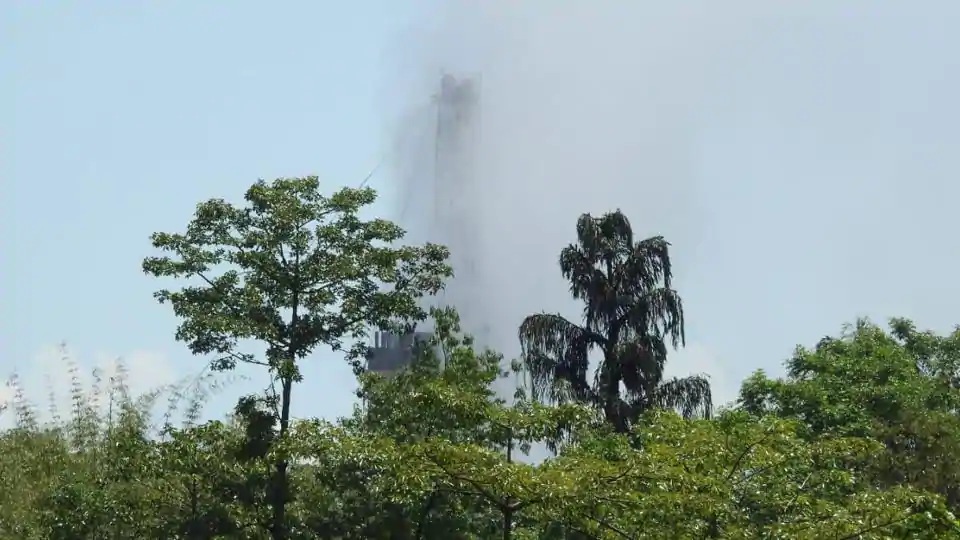
Residents said the blowout could have long term consequences for the area, its residents as well as flora and fauna. The recovery of a Gangetic dolphin’s carcass in the Maguri wetland close to the well has heightened these fears.
“The dolphin did not have any injury marks and its skin was peeled off. People have noticed oil in Maguri wetland, which could have spilled from the well. Because of the blowout, there is a layer of oil like substance dripping from trees and roofs of houses in the area,” said Binanda Hatibarua, who lives near the well and visited the site.
Tinsukia deputy commissioner Bhaskar Pegu said the Park’s core area is located around 1 km from the well and there is no threat to it. “But the eco-sensitive zone outside the park is located around 300 metres away from the site of the blowout and we have got reports that oil condensate have fallen on the wetlands in that area,” he said.
The evacuees have been shifted to three camps from an area spread over a 1.5 km radius. Madhab Moran, a Baghjan resident, said his house is located around 1.5 km from the well and the condensate has been falling on trees and homes in the area including his. He said the blowout produced a storm-like sound.
Officials said a blowout means uncontrolled release of crude oil or gas from a well when pressure control systems fail. Condensate is a low density, high gravity hydrocarbon generally found with natural gas.
In a statement, OIL said the blowout happened while work was underway to produce gas from new oil and gas-bearing reservoir at a depth of 3,729 metres. It said food and other support was being provided to the evacuees and that continuous monitoring is underway to minimise any environmental impact.
OIL officials said the process to contain the leakage was underway and measures like adequate water supply, proper lighting, and transportation of heavy equipment to the site have to be put in place before the actual operation to control it can be started.
“A lot of preliminary work needs to be done to enter the well site. We are doing that and it would take at least another two days to reach the well and try and contain it,” said OIL spokesman Tridiv Hazarika.
Chief minister Sarbananda Sonowal on Friday called Union petroleum minister Dharmendra Pradhan and urged him to take immediate remedial measures to bring the situation under control.
On May 11, the union forest, environment and climate change ministry had given environmental clearance for extension drilling and testing of hydrocarbons at seven locations by OIL under Dibru-Saikhowa National Park area.