
 E-Paper



2018 Thoothukudi firing: SC stays Madras HC order for probe into assets of officials
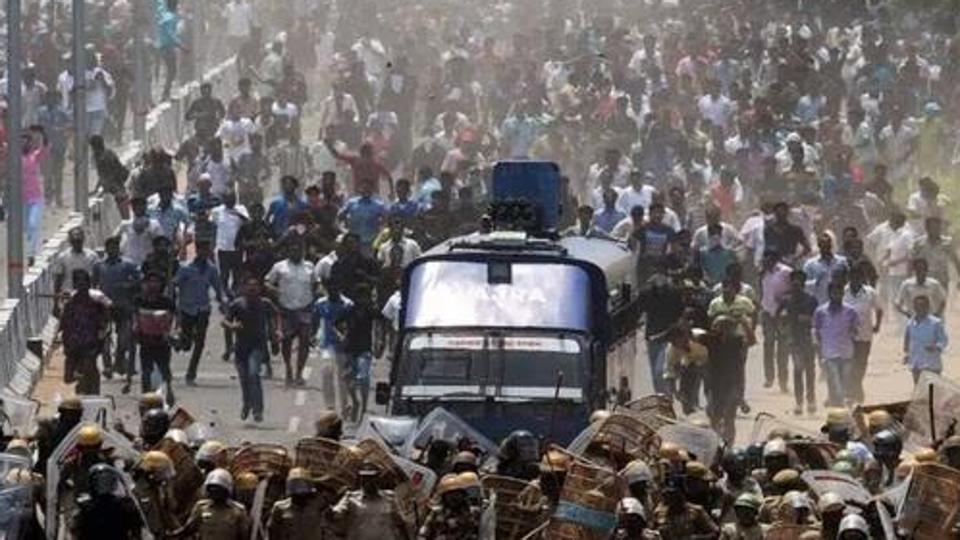
The Thoothukudi firing occurred in May 2018, when residents of the town gathered to peacefully protest the continued operation of the Sterlite Copper plant

 Prefer HTon Google


The Supreme Court on Friday stayed a July 15 order by the Madras high court that had directed an investigation into the assets of police and revenue officials involved in the 2018 Thoothukudi firing, which resulted in the deaths of 13 people during protests against the Vedanta-owned Sterlite Copper plant.
The stay was issued by a bench led by Chief Justice of India (CJI) Dhananjaya Y Chandrachud, which found merit in the arguments presented by the counsel for the police officials. The officials, through senior counsel Kapil Sibal, argued that the high court’s order was unwarranted, especially in light of the clean chit given to them by the Central Bureau of Investigation (CBI).
“This cannot go on forever. There is NHRC finding in our favour and then the clean chit by the CBI came. But the high court has now sent it back to the local police,” Sibal argued before the bench that also included justices JB Pardiwala and Manoj Misra.
Also Read:The Madras HC order on Thoothukudi firing brings into focus the industry-police nexus
Admitting the matter, the bench issued notice on the petition filed jointly by 17 police officials and stayed the high court order of a fresh inquiry against them.
On July 15, the high court had ordered a probe by the Tamil Nadu Directorate of Vigilance and Anti-Corruption (DVAC) into the assets of 21 officials named in the Justice Aruna Jagadeesan Commission’s report, which investigated the 2018 Thoothukudi firing and concluded that there were police excesses.
The high court made the order while hearing a petition filed by human rights activist Henry Tiphagne, who sought a directive for the National Human Rights Commission (NHRC) to reopen the case. The central body which was probing the case suo-moto had closed it in October 2018.
On the day, the high court had also criticised the CBI for exonerating the officials implicated in the commission’s report, expressing its displeasure that the agency appeared to have acted in coordination with the officials, ignoring instances of police overreach. The high court remarked:
“Voiceless people were at the receiving end, the persons in helm of affairs could not tolerate the prolonged, peaceful stir; and one industrialist wanted to teach a lesson, and the officials acted accordingly.”
Stating that it suspects that some police officials allowed the firing to occur in order to further their own agendas, the high court directed the DVAC to submit a preliminary report detailing the assets of the officials, their spouses and close relatives within two weeks. This deadline was extended earlier this week to three months.
The Thoothukudi firing occurred in May 2018, when residents of the town gathered to peacefully protest the continued operation of the Sterlite Copper plant, which they alleged was causing severe environmental and health hazards.
The protests, which lasted for around 100 days, culminated in violence on May 22 and 23, when police opened fire on the protesters, resulting in 13 deaths and injuries to more than 100 people.
The police initially claimed that the firing was in self-defense. However, the Justice Aruna Jagadeesan Commission’s report held 17 police personnel, a district collector, and three deputy tahsildars responsible for the incident.
The CBI’s investigation into the incident had been contentious. In its initial report submitted in December 2023, the CBI named only one individual, Inspector R. Thirumalai, as responsible for the shooting. The original charges in the FIR were reportedly diluted, invoking only minor provisions.
The Madras high court rejected this report and ordered a fresh investigation, the findings of which were submitted a month ago but had not yet been taken up by the high court.



